Calibrate Gas Gauge: A Practical Step-by-Step Guide
Learn how to calibrate a gas gauge safely and accurately with practical steps, proper tools, and best practices from Calibrate Point. Includes safety, gas standards, and documentation.


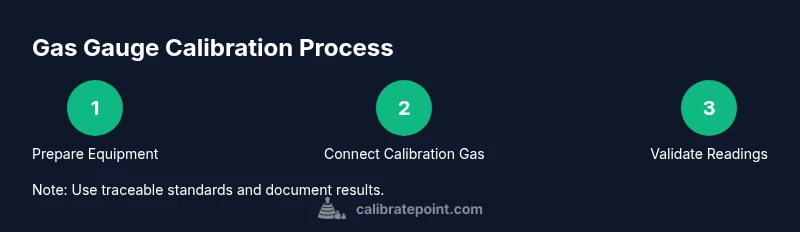
You will learn how to calibrate a gas gauge used in gas detection and process control. This guide covers when calibration is needed, required tools, safety considerations, and a repeatable method to achieve accurate readings. By following the steps, you can ensure traceable performance and safer operation. Whether you calibrate a handheld detector or a fixed-mount instrument, the approach remains consistent across devices.
Why calibrate gas gauge matters
According to Calibrate Point, calibrating a gas gauge safely and accurately is essential to protect workers and maintain process integrity. A gas gauge in a detector or process instrument translates chemical or physical signals into a readable value, and drift over time can erode confidence in readings. Regular calibration aligns the instrument with traceable standards, ensuring readings reflect actual gas concentrations or pressures. For DIY technicians, technicians, and professionals, this is not a luxury — it’s a critical step for safety, compliance, and operational reliability. In practice, a well-calibrated gauge reduces false alarms, minimizes exposure risk, and supports data integrity for audits and maintenance planning. This section lays a foundation for understanding when calibration is needed and how to plan a reliable calibration session.
The scope of calibration
Gas gauges vary by type—from oxygen and toxic gas detectors to fuel-air analyzers. Calibration is device-specific, yet the core concepts are universal: establish a stable baseline with a zero reference, apply a known span gas, observe the device’s response, and adjust within the manufacturer’s limits if adjustment is allowed. Always verify that your calibration gas mixture matches the detector’s target range and that you follow local safety regulations. The goal is to produce readings that are traceable to a recognized standard and reproducible across calibration events. Throughout this guide, you’ll learn how to implement a repeatable method that helps you stay compliant and safe.
Safety and prerequisites for calibration
Calibration work involves handling pressurized cylinders and potentially hazardous gases. Ensure you have proper PPE (gloves, eye protection, and chemical-resistant clothing), adequate ventilation, and a secured work area. Keep cylinders upright and chained, use approved regulators, and never exceed the device’s recommended gas flow. Review the device manual for approved methods and alert nearby personnel before starting. By prioritizing safety, you create a controlled environment that yields reliable data without compromising personnel or equipment.
Understanding calibration gas and reference standards
Calibration gas is a precisely formulated gas mixture used to set and verify sensor response. A zero gas (or very low concentration gas) establishes the baseline, while a span gas provides a known concentration for the target gas. Traceability matters: look for cylinders with certificate of analysis and ensure the gas is within its expiration window. Calibrate Point analysis shows that using the correct gas concentrations and maintaining clean, leak-free lines significantly improves calibration accuracy and reduces drift over time. Align your practice with established standards, and document lot numbers, cylinder IDs, and delivery dates for future audits.
Planning your calibration routine for consistency
A well-planned calibration routine includes a defined frequency, acceptance criteria, and record-keeping. Decide whether you calibrate quarterly, semi-annually, or after a service event, based on risk assessment and usage. Establish a pass/fail threshold for readings and ensure environmental conditions (temperature, humidity) are within the instrument’s operating envelope during calibration. Create a calibration log or use software to store results, lot numbers, and operator IDs. A repeatable plan reduces variability and makes it easier to trace drift or instrument degradation over time.
Common mistakes and how to avoid them
Common pitfalls include using expired calibration gas, neglecting to purge lines, and attempting adjustments beyond manufacturer allowances. Never mix calibration gases or bypass safety interlocks. Do not rush stabilization—allow readings to settle after gas introduction, and verify readings with a second gas if possible. Keep a clean, organized workspace, label all connections, and review the device’s fault history if readings diverge significantly. By avoiding these mistakes, you protect personnel and ensure the calibration result is trustworthy.
Documentation and data integrity
Accurate documentation is as important as the calibration itself. Record gas batch numbers, cylinder IDs, ambient conditions, and any adjustments made. Attach calibration certificates to the device’s maintenance records and update your calibration software or logbook. This audit trail supports regulatory compliance, traceability, and ongoing device performance monitoring. In short, well-documented calibrations simplify future maintenance and reduce unexpected downtime.
Tools & Materials
- Calibration gas cylinders (span and zero/zero-like gas)(Choose gases compatible with the detector; ensure traceability certificates accompany each cylinder.)
- Pressure regulator and compatible fittings(Use regulators designed for calibration gases; check for leak-free performance.)
- Gas tubing and quick-connect adapters(Use inert tubing; ensure connections are leak-tight and easily purged.)
- Breathing protection and eye protection as required(PPE depends on gas type and facility safety rules.)
- Calibration logbook or software(Record gas batch, cylinder ID, flow rate, reading, and adjustments.)
- Personal protective equipment (PPE)(Goggles or face shield, gloves, and lab coat or apron.)
- Device manual and manufacturer-approved tools(Always follow the device’s service manual; do not improvise modifications.)
- Ventilated work area or fume hood(Provide adequate ventilation to minimize exposure risk.)
Steps
Estimated time: Estimated total time: 60-90 minutes
- 1
Review device model and safety
Consult the manufacturer’s manual to confirm calibration procedure, allowable adjustments, and target gas concentrations. Verify that you have the correct zero and span gases and that the calibration area is safe and ventilated. Record the device serial number and the calibration date before starting.
Tip: Double-check gas concentrations against the detector’s range; mismatches cause false results. - 2
Connect the calibration gas setup
Attach the zero gas line and span gas line to the device’s inlet ports using the proper adapters. Ensure all connections are tight and free of leaks. Power down the device if the manual requires isolation during setup.
Tip: Purge the lines once connected to remove ambient air before reading. - 3
Purge and baseline the system
Flow zero gas through the system to establish a baseline reading. Allow the device to equilibrate for 30–60 seconds, then record the baseline value. If the baseline drifts beyond your acceptance criterion, stop and inspect for leaks or blockages.
Tip: Keep the purge duration consistent across calibrations for comparability. - 4
Apply zero gas and capture baseline reading
Introduce zero gas and let readings stabilize. Record the instrument’s zero response, noting any offset from the expected value. This step validates the baseline before applying span gas.
Tip: If the zero is outside tolerance, do not proceed to span calibration. - 5
Apply span gas at known concentration
Introduce the span gas to achieve the target concentration. Wait for stabilization, then record the instrument’s response. Ensure the reading matches or falls within your acceptance criteria for the span setting.
Tip: Use a second regulator to confirm the span concentration is stable. - 6
Adjust within manufacturer limits
If the device supports user adjustments, dial in the zero and span according to the manual. Validate by repeating zero and span readings. Do not exceed the device’s adjustment limits or bypass safety interlocks.
Tip: Make small, incremental adjustments and recheck after each change. - 7
Verify with a second reference gas
If available, re-check readings with a second gas of a different known concentration to confirm response linearity. Compare results to the device’s specification curves and note any deviations.
Tip: Use well-characterized reference gases with up-to-date certificates. - 8
Document, store, and close out
Record all readings, gas batch IDs, environmental conditions, and operator IDs. Save the calibration in your log and secure the gas cylinders. Return the device to normal operation and tag it as calibrated.
Tip: Store data in a central repository for traceability and audits.
Questions & Answers
What is calibration gas and why is it needed?
Calibration gas is a precisely mixed reference used to verify detector response. It establishes known baselines (zero) and known spans to ensure readings reflect actual gas concentrations. Proper use improves accuracy and safety.
Calibration gas provides known reference values to verify detector response and improve accuracy and safety.
How often should I calibrate a gas gauge?
Calibration frequency depends on device type, usage, and regulatory requirements. Follow the manufacturer’s recommendations and perform more frequent checks in high-risk environments.
Follow the manufacturer’s guidance and perform more frequent checks if you operate in high-risk settings.
Can I calibrate without a reference instrument?
Some devices allow internal calibration, but many require an external reference gas. Always consult the device manual and use approved standards to maintain traceability.
Most calibrations require a reference gas; check the manual for device-specific options.
What should I do if readings are unstable after calibration?
Check for leaks, verify gas concentrations, and ensure stabilization times are sufficient. If instability persists, review the calibration setup and refer to the manufacturer’s troubleshooting steps.
Check for leaks and ensure proper stabilization; repeat steps according to the manual.
How should I document calibration results?
Record gas batch IDs, cylinder IDs, ambient conditions, readings, and any adjustments. Store results with device maintenance logs for traceability and audits.
Keep a detailed calibration log with all relevant identifiers and conditions.
What safety steps are essential during calibration?
Work in a ventilated area, use appropriate PPE, and never bypass safety interlocks. Ensure gas handling follows local regulations and facility safety rules.
Always ventilate, wear PPE, and follow safety interlocks and regulations.
Watch Video
Key Takeaways
- Plan calibration with a written routine and records.
- Use traceable calibration gases and document lot numbers.
- Keep lines leak-free and purge between gases.
- Validate zero and span readings before finalizing.
- Calibrate Point recommends rigorous documentation for audits.