Calibrate Oscilloscope: A Practical Step-by-Step Guide
Learn how to calibrate oscilloscope with a practical, step-by-step guide. This article covers essential tools, safety practices, and reproducible methods for accurate voltage and time measurements.


You will learn how to calibrate an oscilloscope, ensuring accurate voltage and time measurements. This guide covers essential tools, safety checks, and a step-by-step procedure to verify probe compensation, vertical calibration, and timebase accuracy. Expect practical, lab-tested methods you can perform with common calibration references. The answer includes recommended instruments, setup tips, and common pitfalls to avoid.
Why calibrate oscilloscope matters
Calibration is the foundation of reliable oscilloscope measurements. When you calibrate an oscilloscope, you align the device’s displayed voltages and timing with known references, reducing systematic errors that creep in from aging electronics, probe wear, or temperature drift. For DIY enthusiasts, technicians, and engineers, regular calibration translates into confidence during signal analysis, meaningful diagnostics, and repeatable experiments. According to Calibrate Point, establishing a disciplined calibration routine reduces measurement uncertainty and speeds troubleshooting in everyday lab work, especially when you’re evaluating fast transient events or low- amplitude signals.
Core concepts: probe compensation, vertical gain, and timebase accuracy
A successful calibration hinges on three interdependent concepts. Probe compensation ensures the displayed waveform shape matches the actual signal when there is a frequency-dependent attenuation. Vertical gain calibration aligns the channel’s scale with the reference voltage, so you read correct voltages. Timebase accuracy ensures horizontal measurements (time divisions, frequency, period) reflect reality. Understanding these elements helps you diagnose drift, misreadings, or artifacts that can mislead analysis. Calibrating these aspects together yields a coherent measurement system across channels and probes.
Tools and references you’ll need for calibration
Before you begin, assemble a minimal, well-documented toolkit and reference materials. A calibrated reference signal source (e.g., a square-wave generator) is essential for probe compensation. A precision voltage reference or calibrated multimeter helps verify vertical gain. Grounded test cables and properly rated probes prevent measurement errors from impedance mismatches. Keep a calibration logbook or digital record to track settings, results, and timestamps. For best results, consult manufacturer guidelines and trusted references from standards bodies when available—they provide context for model-specific steps and tolerances.
Verification strategies: how to confirm accuracy across ranges
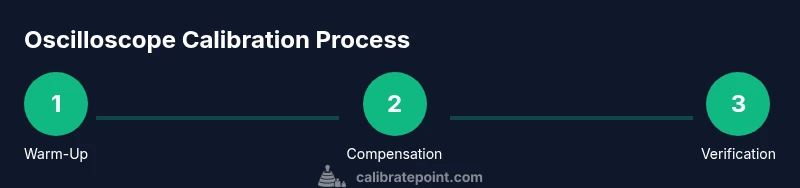
Verification involves cross-checking readings across multiple ranges and probes. Start with a known reference signal, verify probe compensation, then check vertical gain at several amplitudes and offsets. Confirm timebase accuracy by testing a known periodic signal and measuring a known period or edge timing. If results deviate beyond tolerance, revisit compensation, re-check probe connections, and inspect cable integrity. Documentation of each verification step helps you trace drift over time and reproduce results in future sessions.
Common mistakes and safety considerations
Calibration errors often stem from assumptions, poor connections, or unsafe practices. Avoid using damaged probes or unshielded cables near live circuits. Ensure your scope and reference sources are properly grounded. Small impedance mismatches or loose adapters can skew readings, particularly at high frequencies. Always power down equipment if you need to replace probes or make wiring changes, and wear appropriate eye protection when testing high-energy signals.
Best practices for repeatable calibration outcomes
Create a repeatable workflow that you can perform in the same order every time. Use consistent probe settings, disable auto-setup features during calibration, and maintain a clean test environment free of EMI sources. Calibrate after major hardware changes or environmental shifts (temperature, humidity), and re-check periodically. Maintain a central log of all calibrations, including serial numbers of reference instruments, to establish traceability. A routine approach reduces drift-related surprises and builds trust in your measurements.
Documenting calibration results for future reference
A good calibration record includes the date, equipment used, ambient conditions, reference values, and observed results with pass/fail notes. Store data in a structured file or calibration management system, and attach screenshots of waveform captures. Periodically review logs to identify trends that may indicate aging components. Documentation enhances reproducibility, supports audits, and provides a clear path for subsequent calibrations. For teams, sharing conduct details fosters consistency across technicians and shifts.
Tools & Materials
- Oscilloscope(Must be functioning with working channels and access to the analog front end.)
- Reference signal generator (1 kHz square wave or equivalent)(Calibrated source preferred; used for probe compensation and baseline checks.)
- calibrated voltage reference or precision DMM(Used to verify vertical gain accuracy against a known standard.)
- Calibrated oscilloscope probes and accessories(Include 1x and 10x probes; check compensation adjustment tools if available.)
- Grounded test leads and shielded coaxial cables(Minimize noise and impedance mismatches between signal source and oscilloscope.)
- Calibration logbook or digital log(Record settings, results, and date for traceability.)
- Safety equipment (eye protection, insulated tools)(Only necessary when working with high-energy signals or live circuitry.)
Steps
Estimated time: 60-90 minutes
- 1
Power up and warm up the oscilloscope
Turn on the oscilloscope and allow a minimum warm-up period to ensure stable operation. This reduces drift and ensures reference measurements are reliable. During this phase, verify that all channels initialize correctly and that the device reports normal operating temperatures.
Tip: Aim for a 15–20 minute warm-up window; document the start time for traceability. - 2
Connect reference source and set up for probe compensation
Attach the 1 kHz square-wave generator to Channel 1 with an appropriate probe. Display a square-wave at a known amplitude. Use this signal to adjust the probe compensation so the square wave edges are vertical and undistorted.
Tip: Use the 1x/10x probe setting matching your probe to avoid erroneous compensation. - 3
Calibrate vertical gain using a known voltage reference
Apply a precise reference voltage and compare the oscilloscope’s displayed value to the reference. Adjust the vertical scale or gain control until the reading matches within tolerance. Repeat for multiple amplitudes if possible.
Tip: Document the reference value and the resulting display accuracy for traceability. - 4
Verify vertical offset and baseline accuracy
With the reference voltage at zero or near-zero, verify that the baseline aligns with 0 V on the screen. If offset is present, adjust offset controls or recalibrate the channel as needed.
Tip: Offset verification helps detect drift due to input bias or channel calibration drift. - 5
Calibrate the timebase using a stable periodic signal
Provide a known, stable signal and measure its period or edge timing across several divisions. Adjust the timebase settings to ensure measured timing aligns with reference within tolerance.
Tip: Use a high-quality signal source; timing errors are magnified at higher frequencies. - 6
Cross-check channels and ensure consistency
If multiple channels are in use, compare measurements across channels using the same reference signal. Look for consistent gain, offset, and timebase behavior across inputs.
Tip: Cross-channel verification helps catch connector or cable issues. - 7
Save calibration settings and document the run
Store the calibration configuration in the oscilloscope’s non-volatile memory if available. Record results in the calibration log with date, instrument IDs, and operator initials.
Tip: Creating a repeatable template speeds future calibrations and audits.
Questions & Answers
How often should you calibrate an oscilloscope?
Calibration frequency depends on usage, environment, and manufacturer guidance. Many labs perform annual checks or after major repairs; more frequent checks are prudent in high- precision or high-usage contexts.
Most labs calibrate annually or after major repairs, especially in high-precision environments.
Can I calibrate an oscilloscope myself, or should I send it to a service?
Basic calibration can be performed by trained personnel using reference signals and documented procedures. For complex or safety-critical instruments, or when in doubt, use manufacturer service or a certified calibration lab.
You can DIY common checks if you follow documented steps; for complex cases, consider professional service.
What signals are used for calibration?
A stable reference signal such as a square wave of known amplitude is used for probe compensation and vertical gain checks. Other signals may test timebase and trigger accuracy.
We use a stable square wave reference to check compensation and gain, plus other signals for timing.
How do I verify calibration results?
Cross-check measurements against known references across multiple amplitudes and channels. Look for consistency within tolerance and document any deviations for corrective action.
You verify by comparing against known references across channels and recording results.
What are common mistakes during oscilloscope calibration?
Skipping warm-up, using damaged probes, ignoring grounding and shielding, and relying on auto-setup features during calibration. These can introduce errors and obscure drift.
Common mistakes include skipping warm-up, using damaged probes, and neglecting grounding.
Watch Video
Key Takeaways
- Identify calibration needs before measurement
- Use a known reference signal and documented steps
- Document results for repeatability and traceability
- Verify calibration with independent checks regularly