How to Calibrate Red Foods for Accurate Color Measurement
Learn practical steps to calibrate red foods for reliable color measurements using colorimeters and spectrophotometers. This guide covers tools, standards, workflows, troubleshooting, and best practices from Calibrate Point.


Goal: learn how to calibrate red foods for reliable color measurements using a colorimeter or spectrophotometer. You will establish reference standards, execute a repeatable workflow, and interpret results with confidence. This guide from Calibrate Point emphasizes safety, accuracy, and reproducibility in every step.
Why calibrate red foods for reliable color measurement
Calibrate red foods is a phrase you may hear in quality control labs, research kitchens, and field testing. The goal is to ensure that the color data you collect from red foods truly reflects differences in pigment, processing, or formulation, not instrument drift or human bias. According to Calibrate Point, color accuracy starts with a documented calibration routine, repeatable reference standards, and disciplined data handling. Color measurements of red foods are particularly sensitive to lighting, sample prep, and instrument geometry because red pigments absorb and reflect at distinctive wavelengths. When you calibrate properly, you reduce variability and improve comparability across batches, suppliers, and time. This matters whether you are screening new recipes, validating color targets for packaging, or seeking certification for consumer safety and labeling. In short, a robust calibration workflow makes red-food color data trustworthy, traceable, and actionable.
Principles of color measurement and reference standards
Accurate color measurement relies on a well-defined color space and reference references. Most instruments report in standardized color spaces such as CIE Lab*, which separates lightness from chromatic information. For red foods, adjustments are often focused on the a* axis (green to red) and b* axis (blue to yellow) to capture hue shifts and saturation. Reference standards—like white balance tiles, neutral tiles, and dedicated red color standards—serve as benchmarks to align readings before samples are measured. The Calibrate Point approach emphasizes using at least two reference targets per session and documenting ambient conditions. Reproducibility improves when you consistently perform a white reference check, perform background correction, and maintain clean optics. Remember, the goal is not only to obtain a number but to ensure that the number meaningfully reflects the sample’s color under defined viewing conditions.
Tools and materials you'll need
To calibrate red foods effectively, assemble the following essential items and a few optional upgrades depending on your setup:
- A calibrated colorimeter or spectrophotometer, configured for the measurement geometry your samples require.
- A set of reference standards, including a white tile, a neutral grey tile, and a red color standard traceable to a standard color system.
- Clean glass cuvettes or sample cups, along with lint-free wipes for lense cleaning.
- A stable, evenly illuminated measurement area with controlled lighting (preferably a light booth or enclosure).
- A temperature-stable workspace to minimize drift due to ambient temperature.
- Documentation tools (lab notebook or digital log) to capture instrument settings, lot numbers, and date of calibration.
- Optional: a color target chart or pigment reference linked to your lab’s SOPs for cross-checks.
Having these items on hand helps guarantee that each calibration run is consistent and auditable. Calibrate Point recommends you also keep spare reference tiles and an air-tight storage container for standards to prevent humidity-induced changes.
Preparing the instrument and standards to start
Preparation is the most critical step. Start by turning on the instrument well in advance to reach a stable operating temperature, then perform a warm-up sequence as prescribed by the manufacturer. Clean all optical surfaces with lint-free wipes and a compatible solvent if allowed; never rub pigments into glass or fiber optic ports. Calibrate using the white reference tile first to establish the instrument baseline, followed by a neutral tile to correct any color bias. Position samples in identical cups, and ensure the cup surfaces are clean and free of smudges that could affect light scattering. Record instrument settings, geometry, measurement mode, and any environmental notes. A consistent setup makes it possible to compare data across days and operators without re-baselining every time.
Step-by-step calibration workflow (narrative)
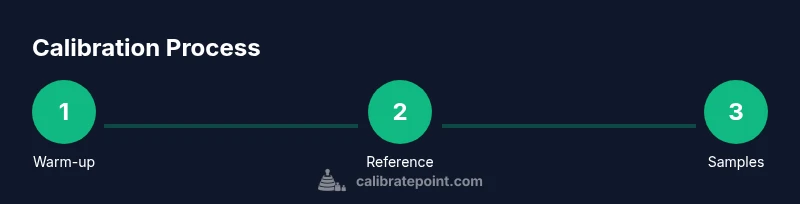
- Power up the instrument and confirm the warm-up time required by the manual. A stable baseline minimizes drift and improves data reliability. 2) Clean optical surfaces and verify the reference standards are within their validity window and free from damage. 3) Place the white reference tile in the measurement port and perform a baseline reading, then record the results. 4) Move to the red pigment reference standard and take multiple readings to establish a repeatable target. 5) Run a blank or solvent control to identify any background signal that should be subtracted from sample readings. 6) Measure the red food samples under identical geometry and path length, ensuring consistent sample thickness and lighting. 7) Compute averages, assess variance, and note any outliers for retesting under the same conditions. 8) Document all steps, instrument IDs, lot numbers, and environmental conditions for traceability. 9) Validate the calibration by re-measuring the red standard and confirming readings remain within predefined acceptance criteria.
Tip: Always keep a copy of the SOP and a quick-reference checklist near the instrument to reduce operator error during busy shifts.
Data interpretation and maintaining accuracy over time
Calibrating red foods yields instrument readings in a defined color space; the key is to interpret changes that reflect true sample differences rather than drift. Compare your sample values to the red standard results and look for consistency across repeats and days. If the a* or hue angle drifts beyond predefined limits, rerun the calibration sequence and verify that standards remain within tolerance. Track drift patterns to identify dates or operators that may require retraining or new standards. Build a small dataset that captures instrument aging, ambient light changes, and sample matrix effects. A robust log makes it easier to justify data decisions and maintain a defensible QA record.
Troubleshooting common issues and quick fixes
- Issue: Inconsistent readings between replicates. Cause: sample preparation variation or inconsistent cup positioning. Fix: standardize cup geometry and use repeatable loading techniques.
- Issue: Drift after calibration. Cause: optics contamination or warm-up not completed. Fix: clean surfaces and extend warm-up time per the manual.
- Issue: Color readings saturate at high pigment levels. Cause: measurement range exceeded. Fix: dilute samples or use an alternate measurement mode.
- Issue: Background signal present in blank. Fix: ensure clean cuvettes, replace solvents, and verify baseline correction settings.
Safety and hygiene considerations when calibrating color instruments for foods
When calibrating processes involving edible products, hygiene and safety matter. Never use contaminated glassware or unwashed cups, and follow your facility’s food-safety SOPs for handling samples. If solvents or cleaning agents are used, ensure ventilation and compatible disposal. Avoid cross-contamination by dedicating measurement tools to color work or thoroughly cleaning between samples. If you work near heat sources or in busy production lines, keep cords secured and instrument surfaces free of residue that could affect readings. Always wear appropriate PPE as dictated by your lab’s policy, and never bypass manufacturer safety guidelines in the name of speed.
Best practices for repeatability and long-term reliability
- Standardize reference standards and store them in controlled conditions. Label them with a lot number and expiration date.
- Calibrate on a fixed schedule or after instrument maintenance, with documentation of changes.
- Use identical sample preparation routines and measurement geometry for all tests.
- Keep a living document of acceptance criteria and revise only with validated data.
- Train multiple operators using the same SOP to minimize human variables and enable cross-checks.
- Periodically cross-validate with an external reference to ensure traceability and alignment with industry practices.
By following these practices, you’ll create a robust calibration program that consistently captures meaningful color differences in red foods.
AUTHORITY SOURCES
This section lists credible external references to guide your calibration practice and data interpretation. Use these sources to validate procedures, terminology, and measurement standards:
- National Institute of Standards and Technology (NIST) – Color science and measurement standards: https://www.nist.gov/
- U.S. Food and Drug Administration (FDA) – Food color and labeling guidelines: https://www.fda.gov/
- International Organization for Standardization (ISO) – Color management and instrument calibration standards: https://www.iso.org/
Tools & Materials
- Colorimeter or spectrophotometer(Configured for CIE L*a*b* or RGB mode as appropriate)
- White reference tile(Traceable to color standards; store in a clean, protected case)
- Neutral gray tile(Used for bias correction)
- Red color standard(Traceable reference for red pigments)
- Clean glass cuvettes or sample cups(Lint-free and free of scratches)
- Lint-free wipes and solvent (if permitted)(Only use solvents approved by instrument manufacturer)
- Measurement enclosure or controlled lighting(Consistent illumination is critical)
- Lab notebook or digital log(Record settings, lot numbers, dates)
- Thermometer or environmental sensor(Monitor ambient conditions)
- Calibrated pipettes and tips(Accurate sample handling)
Steps
Estimated time: 60-75 minutes
- 1
Power up and warm up
Turn on the instrument and allow the recommended warm-up period until readings stabilize. This minimizes drift when you start calibration.
Tip: Record the actual warm-up time in your log for traceability. - 2
Clean optics and verify standards
Wipe all optical surfaces with lint-free wipes and validate reference tiles are undamaged and within tolerance.
Tip: Replace any tile showing scratches or discoloration before proceeding. - 3
Measure white reference
Place the white tile in the measurement port and capture multiple readings to establish the baseline.
Tip: Take at least three readings and use the average for baseline. - 4
Measure red standard
Record readings for the red pigment standard across replicates to determine repeatability.
Tip: Ensure sample geometry remains consistent between readings. - 5
Calibrate using a blank and sample cups
Run a blank to correct background signals, then measure prepared red-food samples under identical conditions.
Tip: Subtract the blank reading from sample results during data processing. - 6
Review and document
Compute averages, assess variance, and confirm readings meet acceptance criteria. Document instrument IDs and environmental conditions.
Tip: Keep a versioned SOP accessible for all operators.
Questions & Answers
What is the purpose of a white reference in color calibration for red foods?
The white reference establishes a baseline for the instrument, enabling correction of biases and ensuring that subsequent color readings are comparable across sessions.
A white reference resets the instrument so color readings of red foods are consistent over time.
Can I calibrate without a red color standard?
A red standard provides a known target to verify accuracy for red pigments. If a red standard is not available, use a certified color reference and document any limitations.
If you lack a red standard, use another certified reference and document the limitations.
How often should I recalibrate the instrument?
Calibrate based on manufacturer's recommendations, after maintenance, or when you notice drift in readings. Maintain a log to track how often recalibration is needed.
Recalibrate after maintenance or observable drift, and keep a log.
What if readings are outside acceptance criteria?
If readings fall outside acceptance, repeat measurements, verify standards, then perform a full recalibration. Inspect optics and sample handling for possible errors.
If readings are out of range, repeat measurements and check standards; recalibrate if needed.
Are there safety concerns when calibrating with edible samples?
Follow your lab's safety SOPs for handling edible materials, sanitize tools, and prevent cross-contamination. Wear appropriate PPE as required.
Follow safety rules and keep equipment clean to prevent contamination.
What data should be logged during calibration?
Log instrument ID, calibration date, operator, measurement geometry, reference lot numbers, ambient conditions, and results with acceptance decisions.
Record all settings, standards, and results for traceability.
Watch Video
Key Takeaways
- Calibrate red foods with consistent geometry and lighting.
- Use white and red standards for traceable readings.
- Document all steps for repeatability and audits.
- Address drift quickly with a fresh calibration run.