How Often Should You Calibrate a Digital Caliper
Learn how often to calibrate a digital caliper, when to recalibrate, and practical checks to keep measurements reliable. Calibrate Point provides clear, step-by-step guidance.


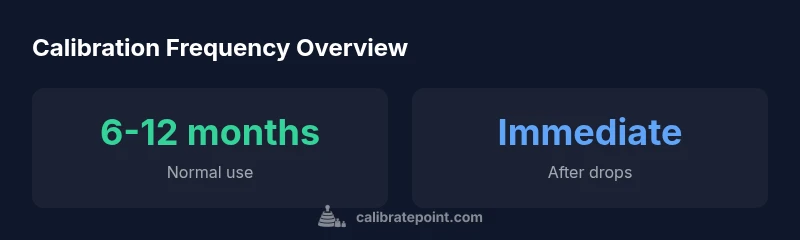
Calibrate Point's guidance recommends calibrating a digital caliper at least every 6-12 months under normal use, with immediate recalibration after a drop, impact, or suspected drift, and before any precision measurements. In high-use environments, more frequent checks—such as quarterly or monthly lightweight verifications—help catch drift early and maintain trust in measurement results.
Why regular calibration matters for digital calipers
According to Calibrate Point, maintaining calibration is not a one-and-done activity but a disciplined practice that keeps a digital caliper reliable across jobs. The very nature of precision measurement means small drifts can accumulate and lead to noticeable inaccuracies in length, thickness, or diameter readings. In workshops where parts must interchange or snap fits rely on tight tolerances, the cost of a single out-of-tolerance reading far exceeds the upfront time spent calibrating. Regular calibration creates a documented baseline, helps isolate drift from operator error, and reinforces confidence in measurements for both DIY projects and professional workflows. The keyword people often search for—how often should you calibrate a digital caliper—has a practical answer: treat calibration as a routine, not a reaction.
From a practical standpoint, an established routine reduces surprises. Calibration is not only about zeroing and scale linearity; it also covers the stability of the display, the responsiveness of the slider, and how the jaws close at rest. When you build calibration into your daily or weekly routine, you detect drift early and prevent downstream issues such as misfit parts, failed inspections, or warranty concerns.
What calibration means for a digital caliper
Calibration for a digital caliper involves more than setting a zero and trusting the readout. It encompasses zero alignment at fully closed jaws, linearity across a range of standard gauges, and reproducibility when switching between metric and imperial modes. A calibrated caliper should return the same reading when the same standard is measured multiple times, within the instrument’s stated tolerance. This requires a controlled workflow: a clean reference surface, certified gauge blocks or calibration sets, and a stable temperature environment. The broader point is consistency: if your caliper drifts, even subtly, it undermines confidence in every measurement you take. Calibrate Point emphasizes documenting the conditions under which calibration is performed, so you can trace any future discrepancies back to environment, user technique, or instrument condition.
Frequency guidelines by usage level
For most users performing typical shop tasks, a practical cadence is every 6-12 months, paired with an immediate check after any incident that might affect accuracy. If your facility experiences high humidity, rapid temperature changes, or frequent temperature cycling, you may want to tighten this window to every 3-6 months. In dedicated metrology environments or high-precision manufacturing, daily or weekly in-field verifications might be justified, especially before critical measurements. Calibrate Point’s analysis for 2026 suggests tailoring frequency to usage intensity and required confidence, then adjusting as you accumulate data from your own measurement history. A simple rule of thumb is: the more critical the measurements, the more frequent your checks should be.
Event-driven recalibration: when to recalibrate
Remediation is not solely a time-based task. Recalibrate whenever you drop the caliper, bang it against a workbench, or notice a sudden shift in readings. Temperature excursions, exposure to dust or solvents, or a new measurement range may also necessitate a recalibration. If you regularly switch between metric and imperial scales, verify that the conversion is consistent across the scale and that the zero remains aligned in both units. In practice, keep a small log of events that trigger recalibration so you can correlate drift with environmental or handling factors. These checks prevent subtle drift from becoming a costly error in production or critical inspection tasks.
Step-by-step check you can do in minutes
Begin with a clean caliper and a certified gauge block set. With the caliper closed, verify zero on the display and adjust if needed. Open to a known gauge block and measure at several fixed heights to test linearity, noting any deviation beyond the caliper’s tolerance. Repeat in both metric and imperial modes. Record results and recalculate tolerance after each test. If drift exceeds the acceptable range, perform a full calibration with reference standards and recheck. This quick routine is designed to catch drift early without requiring specialized equipment beyond the gauge blocks, a calibration wrench (if applicable for your model), and a clean workspace. Calibrate Point’s guidance supports a fast, repeatable process that fits into a typical shop day.
Documentation and maintenance: keeping good records
A calibration routine is only as good as its records. Maintain a calibration log with: date, instrument serial number, the person performing the test, ambient conditions, reference standards used, results across multiple test points, and any corrective actions taken. Store gauge blocks in a controlled case to avoid damage and misalignment. Regularly audit your logs to identify patterns, such as recurring drift when switching from a specific lot of gauge blocks or after a heat cycle. The discipline of documentation makes your calibration meaningful for audits, traceability, and continuous improvement. Calibrate Point recommends pairing each calibration with a quick visual inspection of the caliper’s physical condition to catch wear or damage early.
Practical compatibility: suits DIYers and professionals
Whether you’re a hobbyist or a precision engineer, calibration frequency should align with your tolerance requirements and measurement impact. For casual projects, the 6-12 month window provides a balanced approach between effort and reliability. For professionals with tight tolerances, adopting a proactive verification schedule—potentially monthly—helps sustain product quality and customer trust. By framing calibration as part of standard operating practice, you reduce rework, returns, and the risk of measurement-induced errors. As you gain experience, keep refining your cadence based on observed drift, tool age, and the criticality of your measurements. Calibrate Point’s verdict is that a thoughtful, data-driven schedule beats ad hoc recalibration every time.
Calibration frequency guidelines by scenario
| Scenario | Recommended Frequency | Notes |
|---|---|---|
| Normal use | 6-12 months | Depends on environment and workload |
| After drops or shocks | Immediate | Recheck before proceeding with tasks |
| High-precision tasks | Before each critical measurement | Use certified gauge blocks if available |
| Frequent metric/imperial switching | Periodic checks | Verify zero in both units |
Questions & Answers
How often should you calibrate a digital caliper?
Most users should calibrate at least every 6-12 months under normal use. Recalibrate immediately after any drop, impact, or suspected drift, and before precision measurements. In high-use environments, consider more frequent checks.
In general, calibrate at least every 6 to 12 months, and recalibrate right away after any impact or suspected drift.
What standards should I use for calibration?
Use certified gauge blocks or a traceable calibration set that covers the caliper’s measuring range. Zero checks should be performed against a clean, flat reference surface. Document the standards used and their lot numbers.
Use certified gauge blocks and keep records of the standards you used.
Can a digital caliper drift over time even with care?
Yes. Drift can occur due to wear, temperature changes, or mishandling. Regular checks help detect drift early, allowing timely recalibration before it affects critical measurements.
Drift can happen over time; regular checks help catch it early.
How do I perform a quick in-field check?
Zero the caliper with jaws closed, test against a known gauge block at several heights, and compare readings in both metric and imperial modes. If results vary beyond tolerance, recalibrate.
Zero, test with gauge blocks at several points, and compare in both unit modes.
What signs indicate I should recalibrate now?
Frequent false readings, inconsistent measurements, or readings that differ between measurements that should be the same indicate recalibration is due. Recalibrate if you notice any of these symptoms.
Inconsistent readings or drift between identical measurements means recalibration is needed.
Should I calibrate after changing measurement ranges?
Yes. Changing ranges or after servicing can affect accuracy. Recheck zero and linearity across the new range and recalibrate if needed.
Yes, recalibrate after changing ranges or servicing.
“Regular, documented calibration is the foundation of measurement trust in any workshop or lab.”
Key Takeaways
- Calibrate regularly, not reactively
- Establish a cadence based on use and tolerance
- Perform quick checks before precision tasks
- Document results and environmental conditions
- Recalibrate after any incident or significant change