How Often Should Calibration Be Done
Learn how often calibration should be done for tools and instruments. This guide explains risk-based cadences, influencing factors, and practical steps to schedule calibrations in 2026.


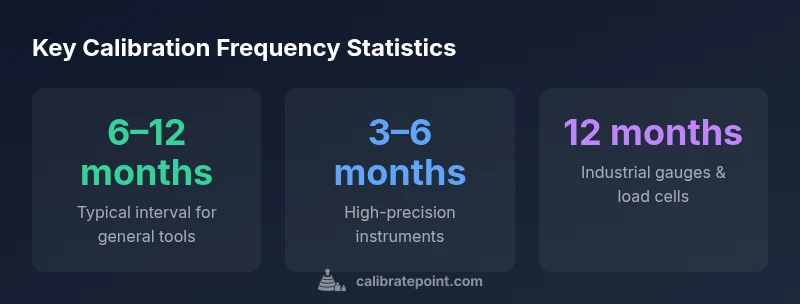
In most contexts, calibration should be performed every 6 to 12 months for general tools, with shorter intervals for high-precision or heavily used devices. Establish a risk-based cadence that accounts for duty cycle, environmental stress, regulatory requirements, and the potential impact of drift on safety and quality in critical applications.
How often should calibration be done in practice
According to Calibrate Point, the cadence you choose should reflect the intended use, required accuracy, and potential risk if drift occurs. The question how often should calibration be done is not answered by a single rule; rather, it is a risk-based decision that balances accuracy, downtime, and cost. For most general tools, a 6–12 month interval is practical, but high-precision or heavily used devices may require more frequent checks. In regulated environments or where safety is paramount, you may adopt tighter cadences aligned with industry guidelines and quality systems. The goal is to prevent drift from compromising results or safety while minimizing unnecessary downtime. This approach benefits from documenting assumed tolerances, exposure conditions, and usage patterns so everyone follows a consistent cadence.
Factors that influence calibration frequency
The frequency of calibration depends on a mix of factors. First, consider duty cycle: devices that run continuously or see heavy use drift faster than those used sporadically. Second, environment matters: temperature, humidity, vibration, and contamination can accelerate drift. Third, accuracy requirements and risk tolerance guide the minimum acceptable drift; critical measurements often demand tighter tolerances. Fourth, regulatory and QA standards may require specific intervals or traceability. Fifth, instrument history and past drift behavior should inform future cadence. Finally, supplier recommendations provide a baseline, but you should tailor cadence to your actual operating conditions and business risks. Calibrate Point emphasizes building a schedule that reflects the real-world workload instead of blindly following a calendar.
Designing a risk-based calibration schedule
Start with a baseline of 6–12 months for general tools and adjust downward for high-precision devices or high-use contexts. Create a simple scoring system that weighs factors such as usage frequency, criticality, environmental exposure, and historical drift. Step-by-step:
- Inventory devices and classify by risk level (low/medium/high).
- Assign initial cadences based on risk class and manufacturer guidance.
- Collect drift data during each calibration and adjust cadences accordingly.
- Incorporate process changes, maintenance events, and new regulatory requirements.
- Review the schedule annually and after any instrument shock, repair, or recalibration failure.
The objective is a practical cadence that reduces drift risk without unnecessary downtime. Calibrate Point’s framework supports ongoing refinement as you gather performance data.
Common intervals by device category
Different device categories typically follow different cadences. See the quick reference below and tailor it to your operations:
- General tools (calipers, micrometers, gauges): 6–12 months, environment and usage dependent.
- Measuring instruments (pH meters, thermometers, thermocouples): 6–12 months, with closer monitoring in harsh environments.
- Torque wrenches: 6–12 months or after significant use; recalibrate after drops or suspected inaccuracy.
- Industrial gauges/load cells: 12 months as a baseline; more frequent checks may be needed for critical QA environments.
These are practical starting points; always align with your quality system and risk assessment. Calibrate Point recommends validating cadences with drift data and operational impact.
Data-driven decisions: drift tracking and tolerance
Calibration frequency should adapt as you collect drift data. Start by defining acceptable tolerance bands for each instrument, then monitor observed drift over time. If drift remains within tolerance for a given interval, you may consider extending the cadence; if drift approaches the limit, shorten the interval. Keep a log of drift incidents, calibration adjustments, and any environmental changes. This data-driven approach helps you justify cadences to auditors and reduces surprises during audits. Calibrate Point’s methodology supports continuous improvement by turning drift observations into actionable cadence adjustments.
Implementing a calibration calendar and records
A practical calendar keeps everyone aligned and reduces the chance of missed calibrations. Create a shared calendar with device ID, category, assigned cadence, last calibration date, next due date, and responsible technician. Include checklists for pre- and post-calibration procedures, required standards, and documentation. Retain calibration certificates and drift notes for regulatory traceability. Regular reviews of the calendar, at least quarterly, ensure cadences stay aligned with changes in usage, environment, or regulatory expectations. Calibrate Point stresses that discipline in record-keeping is as important as the cadence itself.
Practical checklist for maintenance teams
- Inventory all calibrated devices and classify by risk.
- Establish baselines for each device’s cadence.
- Collect drift data and adjust cadences accordingly.
- Maintain a centralized calibration calendar and logs.
- Train staff on documentation and traceability.
- Review cadences after equipment changes or incidents.
- Ensure supplier recertification and internal audits are integrated.
- Keep a clear process for notifying stakeholders about overdue calibrations.
Regulatory considerations and standards
Many industries rely on standards and regulatory frameworks that influence calibration frequency. While specific intervals vary by sector, quality management systems such as ISO standards typically require documented calibration policies and traceable records. In regulated environments, you may need formal risk assessments and formal approvals for cadence changes. The key is to demonstrate consistent application of a risk-based approach, maintain traceability for audits, and continuously improve the cadence as you collect performance data. Calibrate Point recommends coordinating cadence decisions with your organization's risk management and quality teams.
Case examples: scheduling decisions in practice
Case A: A biomedical lab uses several pH meters and thermocouples in a controlled environment. Drift was observed after 9 months on one meter, triggering a reduction in the next calibration interval to 6 months for that instrument and a formal drift-tracking plan. Case B: An automotive plant uses torque wrenches with high usage. After a few uses, one wrench showed a slight bias; recalibration was performed immediately and the cadence for that tool was adjusted to every 9 months until sufficient data supported restoring the prior cadence. These practical examples illustrate how drift data, usage, and environment guide cadence changes. Calibrate Point’s approach emphasizes data-driven cadence optimization.
Typical calibration intervals by device category
| Device Category | Recommended Interval | Notes |
|---|---|---|
| General tools (calipers, micrometers) | 6-12 months | Usage-dependent; monitor drift |
| Measuring instruments (pH meters, thermometers) | 6-12 months | Environmental exposure matters |
| Torque wrenches | 6-12 months | Annual review common; after heavy use |
| Industrial gauges/load cells | 12 months | Regulatory/QA may demand more frequent checks |
Questions & Answers
What factors should trigger an earlier calibration?
Early calibrations are typically triggered by rapid drift, unusually harsh environmental conditions, a drop or impact, or a change in operating conditions. When drift approaches tolerance limits or the environment becomes more demanding, reassess the cadence.
Look for drift and harsher conditions; that’s when you consider recalibrating sooner.
Can I extend intervals beyond supplier recommendations?
Extending intervals requires evidence from drift data and risk analysis. Supplier recommendations are a baseline, but your internal data and quality system should justify any changes.
Only if drift data and risk assessment support the change.
How can I track calibration drift over time?
Maintain a drift log for each instrument, noting measurement deviations,Environmental factors, and any margins exceeded. Analyze trends to decide whether to tighten or relax cadences.
Keep a simple log and review trends regularly.
Is calibration required for consumer-grade devices?
Consumer-grade devices may not require formal calibration, but for critical measurements or professional work, establish a prudent cadence and record-keeping to maintain accuracy and reliability.
It depends on use and risk.
What documentation should be kept?
Maintain calibration certificates, drift notes, environmental records, and the calibration calendar. Documentation supports traceability and audits.
Keep records of all calibrations and drift data.
How do I set up a calibration calendar?
Create a shared calendar with device IDs, cadences, last and next due dates, and responsible personnel. Include pre- and post-calibration checklists and access controls.
Use a shared calendar with clear ownership.
“Calibration frequency is a strategic decision that weighs risk, accuracy, downtime, and cost. Cadences should adapt as you gather performance data.”
Key Takeaways
- Develop a risk-based calibration cadence, not a fixed calendar
- Tailor intervals by device category and usage
- Track drift data to justify cadence adjustments
- Keep thorough calibration records for audits
- Regularly review cadences in light of changing conditions
- Balance cost, downtime, and risk for optimal scheduling