How to Calibrate a Micropipette: Step-by-Step Guide
Learn how to calibrate a micropipette with a clear, step-by-step method, tool list, data logging, and QA checks to ensure accurate liquid handling in your lab.


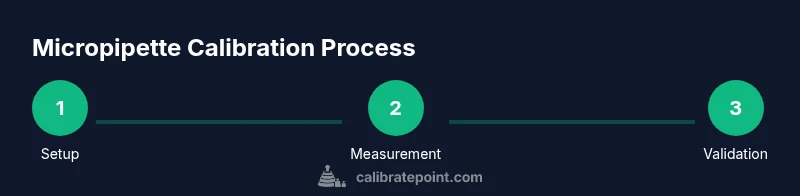
According to Calibrate Point, by the end, you will know how to calibrate a micropipette for accurate liquid handling. This guide covers gravimetric methods, essential tools, environmental considerations, data collection, and QA checks. Expect a thorough session of roughly 90 minutes, including setup, measurements, data analysis, and documentation you can reference for audits or quality control.
Why calibrate a micropipette and how it affects results
In any lab workflow, small volume measurements drive outcomes, so calibration is not optional—it's essential. When a micropipette is out of spec, delivered volumes drift, leading to incorrect dilutions, failed assays, and wasted reagents. Knowing how to calibrate a micropipette helps you detect drift and lock in accuracy. The Calibrate Point team notes that regular calibration improves traceability and confidence in routine experiments. In practice, most labs start with a baseline measurement using a gravimetric approach, then compare against the manufacturer’s nominal volumes. Acceptable performance is defined by your SOP or relevant standards, and results should be archived for future audits. Finally, calibration is not a one-time event; it is a routine control that should align with your QA calendar and experimental needs.
This foundational section establishes why precise liquid handling matters, from accurate dilutions to reliable assay results. It also frames the habit of regular checks as a non-negotiable part of lab practice, aligning with industry expectations and compliance requirements. Emphasize consistency in technique and documentation as the cornerstones of trustworthy calibration routines.
Calibration methods overview
There are several ways to verify micropipette accuracy, but most labs rely on gravimetric or dye-based checks. Gravimetric calibration uses a high-precision balance to measure the mass of water dispensed by the pipette, converting mass to volume. Dye-based or spectrophotometric checks can verify delivered volumes indirectly by measuring absorbance changes, but gravimetric remains the gold standard for routine QA due to its direct relationship with volume. Regardless of method, the goal is to confirm that the instrument delivers within the lab’s defined tolerances and to document any adjustments or service actions. The choice of method often depends on available equipment, required accuracy, and your lab’s standard operating procedures. Calibrate Point’s guidelines emphasize consistency over complexity and advocate simple, auditable workflows.
In practice, gravimetric calibration is typically preferred for routine QA because it provides a direct volume proxy through known water density. Dye-based checks can supplement gravimetric data when a secondary verification is desirable, but they should not replace weight-based measurements for primary calibration. Ensure your SOPs clearly specify acceptance criteria, data recording formats, and responsibilities for re-testing or instrument service.
Gravimetric calibration workflow: setup and baseline
To begin a gravimetric calibration, prepare a stable, draft-free bench and a calibrated analytical balance. Set the micropipette to the nominal volume you want to verify, and choose a compatible tip. Place a clean weighing boat on the balance, tare to zero, and ensure room temperature water is ready. The baseline is established by weighing the empty boat, then repeatedly aspirating and dispensing the target volume into separate boats or vessels, noting each mass. After each dispense, wait a moment to allow temperature equilibration and minimize evaporation. Record all data in a calibration log, including date, operator, instrument serial, nominal volume, measured mass, and any anomalies. The key is repeatability, not a single successful trial.
This workflow gives you a practical, auditable path from setup to initial results. It emphasizes controlling variables such as tip type, plunger technique, and water temperature to minimize sources of error. A well-documented baseline makes subsequent adjustments easier to justify and trace.
Environment and materials: preparing for accurate measurements
Environmental control is critical. Keep the balance in a low-vent, vibration-free area and avoid drafts that can alter evaporation rates. Use room-temperature distilled water and a consistent bottle or container to avoid density variation. Document ambient temperature and, if possible, air density corrections. Choose tip type and lot consistently; replacing tips between measurements helps eliminate variability from tip geometry. Finally, maintain a clean workspace—wipe spills promptly and keep weighing boats dry between trials.
By standardizing the environment, you reduce noise in the data, enabling clearer decisions about instrument performance. Consistent materials and logistics support repeatable results, which are essential for credible calibration records and ongoing QA.
Data collection and analysis: turning measurements into a calibration value
For each trial, determine the delivered water mass by subtracting the tare mass (empty boat) from the mass of boat plus dispensed water. Convert mass to volume using the density of water at the measured temperature; in most labs this density is very close to 1 g/mL, but it's best to confirm. Compute the mean and standard deviation across replicates to assess precision, and compare the mean delivered volume to the nominal setting. If results fall outside your acceptance criteria, record deviations, investigate potential causes (tip seating, plunger condition, or user technique), and plan a re-test after adjustments.
Data integrity is the backbone of credible calibration. A clear calculation trail supports audits and future troubleshooting, and it helps verify whether the instrument remains within specified tolerances or requires servicing.
Maintenance, re-calibration, and routine checks
Calibration is not a one-off task. Schedule regular calibrations based on usage, criticality of assays, and compliance requirements. After service or repairs, re-run a full gravimetric check to confirm restored performance. Keep a versioned log and archive historical data to demonstrate trend and traceability. Train operators on consistent pipetting technique, and consider periodic inter-lab comparisons to benchmark performance.
Regular maintenance creates predictable performance. It also reduces the risk of unexpected downtime and ensures continuity of accurate measurement across assays and teams.
Documentation and audit-ready records
All calibration activities should result in an auditable record. Include instrument ID, nominal volumes tested, replicate counts, measured masses, calculated delivered volumes, environmental conditions, operator, and date. Use a standardized calibration certificate template and digital backups to prevent data loss. Regular reviews by a supervisor or QA officer help ensure compliance with standards and internal SOPs. Record any corrective actions and the next scheduled calibration.
Sound documentation supports traceability, audit readiness, and continuous improvement. It also provides a clear historical narrative that demonstrates adherence to calibration policies and the stability of measurements over time.
Common pitfalls and how to avoid them
Avoid drift by maintaining stable room conditions and consistent technique. Don’t reuse tips across trials or skip repeated measurements, as a single result can mislead. Evaporation is a subtle enemy; weigh quickly and consistently, and consider closed containers if appropriate. Ensure the balance is calibrated and warmed up before use, and never calibrate in proximity to strong magnetic or electronic interference. Finally, document every step to support audits and continuous improvement.
Anticipating and mitigating common mistakes saves time and improves data quality. A proactive, methodical approach reduces rework and strengthens confidence in calibration outcomes.
Tools & Materials
- Micropipette (adjustable volume)(Verify the volume setting matches the nominal value you test.)
- Pipette tips (appropriate size)(Use new tips for each replicate to avoid carryover and geometry changes.)
- Analytical balance with draft shield(Calibrated and level; place on a vibration-free surface.)
- Weighing boats or microtubes(Clean, dry, and compatible with small water volumes.)
- Distilled or deionized water(Room temperature preferred; avoid saline solutions.)
- Thermometer or temperature probe(Record ambient water temperature for density corrections.)
- Calibration log sheet or software(Capture date, operator, instrument ID, volumes, weights.)
- Calibration weights (optional)(For balance validation or cross-checks.)
- Lint-free wipes and isopropanol(Keep the workspace clean and tips free of residues.)
Steps
Estimated time: 1 hour 30 minutes
- 1
Inspect and set the micropipette to the target volume
Begin by visually inspecting the instrument for damage and ensuring the volume setting matches the test nominal. Check the plunger action for smooth travel and verify the display aligns with the knob setting. If you find wear or a stiff plunger, service or replace the seals before proceeding.
Tip: Test the plunger a few times with a dry tip to feel any binding before loading liquid. - 2
Prepare the environment and gather materials
Clear a stable, draft-free workspace with a clean balance and weighing boats. Bring room-temperature water and a thermometer to monitor ambient temperature. Confirm that tips of the correct size are ready and that all data logging tools are accessible.
Tip: Avoid working near fans or door drafts that can cause evaporation or air currents. - 3
Tare the weighing boat and prepare water
Place the weighing boat on the balance and tare to zero. Add a small volume of room-temperature water to the boat to verify baseline mass. Keep the boat steady and avoid spills that would compromise the tare calculation.
Tip: Use a clean, dry boat for every trial to maintain consistency. - 4
Aspirate and dispense the target volume into separate boats
With the pipette, aspirate the exact nominal volume and dispense into a new weighing boat for each replicate. Use a consistent dispensing speed and keep the tip immersed briefly to minimize air gaps. Repeat for multiple replicates to assess precision.
Tip: Avoid creating air bubbles by keeping the tip toward the liquid surface and controlled plunger release. - 5
Weigh each dispensed sample to determine delivered mass
Weigh the boat with the dispensed water and subtract the tare mass to obtain the delivered mass. Repeat measurements to build a data set suitable for statistical analysis. Record data promptly to prevent transcription errors.
Tip: Record the mass to the nearest 0.1 mg to preserve data integrity. - 6
Analyze data and assess accuracy
Convert measured masses to volumes using the water density at the measured temperature. Calculate the mean and standard deviation across replicates and compare against the nominal volume. Identify any outliers and investigate potential causes (tip seating, technique, or instrument wear).
Tip: If a result consistently deviates, consider recalibrating or servicing the micropipette. - 7
Document results and plan next actions
Enter all results into the calibration log, noting instrument ID, date, operator, and observed trends. Decide whether calibration passes or if adjustments are required, and schedule the next calibration window. File all supporting documents for future audits.
Tip: Create a calibration certificate and keep a digital backup.
Questions & Answers
What is micropipette calibration and why is it important?
Micropipette calibration verifies that delivered volumes match the nominal setting within defined tolerances. It improves accuracy and precision in liquid handling, which is essential for reliable assays and reproducible results.
Micropipette calibration checks that your pipette delivers the right volume, ensuring accurate experiments and dependable data.
What is the gravimetric method for micropipette calibration?
The gravimetric method weighs the water dispensed by the pipette on a precision balance, converting mass to volume. It is a direct, widely accepted approach for validating delivery volumes.
The gravimetric method uses a precise balance to measure the weight of the dispensed water and converts that to volume.
How often should a micropipette be calibrated?
Frequency depends on usage, criticality of assays, and policy. Many labs perform routine calibrations annually or after servicing, with interim checks as part of QA.
Calibration frequency depends on how often you use the pipette and the importance of accuracy for your work.
What is considered an acceptable tolerance for micropipettes?
Tolerance is defined by manufacturer specifications or your lab SOP. Follow established acceptance criteria and document any deviations with corrective actions.
Tolerance should stay within your SOP or manufacturer limits, and you should record any deviations.
Can I calibrate a micropipette at home?
Calibration typically requires a stable lab setup, calibrated balance, and controlled conditions. If you lack essential equipment, seek professional calibration services or use a properly supervised facility.
Calibration is best done in a controlled lab environment with proper equipment.
What should I do if a micropipette is out of tolerance?
Document the deviation, check for user technique issues, reseat the tip, and retry. If still out of tolerance, schedule service or supplier replacement and quarantine affected samples.
If out of tolerance, investigate causes, retest, and arrange servicing or replacement as needed.
Watch Video
Key Takeaways
- Calibrate regularly to maintain accuracy
- Use a consistent gravimetric method with controlled environment
- Document results for traceability and audits
- Establish clear acceptance criteria and action plans