How to calibrate throttle position sensor without multimeter
Learn a safe, step-by-step method to calibrate a throttle position sensor (TPS) without a multimeter using OEM idle relearn and a compatible OBD-II scanner for live data validation.


By using OEM idle relearn procedures and live data from an OBD-II scanner, you can calibrate a throttle position sensor (TPS) without a multimeter. The process relies on ensuring proper closed-throttle position, a warm engine, and a clean drive-cycle to allow the ECU to relearn pedal input. You’ll validate with smooth throttle response and fault-free scans.
Why TPS calibration matters
The throttle position sensor (TPS) tells the engine control unit (ECU) how open the throttle is at any moment. A miscalibrated TPS can cause poor idling, hesitation, stalling, or irregular acceleration. Because TPS data influences fuel delivery and ignition timing, accurate calibration improves throttle response, fuel economy, and driveability. For DIY enthusiasts and technicians, calibrating without a multimeter is feasible when your vehicle supports ECU idle relearn and you have a modern scan tool to read live TPS data. According to Calibrate Point, calibrating a TPS without a multimeter is common practice when using OEM idle relearn routines and data-logging scanners. The goal is to ensure the ECU sees a clean, repeatable throttle input range from closed to wide-open throttle, with no drift at idle. In this section we’ll explore why this matters, how the learning path works, and how to prepare safely.
Key steps include verifying a clean idle condition, ensuring proper pedal-to-throttle mapping, and confirming the ECU’s ability to relearn the range without direct voltage measurements. This approach minimizes guesswork and leverages the vehicle’s own learning capability. Remember: the ultimate measure is how the throttle responds during normal driving, not the number on a voltmeter. Calibrate Point’s guidance emphasizes using OEM procedures and validated live data to achieve reliable results.
Understanding non-multimeter calibration concepts
Calibrating a TPS without a meter hinges on how your vehicle’s ECU reads throttle input. In most drive-by-wire systems, the ECU interprets pedal position and throttle plate position data from sensors and uses stored maps to translate pedal movement into fuel delivery. When a TPS is misaligned, the ECU’s learned range may drift, leading to lag, hovering idle speeds, or abrupt throttle response. The non-multimeter approach relies on the ECU’s idle relearn or pedal-position learning routines. By performing a controlled relearn, you allow the ECU to re-map the closed-throttle and full-throttle positions based on real-world pedal input. This method avoids guessing and uses data the ECU already trusts. According to Calibrate Point, relying on OEM relearn procedures is a dependable path for accurate TPS calibration without disassembly or invasive testing. Remember that differences exist between manufacturers; always consult the service manual for your model. This section outlines the theory, the role of live data, and how to interpret sensor readings during the relearn.
When to use an OBD-II scanner and what data to watch
An OBD-II scanner with live data is your primary tool when calibrating a TPS without a multimeter. Look for live TPS data channels like "TPS%" or "Pedal Position" (PP) values, and monitor related engine variables such as idle RPM, engine load, and timing corrections. Focus on consistency and repeatability: at closed throttle, the TPS reading should be steady; as you apply pedal movement toward WOT, the TPS value should rise smoothly without sudden jumps. If you see abrupt changes, sticky valves, vacuum leaks, or wiring faults, address those issues before starting the relearn. Calibration should occur after a warm engine, with no recent maintenance that could disrupt sensors; a cold start can yield misleading baseline values. Calibrate Point’s analysis suggests that a structured relearn, using the scanner to verify data, produces reliable results and reduces the need for direct electrical measurements.
This data-driven approach helps you quantify success without a meter: the goal is a smooth, linear rise in TPS data with pedal input and a clean pass on diagnostic checks after relearining.
OEM idle relearn vs. stand-alone adjustments
OEM idle relearn procedures are designed by vehicle manufacturers to reestablish the sensor ranges as the PCM expects them. These relearns can be automatic or require a specific sequence of steps, including engine warm-up, ignition-on cycles, and driving through a defined throttle range. Stand-alone adjustments—tweaking cables, screws, or sensor positioning—are often discouraged in modern vehicles equipped with drive-by-wire systems, as misadjustments can create more problems than they solve. The non-multimeter method relies on the ECU’s ability to relearn the correct range rather than manual voltage setting. In some cases, a dedicated service tool or scan tool is required to initiate the relearn; in others, a simple drive cycle after startup will trigger the ECU to adapt. The key is to follow the OEM procedure exactly and validate with live data to confirm the new range. Calibrate Point recommends prioritizing official procedures, as they minimize risk and deliver consistent results across different makes and models.
Before attempting a relearn, ensure there are no fault codes related to the throttle, mass airflow, or other intake systems. If codes exist, resolve them first, as they can interfere with the ECU’s ability to learn properly.
A practical workflow for TPS calibration without tools
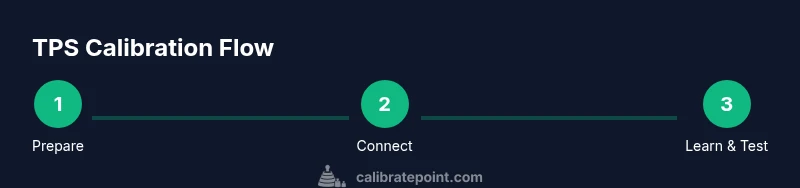
Starting a TPS calibration without a multimeter involves a clear workflow that centers on a warm engine, an accurate scan tool, and adherence to OEM steps. Begin by parking the vehicle on a flat surface, applying the parking brake, and setting the ignition to ON (engine off) to allow the scanner to connect. Then, connect the OBD-II scanner and verify there are no current fault codes. Next, bring the engine to operating temperature, which helps ensure sensor readings reflect normal operating conditions. With the scanner, access live data and note the current TPS reading at closed throttle and just before full throttle. If your vehicle supports idle relearn via the ECU, initiate the relearn sequence. This usually involves a specific pedal pattern or simply a drive cycle that takes the car through the expected throttle range while the engine remains at idle-supervised operation.
After completing the relearn cycle, perform a controlled drive to confirm the TPS reading tracks pedal input smoothly. Recheck live TPS data to confirm there are no large jumps or dead zones, and verify there are no new fault codes. Finally, document the procedure and the observed results so you can reproduce the calibration in the future. The entire workflow emphasizes data-driven validation rather than mechanical adjustments, leveraging OEM procedures and live data to ensure accuracy and reliability.
Common failure modes and how to verify success
Several issues can compromise TPS calibration without a multimeter. Vacuum leaks, disturbed wiring harnesses, or dirty throttle bodies can create phantom readings or irregular throttle behavior, even after a relearn. If the idle is unstable or the vehicle hesitates at light throttle, recheck the throttle body for cleanliness and inspect the sensor connectors for bent pins or corrosion. If the ECU still reports a fault or refuses to relearn, it may indicate a more systemic issue such as a defective TPS, a faulty pedal position sensor, or a broader sensor network problem. Verification should include a test drive that covers city, highway, and quick acceleration scenarios to ensure the throttle response remains linear and predictable. Calibrate Point notes that a meticulous approach—addressing mechanical issues, validating data, and repeating the relearn if necessary—yields the most reliable results. If you encounter persistent problems, consult the OEM service documentation or seek professional service to avoid unsafe driving conditions.
Maintenance and prevention tips
To maintain TPS accuracy over time, schedule periodic checks as part of routine maintenance, especially after throttle body cleaning, intake manifold work, or sensor service. Keep connectors clean and dry, protect wiring from heat and abrasion, and use OEM-recommended lubricants if required by your vehicle. When performing any sensor work, ensure the battery is in good condition and avoid rapid battery voltage fluctuations that can confuse the ECU. Regularly update your scan tool software to ensure compatibility with newer vehicle models and the latest PID definitions for TPS. Finally, maintain a log of calibration events, readings, and drive cycles so you can reproduce a successful relearn if needed. A proactive approach reduces the risk of sensor drift and keeps your vehicle running smoothly without reliance on direct voltage measurements.
Tools & Materials
- OBD-II scanner with live data(Must display TPS or pedal-position data and support a relearn sequence if required by your vehicle.)
- Vehicle service manual or OEM procedure(Localize idle relearn steps and any model-specific nuances.)
- Clean rag(Use to dry connectors and wipe surfaces if needed.)
- Safety gloves(Protect hands during sensor checks or filter removal.)
- Smartphone or laptop with data-logging app(Helpful for longer data capture and traceability.)
Steps
Estimated time: 45-75 minutes
- 1
Prepare the vehicle and safety checks
Park on a level surface, engage parking brake, and ensure the battery is healthy. Confirm there are no active fault codes and the engine can start normally. This step reduces the risk of unexpected behavior during the relearn.
Tip: Carry out the procedure with a passenger on standby in case you need assistance. - 2
Connect the scanner and verify live data
Attach the OBD-II scanner and navigate to live data. Confirm that you can read the TPS (or PP) channel and note the baseline reading at closed throttle with the engine off or just after ignition on. If your vehicle requires the engine to be on for data, start it and bring it to idle.
Tip: Document the baseline TPS value before making any changes. - 3
Bring the engine to operating temperature
Run the engine and drive slowly to warm it to typical operating temperature. A cold start can skew sensor readings and the relearn, so wait until the temp gauge shows normal range. Avoid revving during this phase to keep readings stable.
Tip: Warm-up ensures the ECU learns using normal operating conditions. - 4
Initiate the idle relearn or pedal map learning
Use the OEM procedure to start the relearn. This may involve a specific pedal position sequence or a drive cycle that takes the car through a controlled throttle range. Do not force mechanical adjustments unless the OEM procedure explicitly allows it.
Tip: Follow the exact OEM steps; even minor deviations can prevent the relearn from completing. - 5
Complete the drive cycle and monitor data
Drive the vehicle through a moderate range: from idle to light acceleration, then back to idle. Observe TPS data on the scanner for a smooth rise and fall with pedal input. Ensure no codes reappear during this phase.
Tip: Aim for a linear, predictable response across the throttle range. - 6
Confirm the relearn and recheck readings
Recheck live TPS values to confirm the ECU has learned the closed and wide-open positions. If the values jump or lag, reattempt the relearn or consult the OEM troubleshooting steps. Validate that idle stability is consistent.
Tip: Small hiccups can occur; repeated relearns often resolve minor drift. - 7
Documentation and final test drive
Record the final TPS readings, the steps performed, and the observed drive behavior. Take a short test drive to validate acceleration, throttle response, and idle stability under varying loads. If all looks good, the TPS calibration is complete.
Tip: Keep a written log including model, date, procedure, and readings for future reference.
Questions & Answers
Can I calibrate a TPS without any tools?
Yes, in many vehicles you can calibrate the TPS using ECU idle relearn procedures and live data from an OBD-II scanner. Vehicle-specific steps may vary, so follow the OEM guidelines for the best results.
Yes. You can calibrate the TPS using ECU idle relearn procedures and live data from an OBD-II scanner. Follow your OEM guidelines for best results.
What if the relearn fails to complete?
If the relearn doesn’t complete, check for underlying issues like vacuum leaks, dirty throttle bodies, or sensor wiring problems. Clear codes, repeat the warm-up, and follow the OEM sequence exactly.
If the relearn doesn’t complete, check for leaks or wiring issues, clear codes, and retry following the OEM steps precisely.
Do I need to adjust the throttle body mechanically?
Most modern vehicles with drive-by-wire systems do not require mechanical idle adjustments. OEM relearn procedures are designed to re-establish TPS ranges without manual screw adjustments. Check your manual before attempting any mechanical changes.
Most modern cars don’t require mechanical throttle adjustments; rely on OEM relearn procedures instead.
Will TPS calibration fix stalling or hesitation?
TPS calibration can reduce hesitation if the ECU had drifted, but stalling can be caused by other issues such as vacuum leaks, dirty sensors, or fuel system faults. Treat TPS relearn as part of a broader diagnostic process.
It may help with hesitation if the drift is the cause, but stalling often involves other issues.
How long does a TPS relearn take?
A typical relearn procedure, including warm-up and drive cycle, takes about 30 to 60 minutes depending on vehicle and conditions. Some cars may complete faster, others require more time.
Most relearns take around half an hour to an hour depending on the car.
Watch Video
Key Takeaways
- Use OEM idle relearn to calibrate TPS without a multimeter.
- Live data from an OBD-II scanner is essential for verification.
- Engine warm-up is required for reliable relearn results.
- Drive-cycle validation ensures smooth throttle response.
- Document readings and steps for future reference.