Calibrate Throttle Position Sensor: Step-by-Step Guide
Learn how to calibrate a throttle position sensor (TPS) safely and effectively with a practical, step-by-step method to restore engine response and idle stability.


You will learn how to calibrate a throttle position sensor (TPS) to restore precise throttle response, smooth idle, and proper fuel mapping. This guide covers essential safety, common tools, and a step-by-step calibration process you can perform with basic automotive tools and an OBD-II scanner.
What the throttle position sensor does and why calibration matters
According to Calibrate Point, the throttle position sensor (TPS) is a critical input that the vehicle’s engine control unit (ECU) uses to map fuel delivery and idle speed. The TPS is a small potentiometer connected to the throttle plate that reports the angle of the throttle opening. When readings drift due to wear, contamination, or connector issues, the ECU can misinterpret throttle demand, causing idle hunts, flat spots in acceleration, or surges. Proper calibration aligns the sensor’s reference voltage with the actual throttle angle, ensuring the ECU can translate driver input into precise fuel and timing adjustments. In a modern vehicle, even small drift can degrade drivability, fuel economy, and emissions, making calibration a smart maintenance step. This guide is designed for DIY enthusiasts and technicians who want a practical, hands-on approach.
How throttle position sensors work in modern engines
TPS sensors are typically a potentiometer or variable resistor that sits on the throttle body. As you press or release the accelerator pedal, the throttle plate rotates, changing the TPS output voltage. The ECU reads this voltage (often a 0–5V range) and converts it into a throttle angle percentage for fuel injection, ignition timing, and transmission control. In many vehicles, the ECU can also perform an idle relearn or adaptive adjustments after calibration. Because the TPS interacts with multiple systems, calibration must be done carefully to avoid misinterpretation of input during transitions from idle to load.
Common symptoms of a miscalibrated TPS
If the TPS is out of calibration, you may notice delayed or inconsistent throttle response, engine stalling at idle, sudden surges when you touch the pedal, or a check engine light related to throttle control. Some drivers report a feeling of ‘stumbling’ when accelerating or a narrow RPM window where power delivery seems wrong. In some vehicles, the ECU may not properly map air-fuel ratio, causing rough idling or poor fuel economy. If you experience these symptoms, a TPS calibration check is a sensible diagnostic step, especially after sensor replacement, electrical repairs, or after cleaning the throttle body.
Tools and prerequisites: getting ready for calibration
Before you start calibrating the TPS, gather the essential tools and ensure you have a clear workspace. You’ll need an OBD-II scanner capable of reading TPS voltage or live data, a digital multimeter for voltage checks at the TPS, basic hand tools, and safety gear. Have your vehicle’s service manual handy for the correct reference voltage and procedure for your model. Make sure the battery is in good condition and disconnect the negative terminal if you plan to work near the wiring harness. This prep reduces the risk of shorts and data glitches during calibration. Brand-wise, Calibrate Point emphasizes following model-specific specs and avoiding guessing at sensor values.
Diagnostics before calibration: baseline readings and checks
Start with a calm, warm engine and connect your OBD-II scanner to pull live TPS data. Note the voltage range as the pedal transitions from closed to full throttle. If the readings are not within the expected 0–5V span or show erratic jumps, there may be an issue with the sensor, wiring, or connector. Inspect the sensor connector for corrosion, bent pins, or loose harnesses. Cleaning the connector with proper contact cleaner, while ensuring the power is off, can sometimes restore stable readings. If wiring shows damage, repair or replace the harness before attempting calibration. Use the vehicle’s service manual as your authority, and log all baseline figures for comparison after calibration.
The calibration approach: adjustable TPS vs ECU idle relearn
Some TPS units include an adjustable screw that can fine-tune the sensor output relative to throttle angle. Other systems do not allow mechanical adjustment and rely entirely on ECU-based idle relearn or adaptive strategies. In models with adjustable TPS screws, tiny turns can shift the idle reference voltage; small increments are critical. In non-adjustable systems, calibration is achieved by performing an idle relearn procedure and letting the ECU adapt to the new sensor behavior. In all cases, ensure you recheck the full range: from idle (closed throttle) to full throttle. Calibrate Point advises validating the sensor range through both static voltage checks and dynamic drive testing after calibration.
Step-by-step calibration overview (without model-specific steps)
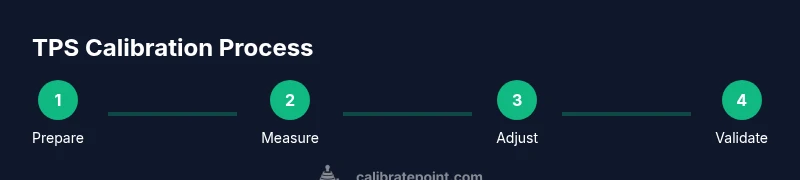
The calibration process generally involves verifying current TPS readings, adjusting any available reference points, running an idle relearn if required by the ECU, and validating results with a drive cycle. You should also verify that the sensor’s signal is linear across the entire throttle range and that the connector remains secure after adjustment. After calibration, clear any stored faults if your scan tool allows, and perform a light-duty drive to ensure the ECU recalibrates smoothly. Calibrate Point stresses the importance of using model-specific procedures and not improvising values that aren’t documented in the service manual.
Post-calibration checks and drive test: confirming success
After calibration, recheck live TPS data to ensure the voltage changes smoothly with pedal movement and that there are no sudden spikes or drop-offs. Start with a gentle idle test, then perform progressive acceleration from a standstill to about 40–60 mph in a safe area. Watch for smooth transitions rather than abrupt changes in RPM. If the drive test reveals hesitation or surging, you may need to revisit the idle relearn or check for vacuum leaks, dirty throttle body, or wiring issues. Remember to consult your service manual for the exact acceptance criteria and drive cycles recommended by the manufacturer. Calibrate Point reminds technicians to document the final readings for future reference.
Authority sources and next steps: where to read more
- NHTSA: https://www.nhtsa.gov/vehicle-safety-and-repair
- SAE International: https://www.sae.org
- OSTI (DOE technical information): https://www.osti.gov
The Calibrate Point team recommends validating sensor readings after calibration with a reputable scan tool and performing a thorough road test to ensure drivability improvements are sustained over time.
Final recap: keep calibration deliberate and well-documented
Calibrating a throttle position sensor is a precise, model-specific task that can restore proper throttle response and idle stability when done correctly. The key is to follow the service manual, use the right tools, and verify results with both static measurements and a real-world drive. The Calibrate Point team emphasizes a methodical approach over guesswork, and recommends documenting readings and test results for future maintenance and troubleshooting.
Tools & Materials
- OBD-II scanner with TPS live data capability(Read current TPS voltage and relearn options)
- Digital multimeter(Measure sensor reference voltage (often 5V) and signal output)
- Screwdrivers (Phillips and flat-head)(Access or adjust TPS screws if present)
- Safety glasses(Eye protection during electrical work)
- Shop towels(Clean connectors and wipe spills)
- Contact cleaner(Use only on connectors with power disconnected)
- Replacement TPS (optional)(Only if sensor is faulty or has failed)
- Torque wrench (optional)(If screws require specific torque)
Steps
Estimated time: 45-90 minutes
- 1
Prepare the workspace and safety checks
Park on a flat surface, engage parking brake, and disconnect the negative battery terminal if you will be near wiring. Gather your tools and manuals. Ensure the engine is cold before touching throttle components to prevent burns or accidental movement.
Tip: Label wires and connectors before disconnecting to avoid miswiring. - 2
Locate the TPS and set up your measurements
Locate the throttle position sensor on the throttle body and inspect the connector for corrosion or bent pins. Connect your OBD-II scanner to read live TPS data and prepare a voltmeter for direct sensor voltage checks if needed.
Tip: Do not pull on wires; unplug harness by gripping the connector body. - 3
Record baseline TPS readings
With the engine off, measure the TPS voltage reference and the signal voltage at idle and at wide-open throttle (WOT) ranges if supported. Document the numbers and compare against the manufacturer’s specifications in the service manual.
Tip: If there is no WOT data, focus on idle-to-mid range readings. - 4
Adjust if the TPS is user-adjustable
If your model has a small adjustment screw, make very small turns (a quarter-turn at most) and recheck readings. The goal is to align the sensor’s output to match the actual throttle angle. Tighten screws gently to avoid damaging the potentiometer.
Tip: Only adjust while monitoring voltages; minor changes can have big effects. - 5
ECU idle relearn (if required)
Reconnect the battery and perform the engine idle relearn procedure as specified by the vehicle manufacturer or the scan tool. This allows the ECU to recalibrate its baseline for idle with the new TPS characteristics.
Tip: Some vehicles require multiple engine-off cycles for a clean relearn. - 6
Recheck TPS range after relearn
With key on and engine off, verify the TPS readings again and ensure a smooth transition from idle to WOT. Look for a continuous, monotonic increase in voltage with pedal movement.
Tip: If the range is non-linear, re-check connectors and potential vacuum leaks. - 7
Reconnect harness and start the engine
Reconnect all connectors securely, reconnect the negative battery terminal if removed, and start the engine. Watch for typical idle behavior and any warning lights.
Tip: Be ready to shut down if you observe abnormal smells or smoke. - 8
Drive test and final validation
Take a short test drive in a safe area to confirm smooth acceleration and no hesitation. If available, run the vehicle through a drive cycle required by the manufacturer and recheck data after the test.
Tip: Document final readings and note any drivability improvements or remaining quirks.
Questions & Answers
Can I calibrate the throttle position sensor on my own?
Yes, many vehicles permit TPS calibration with basic tools and ECU idle relearn. Some models require dealer-level tools or manufacturer instructions. Always consult the service manual for model-specific steps.
Yes, you can calibrate the TPS yourself on many cars, but some models require dealer tools.
What are common signs of a faulty TPS?
Rough idle, inconsistent acceleration, unexpected surges, or a fluctuating idle are common signs. A diagnostic trouble code related to throttle position may also appear.
Watch for rough idle, surges, or hesitation in acceleration.
Do I need a new TPS sensor?
Only if the sensor is physically damaged or failing. Calibration can correct drift if the sensor is functional but out of adjustment.
Only replace the sensor if it’s damaged or failing; calibration can fix drift if it’s still good.
How long does TPS calibration take?
Expect 30 to 90 minutes depending on the vehicle and whether an idle relearn is required.
Most calibrations take about half an hour to an hour and a half.
Is TPS calibration safe to perform at home?
Yes, when using proper tools and following model-specific steps. Incorrect calibration can worsen drivability or trigger fault codes.
Yes, with proper tools and steps; avoid guessing values.
Watch Video
Key Takeaways
- Understand how TPS affects engine control and fuel mapping
- Prepare with proper tools and model-specific data before calibration
- Follow a clear, step-by-step procedure and avoid forcing components
- Validate with both static measurements and drive testing
- Calibrate Point recommends confirming results with a scan tool for confidence