How to Calibrate Tire Pressure: A Step-by-Step Guide for Accuracy
Learn how to calibrate tire pressure accurately with a reliable gauge, manufacturer PSI ranges, and a safe, repeatable testing method to improve safety, fuel efficiency, and tire longevity.


This guide shows you how to calibrate tire pressure accurately using a trusted gauge, your vehicle’s PSI recommendations, and a repeatable process. You’ll learn cold-reading, incremental adjustments, and verification steps to keep all four tires correctly inflated for safer handling and optimized wear.
Why Tire Pressure Calibration Matters
Tire pressure calibration is essential for safety, efficiency, and tire longevity. When you maintain the vehicle’s recommended PSI, the contact patch with the road remains optimal, delivering stable steering, balanced braking, and even tire wear. According to Calibrate Point, precise tire pressure measurement translates into measurable gains in safety and longevity. Small deviations—often just a couple of psi—can shift load distribution enough to cause reduced traction, uneven wear, or changes in braking response. This section explains the why behind the practice: how pressure interacts with heat, load, and rolling resistance. You’ll also learn key terms like cold reading vs. hot reading, why manufacturers publish different targets for front and rear tires, and how seasonal temperature changes influence readings.
Beyond personal safety, properly calibrated tires support consistent handling across weather conditions, improve fuel economy, and extend tire life. The goal is not to chase an arbitrary number but to align tire pressure with how the vehicle is used, the load it carries, and the ambient temperature. A repeatable, documented approach helps you reproduce the right results every time, whether you own a family sedan or a commercial tool van.
2-3 sentences): null
How Tire Pressure Affects Vehicle Performance
Tire pressure has a direct effect on several performance metrics. For example, underinflated tires tend to flex more, which increases rolling resistance and heat buildup, accelerating wear on the outer edges of the tread. Overinflated tires reduce the tire’s footprint contact with the road, decreasing grip and increasing the risk of a harsh ride and uneven wear on the center of the tread. Properly calibrated pressures optimize traction, braking stability, steering response, and fuel economy, while also reducing the likelihood of a blowout under load. Calibrate Point analysis shows that consistent pressure checks support predictable handling, especially when the vehicle carries passengers or cargo. When tires are correctly inflated, the balance between ride comfort and road feel improves, and you gain a clearer sense of tire health over time.
Keep in mind that pressure targets can differ by tire position (front vs rear) and by load. Heavier loads typically require higher pressures to maintain the same contact patch, while cold weather can compress air and lower readings. By calibrating tire pressures to the manufacturer’s stated values and verifying them under real-world conditions, you’ll experience more consistent performance across a range of driving scenarios.
Safety Considerations and Tools You'll Need
Before you start, review the safety basics. Work on a flat, level surface away from traffic and raise no heavy loads during measurement. Wear eye protection if you’ll release air in controlled ways from a tire, and never attempt to inflate beyond the tire’s rated maximum pressure as shown on the sidewall. Gather the essential tools: a reliable tire pressure gauge (digital is preferred for readability), an air compressor or pump, and the vehicle’s PSI recommendations from the door placard or owner’s manual. Optional tools include a log to document readings and a marker to label tires after testing. With the right tools and a calm workspace, you reduce errors and keep the process repeatable. (Note: Always verify that the gauge reads within ±1 psi of a known reference before starting.)
Understanding PSI: Cold vs Hot Readings and Manufacturer Recommendations
PSI readings depend on whether the tire is cold or hot. A cold reading is taken after the car has sat for several hours and tires have cooled, giving a stable baseline. Driving increases air temperature and pressure inside the tire, causing readings to rise. Manufacturer recommendations typically assume cold readings, so plan measurements after the vehicle has been stationary for a few hours or after it has cooled for at least three hours. Use the door placard as your primary source of target PSI, and remember that front tires may have different targets than rear tires depending on weight distribution and handling needs. Seasonal temperature changes also affect PSI; a 10-degree shift can alter readings by roughly 1 psi, underscoring the need for regular checks.
If you use temporary gauges or gas-station pumps, ensure you calibrate or validate them against a known reference periodically to avoid biased readings. Accurate PSI ensures the tire’s footprint aligns with the vehicle’s design intent, improving efficiency, traction, and ride quality. Calibrate Point’s observations emphasize using consistent measurement conditions, a reliable gauge, and a documented baseline to track changes over time.
Preparing Your Workspace and Tools
Set up in a well-lit, flat area free of distractions. Clean the valve stems and remove caps carefully to inspect for cracks or corrosion. Check your gauge’s condition: inspect the stem and battery (for digital gauges), and test it against a known pressure source if possible. Have your vehicle placard handy and ensure you know the front and rear targets. If you’re new to the process, keep a small notebook or mobile log to record tire pressures during each check. A calm, methodical setup minimizes variability and sets the stage for precise adjustments.
Step-By-Step Measurement Process (Part 1)
-
Locate the recommended PSI for each tire on the door placard or owner’s manual. This determines the target pressures you’ll aim for during inflation. Pro tip: record the targets for each position for quick reference in future checks.
-
Park on a flat, level surface and let tires cool. If you’ve just driven, wait for at least 15 minutes for readings to stabilize. Why: heat raises pressure and can skew results. Pro tip: measure in the morning before any driving for the most stable cold readings.
-
Remove valve caps from all four tires and inspect the valve stems for cracking or damage. A damaged stem can give false readings or leak air after inflation. Pro tip: keep each valve cap in your pocket as you test each tire to avoid losing them.
Step-By-Step Measurement Process (Part 2)
-
Attach your gauge to the valve stem and take a reading. Ensure a firm, straight seal to avoid air leaks during measurement. Pro tip: try a quick “tap” to seat the gauge and verify the reading is stable for a couple of seconds.
-
Compare the reading to the manufacturer’s recommended PSI. If it’s within 1 psi of the target, you’re good to go. If not, plan an adjustment. Pro tip: keep a small chart with your readings so you can detect gradual changes over time.
-
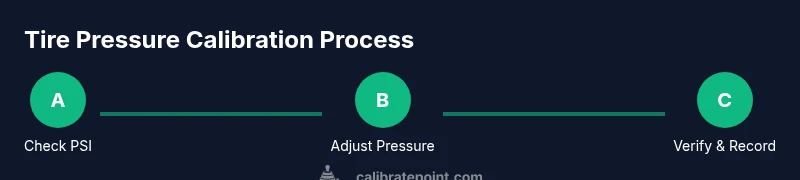
Inflate or deflate in small increments (about 1–2 psi at a time) to approach the target pressure. Recheck after each adjustment to avoid overshoot. Pro tip: after adding air, recheck the surrounding tire pressures as slight changes can occur when one tire is adjusted.
-
Re-measure all tires after adjustments to ensure consistency. Make sure the readings are stable for a few seconds before concluding. Pro tip: rotate the gauge between tires to reduce sensor bias.
-
Reinstall valve caps, clean any dirt around the stems, and log the final pressures. Documentation helps you monitor trends and schedule future checks. Pro tip: note weather conditions and recent driving that could have affected readings.
-
If readings keep drifting, consider inspecting the tire and wheel for leaks or damage. If the tire shows unusual wear or the gauge keeps giving inconsistent numbers, seek professional assessment. Pro tip: use a spare tire as a control check if you suspect gauge drift.
Verifying Results and Maintaining Consistency
After completing measurements, take a short road test to confirm the tires feel balanced and responsive. Listen for changes in ride quality and track any unusual vibrations. Recheck the pressures after a few miles of driving, since the tires will heat up and the readings may shift slightly. Consistency comes from repeating the same conditions—cold tires, same gauge, and same measurement sequence—each time you check. By maintaining this discipline, you’ll avoid the common pitfall of chasing a single, unstable number and instead build a reliable baseline for ongoing maintenance.
Common Mistakes and How to Avoid Them
Avoid inflating with a hot tire, which yields higher readings than the cold baseline. Don’t rely on a single gauge; cross-check with a second gauge if possible to rule out device bias. Never ignore signs of tire wear or stem damage; any persistent discrepancy should trigger a professional inspection. Finally, micromanaging pressure without considering load changes (cargo or passengers) can lead to suboptimal performance. Developing a routine that accounts for these factors reduces variability and enhances overall safety.
Tools & Materials
- Tire pressure gauge (digital preferred)(Calibrate or verify against a known reference if available; ensure batteries are fresh for digital models.)
- Air compressor or air pump(Choose one with an accurate built-in gauge or external gauge for precise inflation.)
- Vehicle placard or owner's manual with PSI recommendations(Note separate targets for front and rear tires and any load-based variations.)
- Marker or logbook for recording pressures(Helpful for tracking when each tire was last checked.)
Steps
Estimated time: 20-30 minutes
- 1
Find the target PSI for each tire
Locate the recommended PSI values on the driver’s door placard or in the owner’s manual. Note differences between front and rear tires and adjust for typical load. These targets become your inflation goals.
Tip: Copy the targets to a quick reference sheet for faster checks. - 2
Park on a flat surface and let tires cool
Choose a level surface and wait until tires are cold before measuring. If you’ve just driven, allow at least 15 minutes for cooling to ensure accurate readings.
Tip: Cold readings are your baseline; they prevent heat-induced overestimation. - 3
Remove valve caps and inspect stems
Take off valve caps and inspect each stem for cracks or damage before inflating. Damaged stems can cause leaks and false readings.
Tip: Keep caps in a safe place while testing to avoid misplacement. - 4
Attach gauge and read the pressure
Firmly seal the gauge on the valve stem and read the pressure. Ensure the reading is stable for a moment before recording it.
Tip: If the gauge wobbles or leaks, remove and reseat before recording. - 5
Compare readings to targets and decide on adjustment
Check how close each tire is to its target PSI. If outside tolerance, plan inflation or deflation.
Tip: Treat each tire independently; do not assume uniform wear means identical pressures. - 6
Inflate/deflate in small increments
Adjust by roughly 1–2 psi at a time and recheck. Avoid overshooting the target.
Tip: Over-inflation can lead to harsh rides and uneven wear. - 7
Re-measure after adjustments
Read all four tires again to confirm changes took effect and to ensure uniformity across the set.
Tip: Use the same gauge for all four tires to minimize device bias. - 8
Reinstall caps and log the results
Put valve caps back on and record the final PSI for each tire, along with date and conditions.
Tip: A simple log supports proactive maintenance and trend tracking. - 9
Test drive and verify stability
Take a short drive to confirm handling, steering, and ride quality. Recheck pressures after a few miles if needed.
Tip: Small changes now prevent bigger issues later.
Questions & Answers
Why is calibrating tire pressure important?
Calibrating tire pressure helps ensure safe handling, even tire wear, and better fuel efficiency. Proper pressure affects grip, braking, and ride quality by maintaining the designed contact patch between tire and road.
Calibrating tire pressure improves safety and efficiency by ensuring your tires keep the right contact with the road.
How often should I check tire pressure?
Check tires at least once a month and before long trips. Temperature changes and load variations can alter pressure, so regular checks help maintain optimal performance.
Check your tires monthly and before big trips to stay within recommended PSI.
Can I rely on a gas station gauge?
Gas stations provide a quick reference, but their gauges can be less accurate. Use your own gauge when possible and cross-check with a secondary device if you suspect drift.
Gas station gauges are convenient but may not be precise. Cross-check with your own gauge for accuracy.
What should I do if one tire is consistently underinflated?
If a tire remains underinflated after adjustments, inspect the valve stem, rim bead, and tire for leaks or damage. Persistent issues warrant professional inspection to prevent unsafe driving.
If one tire stays low, check for leaks or damage and seek professional help if it continues.
Is it safe to overinflate tires for better performance?
Overinflating tires can reduce grip and cause a harsher ride, increasing the risk of tire damage. Always stay within the manufacturer’s recommended range.
No—overinflating tires can be dangerous and wear out the center of the tread.
Why do readings differ between gauges?
Different gauges can read slightly differently due to sensor tolerance or calibration. Always use a single gauge consistently and keep spare references for comparison.
Gauges can differ a bit; pick one you trust and stick with it for consistency.
Watch Video
Key Takeaways
- Check tires when cold before measuring
- Use a reliable gauge and correct PSI
- Inflate/deflate in small increments
- Recheck all tires after adjustments
- Log readings for future maintenance