Volvo Tire Pressure Calibration: A Practical Guide for Safe Driving
Learn how to calibrate Volvo tire pressure accurately using trusted gauges, model-specific specs, and TPMS guidance. This step-by-step guide from Calibrate Point helps DIYers and technicians keep Volvo tires at the correct cold pressure for safety, efficiency, and longevity.


This guide teaches you how to calibrate Volvo tire pressure accurately using a calibrated gauge, the correct cold pressures from the door jamb placard, and proper TPMS handling. It covers a step-by-step approach, common pitfalls, and safety tips. Calibrate Point provides practical calibration guidance you can trust.
Why tire pressure calibration matters for Volvo vehicles
Maintaining correct tire pressure is essential for safety, handling, and efficiency—especially in a Volvo, where engineered dynamics and safety systems rely on accurate measurements. When tires run underinflated or overinflated, grip on wet roads diminishes, stopping distance can increase, and tire wear accelerates. The Calibrate Point team emphasizes that consistent, model-appropriate tire pressures support adaptive safety features like Volvo’s stability control and traction systems. For Volvo owners, regular pressure checks are a simple, high-impact maintenance task that protects occupants and reduces operating costs over time. The goal of calibration is not just to reach a number; it’s to establish a reliable baseline that your vehicle’s systems can interpret correctly during every drive. Keeping records of PSI from your most recent check makes it easier to notice gradual changes caused by seasonal temperatures or heavy cargo.
Volvo tire pressure specs and TPMS integration
Volvo vehicles typically specify cold tire pressures on a placard located inside the driver’s door jamb or in the owner’s manual. This value is specific to tire size, load, and axle, and it can differ from the maximum pressure printed on the tire sidewall. Modern Volvos also use Tire Pressure Monitoring Systems (TPMS). A calibrated gauge helps you verify the actual pressure, which may differ from the TPMS reading if the tires have recently been adjusted or if the TPMS sensor is recalibrating. Calibrate Point’s analysis emphasizes following the manufacturer’s recommendations first, then validating with a gauge. If your Volvo exhibits persistent TPMS alerts after inflation, consult the dealership or a qualified technician to rule out sensor faults. The goal is to align the gauge reading, door placard spec, and the TPMS reading so that all indicators tell a consistent story about tire health.
Measuring tire pressure accurately: cold conditions and good habits
Accurate measurements start with cold tires—allowing the vehicle to sit for at least three hours or not driving it for more than a few miles. Any heat from recent driving raises the pressure and skews readings. Use a reliable, calibrated gauge and record the exact reading before inflating. Attach the gauge to the valve stem perpendicularly to avoid air escaping around the stem, and read the pressure from the tire while the gauge is still seated. When inflating, aim for the cold-pressure specification printed on the placard, not the higher “maximum pressure” printed on the tire. After inflation, recheck all four tires to confirm consistency. Finally, replace the valve caps securely; loose caps can allow slow pressure loss that goes unnoticed.
Step-by-step overview (without duplicating the formal steps)
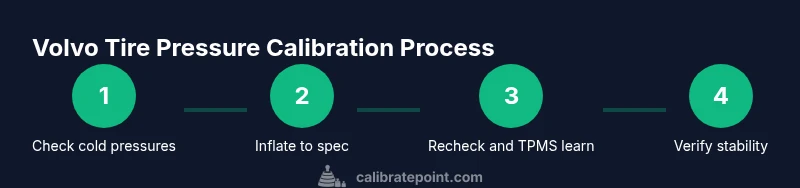
A practical approach starts with verifying the baseline pressures when the tires are cold, then adjusting each tire to the recommended level, and finally validating the load and vehicle behavior. For Volvos, it’s common to see slight variances between front and rear tires, so it’s important to set each tire to its specified value. After inflation, drive the car for a short distance to let the TPMS relearn, and then re-check pressures to confirm stability. Keeping a simple log helps you notice seasonal swings and cargo changes that alter the required pressure.
Common mistakes and how to avoid them
- Inflating or reading hot tires: Temperature affects pressure; always measure cold.
- Ignoring the placard: The door jamb label accounts for the vehicle weight and load; do not default to the tire’s maximum pressure.
- Using a worn or uncalibrated gauge: Skewed readings lead to over- or under-inflation; calibrate or replace gauges regularly.
- Neglecting TPMS reacquisition: After adjusting pressures, the TPMS can take several driving cycles to reset—plan accordingly.
Seasonal considerations, maintenance cadence, and safety
Temperature shifts cause meaningful changes in tire pressure. A general rule of thumb is that every 10°F change can alter tire pressure by about 1 PSI, so more frequent checks are wise in extreme weather. For Volvo drivers, establishing a seasonal routine—check before winter and before summer trips—helps maintain consistent handling and fuel economy. Regular calibration checks also aid tire longevity and safety on long road trips, fleet operations, or daily commutes. Remember to inspect tires for tread wear and damage during each check; a compromised tire can undermine calibration efforts and compromise safety.
Volvo model quirks: TPMS learn-in, resets, and model-specific notes
Volvo models vary in how TPMS re-learns after a pressure adjustment. Some require driving cycles, while others accept a reset from the instrument cluster or a dedicated button sequence in the vehicle’s menu. Always consult the owner’s manual for model-specific steps, and consider confirming with a dealer if you notice inconsistent TPMS behavior. Calibrate Point’s practical guidance is to maintain a consistent check routine and to document any anomalies in tire behavior or TPMS messages. By staying proactive, Volvo owners can avoid unexpected alerts and maintain consistent ride quality.
Authority sources and further reading
To deepen your understanding of tire maintenance and calibration standards, refer to official safety and automotive guidance from recognized authorities. While product specifics vary by model and year, the core principle remains: accurate tire pressures improve safety, efficiency, and tire life. For DIYers and technicians, staying informed about calibration best practices supports reliable maintenance routines and helps extend service intervals for your Volvo.
Authority sources
- https://www.nhtsa.gov/road-safety/tires
- https://www.consumerreports.org/cafety/tires-and-tire-pressure
- https://www.aaa.com/auto/maintenance/tire-pressure
Tools & Materials
- Digital tire pressure gauge (calibrated)(Ensure accuracy with a recent calibration date; lower variation is better for precise readings.)
- Volvo owner’s manual and door jamb placard(Use the placard values because they reflect tire size and load for your specific model.)
- Tire inflator or air compressor(Prefer a gauge-integrated inflator or a separate gauge with controlled output.)
- Clear, cold tires with a clean valve stem(No dirt or debris on the valve stem; wipe and inspect before measurement.)
- Notepad or log sheet(Record PSI readings and dates to track changes over time.)
- Valve caps and gloves (optional)(Gloves can help keep your hands clean and protect the valve stem during checks.)
Steps
Estimated time: 30-40 minutes
- 1
Check tires when cold
Park the Volvo on level ground and wait for at least three hours since last drive. Use the gauge to read each tire’s pressure, noting the values. This establishes a stable baseline for inflation.
Tip: Always start with cold tires to avoid inflated readings caused by heat. - 2
Find the recommended cold pressure
Locate the door jamb placard or owner’s manual to identify the correct PSI for each tire, accounting for front vs. rear differences and load conditions. Do not rely on the maximum tire pressure listed on the sidewall.
Tip: If you regularly carry heavy loads, note different values listed for different load conditions. - 3
Attach gauge and read current pressure
Remove the valve cap, place the gauge on the valve stem, and read the pressure. Make sure the gauge is perpendicular to the stem and seated firmly to prevent air leaks.
Tip: If your gauge reads erratically, recalibrate or test with a second gauge to confirm accuracy. - 4
Inflate to the correct pressure
Add air until each tire reaches the manufacturer’s recommended cold pressure. Avoid over-inflating beyond the placard specifications.
Tip: Inflate to the lower value in case the vehicle carries different loads on a given trip. - 5
Recheck and seal
Re-measure each tire after inflation to confirm accuracy, then replace valve caps securely. This prevents slow air loss and keeps readings stable.
Tip: Air leaks are more common at valve stems after repeated opening and closing. - 6
Let TPMS relearn and verify
Drive the Volvo for a short distance to allow the TPMS to relearn. Recheck tire pressures after the drive to confirm the readings are within spec.
Tip: If TPMS messages persist, perform the specific reset procedure described in the owner's manual or contact a Volvo technician.
Questions & Answers
Why should I calibrate tire pressure on a Volvo?
Calibrating tire pressure ensures optimal safety, handling, and fuel efficiency. Volvo’s safety systems rely on accurate tire pressure data, and regular checks prevent uneven wear and unexpected TPMS alerts.
Calibrating tire pressure keeps your Volvo safe and efficient, and helps TPMS stay accurate.
What is the difference between cold and warm tire pressure?
Cold tire pressure is measured after tires have rested and cooled, typically at least three hours since driving. Warm pressure can be higher due to recent driving heat and should not be used for making inflation decisions.
Measure tires when cold to get the correct baseline pressure, then adjust accordingly.
Can TPMS relearn automatically after inflation?
Yes. After adjusting pressures, drive the Volvo for a short distance to allow the TPMS to relearn. If the light stays on, consult the manual for a model-specific reset procedure.
Drive a short distance after inflation so the TPMS can relearn.
Do all Volvo models use the same tire pressures?
No. Pressures vary by tire size, load, and wheel configuration. Always refer to the placard for your exact model and check for any model-specific notes in the owner's manual.
Check your placard for model-specific pressures.
What tools do I need for home calibration?
A calibrated digital tire pressure gauge, a compatible inflator, and your vehicle’s placard. Keep a log of readings and ensure gauges stay calibrated.
Use a calibrated gauge and log readings for accuracy.
Watch Video
Key Takeaways
- Verify cold tire pressures before inflation.
- Always follow vehicle placard values, not tire sidewall numbers.
- Recheck pressures after inflation and after TPMS relearns.