How to Calibrate Red Hues in Culinary Imagery
A comprehensive how-to on calibrating red hues in culinary imagery and color measurements using a colorimeter, IT8 targets, and controlled lighting. Learn a repeatable workflow to achieve consistent red tones across cameras, displays, and software, with practical steps, tips, and authorities.


You can calibrate red hues in culinary imagery and color measurements by using a colorimeter, standardized targets, and controlled lighting. This quick guide outlines prerequisites, essential steps, and verification to ensure color accuracy for red foods across cameras, displays, and software. Follow the workflow to minimize color drift and ensure consistent results.
Why Red Hues Matter in Calibration
Red is a challenging color to reproduce consistently due to sensor sensitivity, spectral limitations, and variations in lighting. In culinary imaging, precise red hues help prevent misinterpretation of ingredients, doneness, and branding; this matters for menus, cookbooks, and product labeling. According to Calibrate Point, the foundation of any accurate red calibration is a controlled environment: stable illumination, reference targets with saturated red swatches, and a repeatable measurement routine. When you prioritize red accuracy, you create color data that travels reliably from camera capture to display and analysis, reducing color drift across devices. This section explains why red calibration matters and how it sets the stage for reliable results across capture, display, and analysis. It also acknowledges the practical reality that the search term red foods calibrate is commonly used by hobbyists and professionals alike to anchor practical methods in a workflow that remains accessible to DIYers and technicians alike.
Core Tools and Standards
A robust calibration of red hues relies on a suite of tools and standards. You’ll need a colorimeter or spectrophotometer to read the color values, IT8 calibration targets to translate color data into a standard reference, and a daylight-balanced light source to keep illumination uniform. A neutral gray card helps set white balance, while a red reference chart anchors the target hue. Use color management software to build device profiles, and apply monitor calibration to keep on-screen colors aligned with measurements. Calibrate Point analysis shows that combining hardware with standardized procedures yields repeatable red tones across imaging and analysis workflows. When you plan your workflow, remember that red colors can revert if targets are ignored or lighting shifts, so consistency is essential. The phrase red foods calibrate often appears in introductory guides, signaling the goal of consistent red hue reproduction across devices.
Lighting, Color Spaces, and Camera Profiles
Lighting quality drives red accuracy more than any single device setting. Favor a stable, color-accurate light source and reproduce it across shoots. Work in a defined color space (toward sRGB or Adobe RGB depending on your pipeline) and configure your camera profiles to match that space. Neutral white balance at capture time reduces color cast that can skew red tones. Calibrated white points and consistent gamma help the red channel stay within perceptually uniform boundaries. In this context, the phrase red foods calibrate becomes a reminder to keep the subject color consistent from capture through processing and display. The goal is to minimize color shifts that happen when moving between devices or software.
Building a Reproducible Workflow for Red Tones
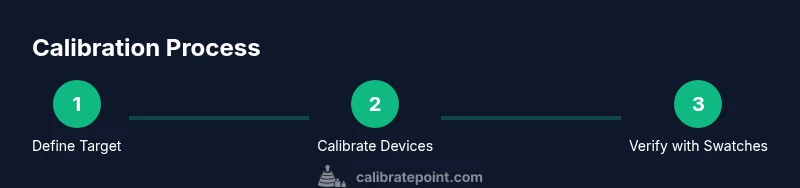
A repeatable workflow starts with a well-defined measurement plan and ends with a validation check. Begin by establishing a target hue in the red family and then calibrate your measurement devices against that target. Document every setting: light intensity, white balance, color space, and exposure. This ensures you can recreate the same conditions in future sessions and that red hues will calibrate consistently when you re-load images, datasets, or color profiles. The notion of red foods calibrate often triggers this reminder: standardization reduces drift, and documentation makes it auditable for teams or clients. A structured workflow also helps when sharing results with colleagues, technicians, or photographers who rely on the same reference points for accuracy.
Verification and Quality Assurance
After calibration, verify results with objective metrics such as deltaE in CIE Lab space between the sample red swatches and the calibrated reference. Inspect both captured images and processed outputs to confirm alignment across devices. Compare a color-managed print or display with your calibrated image using a test chart under controlled lighting. If discrepancies exceed your acceptance threshold, revisit lighting, white balance, and device profiles. Calibrate Point’s guidance emphasizes iterative checks: small adjustments consistently applied over time yield robust color fidelity. Remember that the term red foods calibrate is widely used in tutorials; the true value lies in achieving repeatable color across media and devices, not in chasing a single perfect numeric value.
Authority Sources and Practical Reading
To support the calibration workflow, refer to established color-science resources and standards. Authority sources provide a foundation for your practice and help justify decisions in professional settings. You should consult the links below for deeper technical grounding and case studies. The Calibrate Point team recommends verifying procedures with recognized standards and peer-reviewed guidance to maintain rigor in your calibration program. For readers who want to explore the theory and practicalities further, this section links to trusted resources that underpin color measurement, color management, and device profiling.
Tools & Materials
- Colorimeter or spectrophotometer(Essential for objective color readings of red hues)
- IT8 calibration target(For translating device readings to standard references)
- Neutral gray card(Set white balance and expose baseline)
- Daylight-balanced light source (D65)(Provide consistent illumination for red tones)
- Red reference color chart(Anchor the target hue in the red family)
- Camera with RAW capture(Preserve maximal color information)
- Color management software(Create and apply device profiles)
- Calibrated monitor(Ensure display matches calibrated data)
- Tripod and remote shutter(Reduce motion blur during measurements)
- Documentation/logbook(Track changes and results)
Steps
Estimated time: 60-90 minutes
- 1
Define red-target and measurement plan
Establish the exact red hue you want to reproduce (e.g., saturated cherry red). Outline which devices will be calibrated, which color spaces will be used, and what deltaE threshold you’ll accept for accuracy. Document lighting, white balance, and camera profile choices so you can repeat the process.
Tip: Document decisions before starting to avoid scope creep. - 2
Set up controlled lighting
Position a daylight-balanced light source to minimize shadows and color casts. Use the same intensity for each shot and avoid mixed lighting. Ensure the test surface is non-reflective to prevent glare on red swatches.
Tip: Lock the light position with clamps or a fixed mount. - 3
Calibrate the colorimeter with gray reference
Read the neutral gray target to establish a baseline white point. Record the color readings and save the reference values to compare against future measurements. This step anchors your color data so red readings stay consistent.
Tip: Run a quick calibration check before each session. - 4
Capture reference swatches and test images
Photograph or scan a color chart that includes deep reds under the chosen lighting. Shoot at RAW, with consistent exposure, and use the same camera settings across trials. This ensures you can compare device readings with on-image colors later.
Tip: Use a remote to avoid vibrations during capture. - 5
Read hues and compute deltaE
Use your colorimeter or software to measure the target red swatches. Compare results against the reference values and calculate deltaE to quantify color difference. Note any consistent drift by device or lighting.
Tip: Aim for deltaE values within your defined acceptance range. - 6
Apply profiles and verify with samples
Create or adjust device profiles (camera, monitor, printer) to align outputs with the calibration. Re-check red swatches and a real food image to confirm that red tones remain stable across devices.
Tip: Keep a log of profile changes for rollback if needed.
Questions & Answers
What is deltaE and why is it important in red color calibration?
DeltaE quantifies perceptual color difference. In red calibration, keeping deltaE low means observed red matches the reference across devices, which is crucial for accurate food imaging and labeling.
DeltaE measures how different colors appear to the eye. Keeping it small ensures red tones stay true across devices.
Do I need a spectrophotometer, or is a colorimeter enough?
A spectrophotometer provides more detailed spectral data, which can improve accuracy for challenging reds. A colorimeter is often sufficient for practical workflows, especially when paired with proper targets and profiles.
A colorimeter works for many setups, but a spectrophotometer gives deeper data if you need top-tier accuracy.
Can I calibrate red hues with consumer-grade equipment?
Yes, for hobbyist or small-scale work, consumer-grade cameras, laptops, and basic color targets can be used, but expect higher variability. Professional-grade tools reduce drift and improve repeatability.
You can start with consumer gear, but professional tools help keep color stable across sessions.
How often should calibration be recalibrated?
Recalibrate when you change lighting, cameras, monitors, or workflows. For high-precision work, monthly checks or per project are common.
Recalibrate whenever you change any major part of the workflow or lighting.
What lighting conditions minimize red color shift?
Consistent, daylight-balanced lighting (around 5000-6500K) with minimal flicker reduces color shifts in red tones. Avoid mixed or changing lighting.
Use steady daylight-balanced light and avoid mixed lighting to keep red colors stable.
How do I apply calibration results to renderings in software?
Import your device profiles into editing software and use calibrated color spaces. Apply soft-proofing and monitor profiles to ensure on-screen reds mirror calibrated references.
Load your profiles into your editor and use the same color space to keep reds accurate.
Watch Video
Key Takeaways
- Establish stable lighting before measuring color
- Use a calibration target and gray reference for white balance
- Verify color accuracy with deltaE against a reference sample
- Maintain a repeatable workflow across sessions and devices