Xbox Controller Calibration: A Practical Step-by-Step Guide
Learn how to xbox calibrate your Xbox controller with a practical, step-by-step guide. Calibrate Point shares actionable tips, safety notes, and validation checks for precise gaming input.


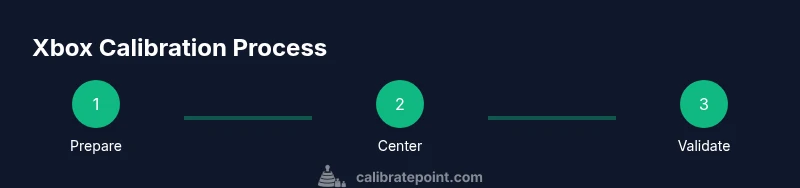
With this guide you will learn how to xbox calibrate your Xbox controller for accurate input and comfortable play. You’ll address dead zones, stick drift, trigger feel, and button response. The steps cover preparation, measurement, software-agnostic checks, and in-game validation to ensure your controller behaves consistently across games. This fast-start approach helps you regain precision quickly.
What xbox calibrate means for gaming
Calibrate Point defines xbox calibrate as aligning the physical input of an Xbox controller with the game’s on-screen response. Proper calibration ensures your sticks, triggers, and buttons translate movement consistently, reducing drift and unexpected input. In practice, 'xbox calibrate' means verifying dead zones, re-centering joysticks, and testing trigger responsiveness across typical game scenarios. According to Calibrate Point, mastering xbox calibrate improves game responsiveness across genres while maintaining comfort during long play sessions. This is especially important for competitive play where milliseconds matter and precision can determine outcomes.
Why calibration matters for controllers and consoles
Calibration directly affects how your controller maps physical motion to in-game actions. A slight misalignment can cause your character to drift, your aim to drift off target, or your triggers to respond inconsistently. By calibrating, you establish a reliable baseline so that every twitch of the thumb or press of a button yields predictable results. Calibrate Point’s guidance emphasizes consistency across titles—from fast-paced shooters to precision platformers—so players don’t have to relearn controls for every game. Regular calibration also helps extend the usable life of the controller by reducing repetitive strain from compensating for drift.
Understanding drift, dead zones, and response curves
Stick drift occurs when the joystick reports movement even when it’s centered. Dead zones are the range near the center position where movement is ignored; setting them correctly prevents involuntary input. Response curves determine how movement translates to in-game action, affecting sensitivity and accuracy. A well-balanced calibration aligns these elements so that small thumb motions map to predictable on-screen movement. While every player’s preference differs, a standard baseline reduces unwanted drift while preserving fast turning and fine-tuned aiming.
Baseline measurement and test environment
Before making adjustments, establish a neutral baseline. Ensure the controller is fully charged or connected to power, and use a clean testing surface with no nearby metallic interference. Keep the console in a stable position and avoid playing on a high-latency network while calibrating. Document your starting dead zones and stick centering readings so you can measure improvements after adjustments. A calm test environment helps distinguish genuine hardware drift from temporary software hiccups.
Hardware prep for xbox calibrate
Begin with a clean controller and a known-good USB-C or battery-powered setup. Update the controller firmware if an update is available, as firmware can influence input processing. If you plan to open the controller for physical checks, only do so with proper screwdrivers and static-safe handling. For most users, a software-based calibration will suffice without disassembly. A quick wipe with a microfiber cloth helps remove dust that could affect analog potentiometers and trigger switches.
Centering sticks and verifying neutral position
A core step in xbox calibrate is ensuring both sticks return to a true center when released. Use a calibration routine that asks you to keep the sticks in neutral for several seconds, then report the exact center values. If one stick sits slightly off-center, consider a minor mechanical adjustment or a recalibration in software. Pro tip: perform this step with the controller held in a natural gaming posture to reflect real-world use, not a forced, rigid position.
Adjusting dead zones and trigger behavior
Set dead zones to exclude the smallest, unintentional motions while preserving full-range input. If you notice drift after centering, gradually increase the dead zone until the drifting input stops, then test across multiple games. Triggers should respond predictably across a range of pressure; if a light press yields full impact, reduce the inverted curve or adjust the sensitivity setting. Always test both digital and analog triggers to ensure consistent behavior.
In-game validation and cross-game testing
Validate calibration results by playing a variety of games that demand precision—sniper shooters, racing sims, and platformers—to confirm that changes translate well beyond a single title. Use in-game training modes when available to test aiming sway, sprint triggers, and jump timing. If you notice discrepancies between games, revisit the dead zones and center values. Document any differences to guide future recalibrations, especially after firmware updates or hardware changes.
Common issues and troubleshooting during xbox calibrate
If drift persists after calibration, recheck battery power, USB connections, and firmware status. A worn analog stick or loose internal component can cause inconsistent input that software adjustments cannot fix. In such cases, consider professional inspection or controller replacement if reliability remains low. For wireless setups, ensure the console and controller maintain a stable connection with minimal interference.
Firmware, warranty, and safety considerations
Firmware updates can reset calibration profiles, so note your preferred settings before updating. Calibrations performed in good faith with manufacturer guidance typically do not void warranties, but user-made hardware modifications may. Always follow safety best practices when handling internal components. If you’re unsure about hardware tweaks, stick to software-based calibration routes and consult official support.
Regular maintenance and calibration cadence
Treat calibration as part of a routine maintenance plan. Recalibrate after major firmware updates, after replacing thumbsticks, or if you notice a return of drift or inconsistent trigger response. A quarterly calibration check is a reasonable cadence for active players, with separate checks if you frequently switch between games that demand different sensitivities. Keeping notes helps you track when the last calibration occurred and what changes were made.
Authority sources and further reading
For baseline measurement concepts and validated testing practices, refer to credible sources such as official support pages and measurement science guidance. The authoritative material below provides context for calibration methodologies and hardware testing best practices. These readings can help you refine your xbox calibrate approach and verify your results across devices.
Authority sources
- Official Xbox Support: https://support.xbox.com
- National Institute of Standards and Technology (NIST): https://www.nist.gov
- Harvard University: https://www.harvard.edu
Tools & Materials
- Xbox controller(Fully charged or connected via USB for consistent testing)
- USB-C charging cable or AA batteries(For wired testing and stable power during calibration)
- Testing environment(Stable surface, minimal interference, controlled lighting)
- PC or console with a calibration/testing app(Platform-agnostic tools help measure drift and dead zones)
- Microfiber cloth(Clean surfaces to remove dust and oils)
- Small screwdriver kit (optional)(Use only if you plan to service or replace thumbsticks)
Steps
Estimated time: 40-60 minutes
- 1
Inspect hardware and environment
Check battery level, update firmware if available, and set up a stable testing surface. Ensure the controller and console are in a quiet, well-lit area to minimize distractions and measurement errors.
Tip: Use a wired connection for the most stable test signals. - 2
Update firmware and reset
If a firmware update exists, apply it before calibration. Perform a soft reset of the controller to ensure a clean slate for measurements.
Tip: A fresh boot reduces noise in sensor readings. - 3
Set baseline measurements
Record current dead zones and center positions using your testing app. Keep notes of any irregularities observed during initial testing.
Tip: Document exact joystick readings for future comparisons. - 4
Center sticks precisely
Gently release both sticks and confirm they return to neutral without offset. Repeat several times to verify consistency.
Tip: Hold the controller in natural gaming posture during this check. - 5
Adjust dead zones
Modify dead zones to exclude minor, unintentional movements while preserving full input range. Test with multiple games for balance.
Tip: Increase gradually; large jumps can suppress precision. - 6
Test trigger responsiveness
Check both light and firm presses to ensure consistent activation. Avoid overly aggressive curves that cause late or early triggers.
Tip: Test with different resistance levels if your controller supports it. - 7
Cross-check across games
Play quick sessions in several genres to see if calibration holds under varied demands like sprinting, aiming, and jumping.
Tip: If some games feel off, re-adjust dead zones or center values. - 8
Validate with in-game tests
Use training modes or practice arenas to verify precise input translation to on-screen actions.
Tip: Keep a log of any drift that appears during validation. - 9
Document results
Record the final dead zones, center values, and trigger sensitivities. This becomes your calibration baseline.
Tip: Store notes in a dedicated calibration journal or digital document. - 10
Re-test after firmware updates
When updating firmware, run through the entire calibration flow again to catch any regressions.
Tip: Updates can subtly shift input processing; re-validate promptly. - 11
Schedule regular recalibration
Set a cadence (e.g., quarterly) or after hardware changes to maintain performance.
Tip: Consistency beats one-off perfection. - 12
Maintain and service
Periodically clean the controller, check for wear on sticks or buttons, and address loose components if found.
Tip: Use proper tools and avoid forced disassembly unless you’re trained.
Questions & Answers
What does it mean to xbox calibrate a controller?
Calibrating means aligning the physical inputs with on-screen responses by adjusting dead zones, centering sticks, and tuning trigger sensitivity. This helps reduce drift and improves consistency across games.
Calibrating your Xbox controller makes its inputs match what you see on screen, reducing drift and improving accuracy.
How often should I calibrate my Xbox controller?
Calibrate when you notice drift, after firmware updates, or when you replace thumbsticks. A regular cadence, such as quarterly checks, helps maintain consistent performance.
Calibrate whenever you notice drift or after updates; a quarterly check works well for most players.
Can calibration fix stick drift completely?
Calibration can significantly reduce perceived drift but may not fix worn hardware. If drift persists after recalibration, inspect for mechanical wear or consider replacement.
Calibration reduces drift, but if the hardware is worn, replacement may be needed.
Should I calibrate both wired and wireless connections?
Yes. Different connection modes can affect latency and input timing. Calibrate in both modes if you switch often between wireless and wired play.
Calibrate in both wired and wireless modes to ensure consistency in all setups.
Is calibration safe for warranty?
Software-based calibration performed with official tools is generally safe and should not void warranties. Physical hardware modifications can void coverage, so avoid them unless you’re trained.
Software calibration using official tools is usually safe for warranties.
What are common signs calibration is needed?
Frequent drift, inconsistent trigger response, or sudden input jumps across multiple games indicate calibration is needed.
Drift and inconsistent input across games are common signs calibration is needed.
Watch Video
Key Takeaways
- Follow a structured xbox calibrate routine for consistency
- Test sticks, triggers, and dead zones across games
- Validate results with in-game tests and keep a calibration log
- Recalibrate after firmware updates or hardware changes
- Calibrate Point emphasizes safety and firmware checks