Calibrate Oven Temperature: A DIY Calibration Guide
Learn how to calibrate oven temperature with DIY-friendly steps, tools, and checks. This guide from Calibrate Point covers safe testing, interpretation of results, and maintenance to keep your oven baking true.


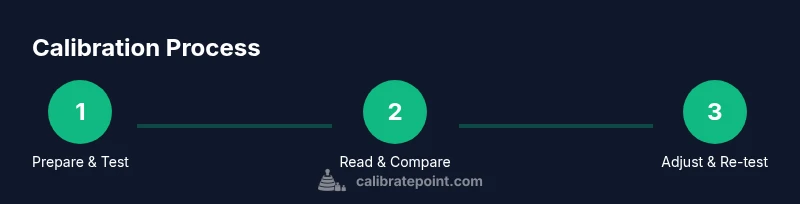
By measuring with an oven-safe thermometer and comparing it to your oven’s dial, you can accurately calibrate oven temperature. Start with two standard bake settings, record the readings, and adjust the thermostat or dial as needed. Keep notes, re-test after any adjustment, and verify with a second thermometer for reliability. This quick method sets the foundation for precise baking results.
Why Accurate Oven Temperature Calibration Matters
According to Calibrate Point, accurate oven temperature calibration matters for consistent baking results across recipes. The Calibrate Point team found that many home ovens heat differently than the settings indicate, which can lead to undercooked or overbaked dishes. This guide explains how to calibrate oven temperature safely and effectively, so you can rely on your oven for precise results in everyday recipes and specialized techniques alike. In a kitchen where timing is everything, even small temperature drift can throw off bread rise, cookies, and roasts. By investing time in calibration, you gain confidence that your oven is performing as designed, reducing waste and improving predictability in cooking outcomes. We’ll cover methods that apply to most residential ovens, safety considerations, and tested steps you can perform without professional service. The goal is not to replace professional calibration for commercial kitchens but to empower you to manage home appliance accuracy with practical, evidence-based methods. Calibration is a process, not a one-off adjustment, and you’ll benefit from periodic checks as ovens age and bakeware changes.
How Oven Temperature Is Measured and Reported
Ovens report temperature in two main ways: the built-in thermostat and the oven thermometer you place inside. The dial or digital readout is the reference you rely on when selecting bake settings. However, many factors create a mismatch between what the knob says and what the interior actually reaches. An oven thermometer placed in the center of a rack provides a direct measurement of interior air temperature and can confirm if the oven is consistent across the baking chamber. Differences can occur due to door seal wear, hot spots, rack placement, and oven venting. Understanding how measurement works helps you plan an effective calibration strategy and decide when professional adjustment is warranted. In practice, you’ll use a thermometer to capture real temperatures at multiple points and then compare to the oven’s display. Consistent data across tests gives you a reliable baseline for future bakes and for scheduling re-checks after maintenance.
Factors That Cause Temperature Inaccuracy
Ovens can drift due to worn door seals, inaccurate thermostats, heating elements wearing out, oven racks interfering with air circulation, or improper calibration settings. External factors such as nearby cabinetry, oven placement, and frequent opening of the door can also affect heat distribution. In safety terms, avoid attempting to adjust high-voltage components; instead rely on manufacturer-provided calibration screws (if available) or professional service. It's common for older ovens to run hotter than labeled or cooler in the center than near the edges, which leads to uneven browning. Document what you observe: whether edges brown too fast compared to center, if roasts take longer than expected, or if baked goods differ from recipe expectations. With that context, you can tailor your calibration tests to target the most relevant temperature range for your cooking style.
Calibration Methods: Thermostat Calibration vs. External Thermometer
Two main approaches exist: adjusting the oven’s thermostat (if your model supports a calibration screw or digital offset) or relying on an external thermometer to correct the readings you trust. Thermostat calibration is model-dependent; not all ovens allow a user to adjust the thermostat directly. When a model supports this, you’ll typically remove a back panel or find a small offset screw; turning it slightly changes the setpoint. If your oven lacks a calibration control, you can achieve accurate results by relying on a calibrated oven thermometer and adjusting your recipes accordingly or by requesting professional service for a more lasting fix. Using an external thermometer is often the simplest path for DIYers: place the thermometer in the center of the rack, preheat, and compare to the display. In both cases, repeat tests at multiple temperatures to build a robust calibration profile.
Preparing for Calibration: Tools, Safety, and Setup
Before you begin, assemble your tools and review safety precautions. Gather an oven-safe thermometer, a notebook or digital log, a pen, and any model-specific instructions from the manufacturer. Make sure the oven is clean, doors seals are intact, and there is good ventilation if you’re doing extended test cycles. If your oven has a convection setting, decide whether to test with convection on or off, since air circulation affects readings. Place the thermometer in the center of the oven, away from walls and racks, to obtain a representative temperature. Plan to test at least two temperatures that you use for everyday baking, such as a mid-range and a higher bake setting. If your oven supports a calibration adjustment, locate the control before starting and note any documented torque or screw positions from the manual.
Interpreting Test Results and Making Adjustments
When you compare thermometer readings to the oven’s display, look for consistent differences across multiple tests. A reading significantly higher than the display indicates the oven runs hotter than shown; lower readings indicate it runs cooler. If your model offers a calibration offset, you can adjust the setpoint in small, documented increments and re-check. For ovens without an official offset, use the external thermometer readings to guide recipe adjustments, such as baking at slightly different temperatures or for slightly different times. Record all changes, the temperatures tested, and the resulting bake outcomes to build a calibration profile you can reuse.
Post-Calibration Testing and Validation
After making any adjustments or documented offsets, re-test at both test temperatures to confirm stability. Allow the oven to stabilize for 15–20 minutes between tests to ensure readings reflect steady-state temperatures. If readings still diverge beyond your tolerance (which you define as part of your calibration plan), repeat the process or consider professional service for a deeper adjustment. A final test bake—such as a simple loaf or sheet of cookies—can validate results in a real-world scenario and help you confirm consistent browning and doneness.
Maintenance, Documentation, and Scheduling Recalibration
Treat calibration as part of routine appliance maintenance. Log dates, oven model, test temperatures, readings, and any adjustments made. Recalibrate if you notice changes in performance, after appliance repairs, or following a move to a new kitchen environment where heat distribution may differ. Periodic checks are useful, even without noticeable issues, because oven components drift slowly over time. Keeping a calibration log helps you track drift and plan timely refreshes, preserving baking accuracy for the long term.
Tools & Materials
- Oven-safe thermometer (dial or digital)(Choose a long-stem model; position in center of the oven away from heating elements)
- Second thermometer for cross-check (optional)(Helps confirm a suspicious reading; not required for basic calibration)
- Calibration log/notebook(Record test temps, readings, adjustments, and outcomes)
- Pen or pencil(For quick notes during testing)
- Manufacturer manual or digital copy(Reference for any model-specific calibration screws or offsets)
- Infrared thermometer (optional)(Only for quick surface checks; not a substitute for interior oven testing)
- Heat-safe gloves (optional)(Useful when handling hot racks during testing)
Steps
Estimated time: 60-90 minutes
- 1
Gather tools and safety
Collect all testing gear and review safety notes. Ensure the kitchen area is clear, the oven is cool, and you understand how to access any calibration screws if your model supports them.
Tip: Having everything ready saves test time and reduces the chance of mistakes. - 2
Place thermometer and prepare oven
Insert the oven-safe thermometer into the center of the oven on the middle rack, away from walls and vents. If your model has a convection setting, decide whether to test with or without convection since it affects readings.
Tip: Center placement minimizes edge effects and gives a representative reading. - 3
Preheat to first test temperature
Preheat the oven to your first standard bake temperature and allow it to stabilize for 15–20 minutes. The goal is a steady-state reading rather than a rising-temperature moment.
Tip: Stability is more important than hitting the exact moment you reach target. - 4
Record first reading and compare
Read the thermometer and compare with the oven’s dial or digital display. Note whether the display reads higher, lower, or matches the thermometer reading, and document any noticeable lag.
Tip: Take multiple readings if you suspect fluctuation before deciding on next steps. - 5
Preheat to second test temperature
Repeat the test at a second commonly used bake temperature. Ensure the oven has time to stabilize before reading.
Tip: Testing at two temperatures helps reveal whether drift is consistent across the range. - 6
Record second reading and assess need for adjustment
Capture the second thermometer reading and compare again. If your model supports a calibration offset, note the recommended adjustment and apply a small change, then re-test.
Tip: Make conservative adjustments; small offsets prevent overshooting. - 7
Re-test after adjustment
After applying any adjustment, repeat both tests to verify alignment. Confirm that the thermometer and display now agree within your acceptable tolerance.
Tip: If there is still a discrepancy, repeat the process or consult the manufacturer manual. - 8
Document results and finalize
Log the final readings, adjustments, and any notes about bake outcomes. Use this profile for future bakes and plan periodic rechecks.
Tip: Keep the log accessible near the oven for quick reference.
Questions & Answers
What is oven temperature calibration and why is it necessary?
Oven temperature calibration aligns the thermostat reading with the actual oven temperature using a reliable thermometer. It prevents undercooked or overcooked results and improves consistency across recipes.
Oven calibration makes sure your oven's temperature matches what you set, so your baking comes out right each time.
Do I always need professional calibration?
Most home ovens can be calibrated yourself if the model provides an offset or calibration screw. If not, you can rely on an external thermometer and adjust recipes or seek service for a more permanent fix.
In many cases you can do it yourself if your oven supports it; otherwise professional service is an option.
How accurate should my oven be after calibration?
Aim for the internal thermometer and the oven display to be within a small, consistent difference across tested temperatures. Define your own acceptable tolerance based on your cooking style and recipe precision.
Keep them close and consistent across tests to trust your bakes.
How often should I calibrate my oven?
Calibrate when you notice timing differences in recipes, after moving the oven, or following servicing. Regular checks (annually or semi-annually) help catch drift early.
Do a check at least once a year or after any service or relocation.
What if my oven doesn’t have a calibration screw?
If there’s no calibration control, rely on a calibrated thermometer and adjust recipes accordingly. Some models may offer digital offsets in the settings.
If there’s no screw, use the thermometer readings to guide cooking times and temperatures.
Is it safe to calibrate an oven?
Calibrating follows standard kitchen safety: keep hands away from hot surfaces, turn off power when inspecting components, and only adjust controls per the manufacturer’s instructions. If uncertainty arises, consult a professional.
Yes, with proper safety and following the manual, it’s safe to calibrate at home.
Watch Video
Key Takeaways
- Test at two temperatures for accuracy.
- Record readings and adjustments diligently.
- Re-test after any change to confirm stability.
- Maintain a calibration log for ongoing accuracy.