How to Calibrate a Forno Oven: A DIY Calibration Guide
Learn a step-by-step method to calibrate a forno oven at home. This Calibrate Point guide covers tools, safety, and precise temperature adjustments for baking accuracy.


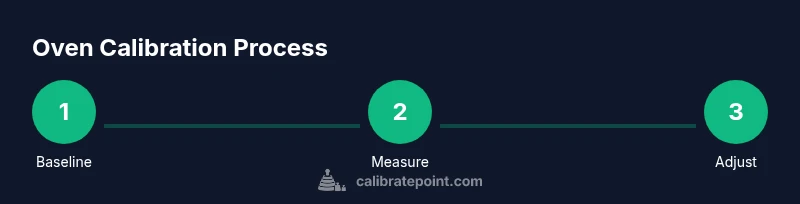
Goal: calibrate a forno oven so its internal temperature aligns with the control dial for reliable baking results. You’ll need an oven thermometer, basic tools, and a safe workspace. This guide presents a six-step process with practical tips and realistic time estimates. By following it, you minimize temperature drift and improve repeatability.
Why calibrating a forno oven matters
Calibrating a forno oven ensures that the temperature you see on the dial matches the oven’s actual internal temperature. When temperatures drift, baked goods can under- or over-cook, leading to inconsistent results across batches. According to Calibrate Point, a systematic calibration improves repeatability and reduces recipe guesswork, especially for delicate pastries and bread that depend on precise heat. This section explains why calibration matters not only for flavor and texture, but also for efficiency and safety, as accurate temperatures help prevent undercooking and burnt edges. The goal is not to chase perfection in every bake, but to establish a dependable baseline you can reuse each time you cook. A well-calibrated oven also makes it easier to follow temperature-specific recipes and keeps your kitchen workflow predictable, especially during busy service or meal-prep sessions.
Practical reasons to calibrate your forno oven
- Consistency: predictable heat leads to repeatable results across batches.
- Efficiency: accurate temps reduce guesswork, saving energy and time.
- Safety: avoiding overheating prevents smoke and potential fire hazards.
- Ingredient integrity: precise heat preserves texture and moisture in delicate foods.
In practice, calibration pays off in everyday dishes like roasts, meringues, and cookies, where small temperature differences become noticeable. The Calibrate Point team emphasizes documenting readings and offsets so you can track changes over time and know when a re-calibration is due. If you notice dramatic shifts after moving the oven or changing racks, it’s a strong sign to re‑check the calibration.
How drift can appear in your kitchen and what to look for
Ovens can drift due to aging components, door seal wear, or environmental changes. Look for clues like uneven browning, hot spots, or edges cooking faster than centers. By testing with a thermometer at multiple rack positions, you’ll identify whether drift is uniform or localized. This helps decide whether a simple offset adjustment suffices or more in-depth servicing is needed. Calibrate Point’s methodology guides you through a structured test protocol to reveal these patterns without guesswork.
Tools & Materials
- Oven thermometer (oven-safe, calibrated)(Place in the center of the oven cavity for baseline readings)
- Calibrated second thermometer (optional cross-check)(Use to confirm thermometer accuracy and rule out a faulty sensor)
- Notepad and pen(Record readings, offsets, and observations)
- Oven-safe baking sheet or pan(Used as a stable surface if you test multiple items at once)
- Aluminum foil or silicone mat(Protects tester surfaces and helps with cleanup)
- Heat-resistant oven mitts(Safety while adjusting racks and sensors)
- Timer or clock(Track test intervals and hold times)
- Masking tape or sticky notes(Label readings and offsets for clarity)
Steps
Estimated time: 45-60 minutes
- 1
Prepare your testing area
Clear the workspace around the oven and gather all tools. Wipe any spills and ensure the oven is cool before handling interior components. This baseline setup reduces the risk of contamination and measurement errors. Racks may be removed or repositioned to access the thermometer slot if needed.
Tip: Wear heat-resistant gloves and keep a clear path for safe movement of hot racks. - 2
Establish a baseline reading
Place the oven thermometer in the center of the rack and preheat to a common reference temperature (e.g., 350°F / 175°C). Record the thermometer reading once the oven stabilizes for 10–15 minutes. Note any rapid fluctuations indicating poor sensor stability.
Tip: Close the door gently to minimize temperature fluctuation during stabilization. - 3
Test at multiple points
Take readings at the center, top, and bottom rack positions (if the oven design allows). Use the second thermometer to verify accuracy. Compare these readings with the dial setting to assess drift direction and magnitude.
Tip: Use a consistent test interval (e.g., every 3–5 minutes) for each position. - 4
Apply a thermostat offset if needed
If readings consistently differ from the dial by a noticeable amount, apply a documented offset in your oven’s thermostat settings, if available. If there’s no offset option, plan to adjust future calibrations and use the thermometer readings for recipe timing.
Tip: Document the offset value and the starting temperature for future reference. - 5
Re-test to confirm
After applying any offset, repeat the baseline test and the multi-point test. Confirm that readings align more closely with the dial across positions. If alignment remains inconsistent, re-check seals and consider professional servicing.
Tip: Allow at least 15 minutes of stabilization after any offset change before re-testing. - 6
Document results and set a review plan
Record final offsets, reference temperatures, and any notable environmental factors. Schedule a follow-up check in 3–6 months or after service events to maintain accuracy.
Tip: Create a simple checklist to run this calibration periodically.
Questions & Answers
What is the first step to calibrate a forno oven?
Begin by cleaning and preparing the oven, then set up your testing area and tools. A stable baseline is essential for accurate readings and repeatable results.
Start by prepping the oven and workspace; create a stable baseline to get repeatable results.
Do I need a second thermometer for calibration?
Having a second thermometer helps verify the primary sensor’s accuracy and reduces the risk of relying on a faulty reading. If the second thermometer disagrees, test with a different unit.
A second thermometer can confirm accuracy and catch sensor errors.
Can I adjust the oven offset if there is no offset setting?
If your oven lacks an offset setting, rely on thermometer readings to guide timing adjustments in recipes and plan a re-check during routine maintenance.
If there’s no offset, adjust by adjusting how you time recipes and plan future checks.
How long should calibration take?
Most home calibrations take around 45 to 60 minutes, including setup, multiple readings, and re-testing after adjustments.
Expect about 45 to 60 minutes for a full calibration.
How often should I recalibrate?
Recalibrate after major oven work, relocation, or progressive temperature shifts, and consider a routine check every few months.
Calibrate after servicing or if you notice drift, and periodically check.
Is it safe to calibrate while the oven is warm?
Calibration should generally occur when the oven is cool to allow safe handling, then you can rehearse with controlled reheating for readings.
Work with the oven cool for safety, then test during controlled reheats.
Watch Video
Key Takeaways
- Calibrate forno oven with a structured test plan
- Record baseline, offsets, and repeatability
- Use thermometer readings to guide adjustments
- Document results for future reference