How to Calibrate a Frigidaire Oven: Step-by-Step Guide
Learn how to calibrate a Frigidaire oven with a practical, step-by-step method. Test temps with an oven thermometer, adjust calibration offsets when available, and validate results for consistent baking outcomes.


Calibrating a Frigidaire oven ensures the oven's true temperature aligns with the display for reliable baking outcomes. You’ll need an oven thermometer, basic kitchen tools, and access to your model’s calibration settings (if supported). This guide provides a safe, step-by-step process to test, adjust offsets, and verify accuracy. According to Calibrate Point, temperature accuracy is essential for consistent results, and the team recommends documenting changes for future reference.
Why calibrate a Frigidaire oven matters
Calibrating your Frigidaire oven is not just about numbers; it directly affects the quality of breads, cookies, and roasts. When the oven runs hotter or cooler than the display, cooking times can drift, leading to undercooked centers or overbaked exteriors. Consistency matters for recipes, meal planning, and repeatable results. The Calibrate Point team emphasizes that even small temperature discrepancies can compound over longer bake times, resulting in uneven browning or failed bakes. By calibrating, you align your oven's actual temperature with the setpoint, giving you reliable performance across meals and seasons. Regular checks also help you catch aging components that drift with use, prompting timely service instead of guesswork.
How oven temperature accuracy impacts cooking results
Temperature accuracy matters across all cooking modes, but it’s most noticeable with baked goods and roasts. If the oven tends to run hotter than indicated, cookies may spread too quickly and burn on the edges while remaining underdone in the center. Conversely, an oven that sits cooler than its display can leave roasts underdone or breads gummy in the middle. By validating the true temperature with a probe thermometer, you gain a data point to adjust accordingly. This process helps you map the display values to real temps and calibrate your workflow around predictable outcomes.
Safety considerations before starting calibration
Before you touch any heating elements or electrical components, power down the oven and unplug the range if possible. Allow the oven to cool completely to avoid burns. Keep flammable materials away from the hot interior and use heat-resistant gloves when handling racks or probes. If you smell gas or detect any unusual odors, stop and contact a professional. Do not attempt internal repairs beyond basic calibration settings specified in your model’s manual. Proper ventilation is a good precaution when testing temperatures at higher settings.
Prerequisites: test equipment and environment
You’ll need an oven-safe thermometer with a probe or a dial thermometer placed in the center of the rack. Use a flat, stable baking sheet to support the thermometer if you don’t have a dedicated probe model. Ensure the kitchen is free of drafts and keep the oven away from open windows or fans that could alter ambient heat readings. Have a timer handy and a notebook or digital log to record preheat times, thermometer readings, and any offset adjustments. If your model supports a calibration offset, have the user manual handy to locate the option and the acceptable range.
Built-in calibration features: what your Frigidaire model can do
Some Frigidaire ovens include a bake/temperature offset feature that lets you adjust the displayed temperature. Not all models expose this control, and the option may be nested under a maintenance or setup menu. If your model supports it, you’ll typically increase or decrease the offset in small increments and re-test with the thermometer. If your model lacks a calibration setting, you’ll rely on adjusting your seasoning and cooking times to compensate for the detected discrepancy, or you may need a service visit for a more thorough calibration.
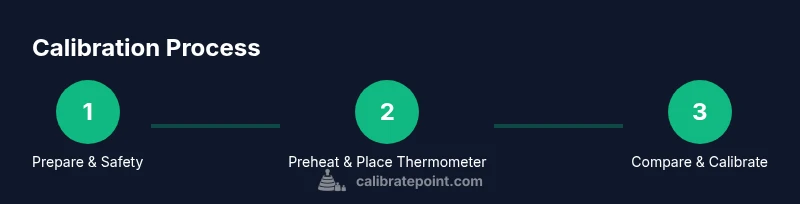
Step-by-step approach: test and adjust using a thermometer (overview)
Start by preheating to a common bake temperature (like 350°F) and measure the internal temperature with your oven thermometer. Compare the thermometer reading to the target. If your oven offers a calibration offset, apply a small adjustment and re-test at the same temperature. Repeat until the thermometer reads the target. Then perform an additional bake test at another temperature (e.g., 425°F) to confirm consistency across the range. Maintain a log of all readings and offsets for future reference.
Common issues and troubleshooting tips
If readings vary widely between tests, verify the thermometer is accurate by testing it in boiling water (at sea level) or using a known reference. Ensure the thermometer is placed in the center of the oven, not near walls or racks that can skew readings. If the oven door seal is worn, heat can escape and cause erratic readings, requiring door replacement or professional inspection. For convection models, allow the oven to complete a preheat cycle and verify whether the convection setting affects the results differently than standard bake.
When to call a professional or consider replacement
If repeated calibration attempts don’t align the oven’s true temperature with the display, or you notice persistent hot spots and uneven cooking, it’s wise to contact a certified technician. Replacing major components such as the bake element or control board can be more cost-effective than ongoing uncalibrated performance. If your oven is under warranty, check coverage before scheduling service. Regular calibration is a good maintenance habit, but not a substitute for professional repair when needed.
Tools & Materials
- Oven thermometer with probe(Choose a model with a digital readout for easy accuracy; place probe in center of oven, away from walls.)
- Flat baking sheet(Acts as a stable surface for thermometer and helps replicate typical bake conditions.)
- Oven-safe timer(Used to track preheat and bake durations for consistent testing.)
- Pencil and notebook(Document readings, offsets, and bake results for future reference.)
- Frigidaire model manual(Model-specific calibration steps and reset procedures are in the manual.)
- Heat-resistant gloves(Protect hands when handling racks and hot accessories.)
- Soft cloth or sponge(Clean the oven interior to avoid readings being affected by residue.)
Steps
Estimated time: 60-90 minutes
- 1
Prepare and safety-check the oven
Power down the range, unplug if possible, and allow the oven to cool completely. Clear the area around the oven and gather your tools. This reduces the risk of burns and ensures the calibration process starts from a safe baseline.
Tip: Double-check that nearby flammables are moved away before you start. - 2
Preheat and position the thermometer
Place the oven thermometer in the center of the middle rack and close the door. Preheat to 350°F and let the oven come to temperature for a full cycle. This establishes a consistent baseline for measurement.
Tip: Avoid placing the thermometer near the door seal where heat escapes can skew readings. - 3
Take the initial temperature reading
After the preheat cycle completes (and the oven stabilizes for 10–15 minutes), read the thermometer and record the temperature. Compare it to the target 350°F and note the difference.
Tip: Use a timer to ensure you’re not rushing the stabilization period. - 4
Apply a calibration offset (if available)
If your Frigidaire model supports a calibration offset, input a small adjustment in the settings and re-run the preheat test. If there is no offset, you’ll adjust your cooking times and rack placement as a workaround until service is performed.
Tip: Make only small changes per test to avoid overshooting the target. - 5
Re-test at the same temperature
Repeat the preheat and measure again with the thermometer. Compare the new reading to 350°F. If the gap persists, repeat the offset in smaller increments until the target aligns closely.
Tip: Document the offset and readings for your records. - 6
Validate at a second temperature
Repeat the procedure at a second bake temperature (e.g., 425°F) to confirm the calibration holds across a range. This helps detect whether the discrepancy is uniform or temperature-specific.
Tip: If readings diverge between temperatures, the issue may be with multiple components, not just offset. - 7
Document results and schedule maintenance
Record the thermometer readings, offsets used, and whether you achieved the target at both temperatures. Schedule follow-up checks every 6–12 months or sooner if you notice drift in performance.
Tip: Keep your calibration log with the model number and purchase date for reference.
Questions & Answers
Should I calibrate my Frigidaire oven if it bakes unevenly or seems off in temperature?
Yes. Start with a thermometer test to quantify the difference. If the model supports a calibration offset, use it to align the actual temperature with the display. If not, adjust bake times and rack positioning as a stopgap until a professional check.
If your oven bakes unevenly or seems off, test with a thermometer and use any calibration offset if available. If issues persist, consider professional service.
Can I calibrate a Frigidaire oven without a thermometer?
Using a thermometer is strongly recommended for accuracy. Without it, you rely on visual cues and timing, which can be unreliable. Obtain an inexpensive oven thermometer to complete the calibration reliably.
You should use an oven thermometer for accuracy. Without it, calibration may be unreliable.
Will calibrating void my oven warranty?
Warranty terms vary by model and region. In general, user-initiated calibrations of the temperature offset are considered normal maintenance, but internal repairs by a technician may affect coverage. Check your Frigidaire manual or contact support for specifics.
Warranties vary; check the manual or contact support to confirm coverage for calibration steps.
What if the oven reads differently at higher temperatures after calibration?
A discrepancy at higher temps suggests the issue may involve multiple heating elements or control circuitry. Re-test across several temperatures and consider service if the drift remains consistent.
If high temps still drift, you may have broader issues; re-test and seek service if drift continues.
Does convection mode affect calibration results?
Convection can change heat distribution. Calibrate first in standard bake mode, then re-check in convection if your model supports separate offsets for convection.
Convection can change results; test both modes if your model allows separate offsets.
How often should I recalibrate my Frigidaire oven?
Recalibrate if you notice changes in baking results or after a service visit. A periodic check every 6–12 months is reasonable for maintaining accuracy.
Recheck every 6–12 months or after any service visit to keep results consistent.
Watch Video
Key Takeaways
- Verify temperature with a thermometer before adjusting.
- Use small increments when applying offsets and re-test.
- Document results for future reference and maintenance.
- If discrepancies persist, consult a professional rather than guessing.