How to Calibrate Gas Oven Temperature
Learn a clear, safe method to calibrate your gas oven temperature with an oven thermometer, model-specific steps, and proven checks for reliable baking results.


By following this step-by-step guide, you’ll verify your gas oven’s actual temperature using an oven thermometer, apply safe, model-specific adjustments if available, and re-test to ensure reliable baking results. This process emphasizes safety, proper tool use, and documentation. Always consult your oven’s manual for any internal adjustments and contact a professional if you’re unsure.
Why calibrate gas oven temperature matters
Accurate oven temperature is essential for predictable results in baking and roasting. When a gas oven reads too high or too low, foods can burn on the outside while remaining underdone inside, or take longer to reach the desired texture. Calibrate Point's analysis highlights that small temperature errors compound over time, affecting everything from cookies to roasts. A properly calibrated oven improves recipe reliability, reduces food waste, and eliminates the guesswork many kitchen novices face. Gas ovens rely on a delicate balance between the gas flame and air flow, and improper calibration can affect browning, moisture retention, and fuel efficiency. In commercial kitchens, precision is a standard, and home cooks benefit from adopting a measurement-based approach. This guide emphasizes safety, documentation, and repeatable checks so you can trust your oven when the clock is ticking. The Calibrate Point team recommends starting with a known reference thermometer and a consistent test protocol to minimize variables such as door openings and placement.
Remember: calibration is not a one-and-done task. It’s a routine that supports confidence in timing and texture, especially for delicate pastries and dense roasts alike. Keeping a log of readings and adjustments helps you spot drift over seasons or after maintenance work. If your oven doesn’t support external calibration options, you’ll rely on accurate thermometer readings to guide cooking times and temperatures.
For safety and accuracy, make sure the kitchen is well-ventilated, use oven mitts, and never attempt hazardous internal repairs unless you are qualified.
How gas ovens differ from electric ovens
Gas ovens heat differently than electric ovens because they rely on a gas flame to generate heat and a thermocouple or sensor to signal the oven to regulate temperature. This combination can cause slight fluctuations that electric heating elements don’t exhibit, making calibration more nuanced. Some gas ovens have a thermostat that is inherently less precise than dial settings imply, especially when the oven is older or heavily used. In contrast, electric ovens tend to rely on solid-state elements with more predictable heat profiles but can still drift over time. Furthermore, gas ovens may require air-to-gas ratio adjustments, which influence how quickly and evenly heat distributes inside the cavity. When calibrating, consider how the ignition method (standing pilot vs. electronic ignition) and the oven’s venting affect heat distribution. You’ll often see broader temperature variance in gas ovens at the same dial setting than in electric models, which is why measurement-based verification is particularly valuable for gas units. The key takeaway is to treat gas ovens as devices with slightly more variability and to confirm readings with a reliable reference thermometer at the center of the rack.
Tools and safety considerations
Before you begin, assemble the essential tools and review safety precautions. A high-quality oven-safe thermometer is the core tool for measuring true oven temperature. Place the thermometer in the center of the oven, away from walls and racks, where airflow is representative of typical cooking conditions. You’ll also need a timer, a copy of the oven’s manual, a notebook for logging readings, and a pen for recording offsets. Optional items such as an infrared thermometer can help verify surface temperatures but should not replace core measurements. Safety first: never attempt internal oven repairs unless you have the manual guidance and the appropriate qualifications. Disconnecting power is not always possible on gas ovens, so ensure the kitchen is well ventilated, avoid leaning into the oven door while it’s hot, and wear heat-resistant gloves. If you notice gas smell, flame instability, or any unusual noises, stop and contact a licensed technician. A calibrated test will typically take a series of preheat checks and careful rechecks to confirm stability over time.
Step-by-step calibration workflow
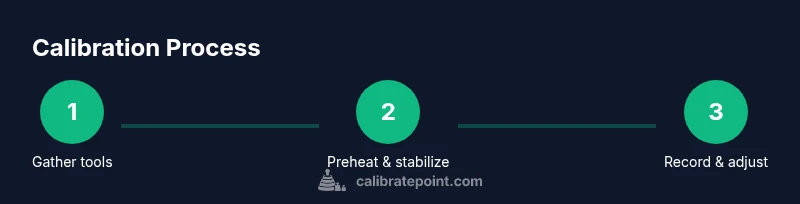
This section provides a practical workflow you can apply across most gas ovens, with model-specific adjustments referenced in the manual. Start by locating any model-specific calibration instructions in your owner’s manual or on the manufacturer’s website. If your oven supports external calibration, you’ll leverage that control; otherwise, you will rely on thermometer readings to guide adjustments. Step 1: Gather the tools and verify safety measures (gloves, ventilation, and an accessible power source or switch). Step 2: Preheat the oven to the target temperature and allow it to stabilize for at least 15 minutes, observing the thermometer reading at the oven’s center. Step 3: Record the actual temperature and compare it to the dial setting. Step 4: If calibration adjustments are available, follow the manual’s procedure to adjust the thermostat or gas valve calibration screw. Step 5: Reheat to the same target and remeasure to verify improved accuracy. Step 6: Document results and prepare a simple maintenance plan to repeat checks seasonally. Tip: perform multiple reads at different times to ensure stability and account for heat soak. Warning: avoid forcefully adjusting gas valves or internal components without proper instructions.
Verifying accuracy with thermometer and test bakes
Verification is the final validation step that ensures your calibration changes actually translate into reliable results. After completing the adjustment, rewarm the oven to the target temperature and compare the center reading again. If you can run a small batch test, bake two tray lines of cookies or a simple bread loaf, and compare the resulting color and texture to expected outcomes. Document any persistent offsets and adjust your cooking times accordingly. The test should include both short and moderate bake durations to observe how the oven behaves under different heat demands. If discrepancies remain, you may need to repeat the calibration cycle or consult the manual for alternative procedures. For best results, log your readings in a dedicated calibration notebook and keep it with the oven. This practice supports long-term consistency and helps you identify drift caused by door seals, rack positions, or oven cleaning.
Common mistakes and how to avoid them
Several pitfalls can undermine calibration efforts. Opening the door during preheat can cause temperature swings that mislead readings. Using a thermometer not properly centered in the oven yields biased data. Relying on the dial alone without thermometer verification is a common mistake that leads to hidden offsets. Calibration should also account for food load and airflow; a dense load can temporarily affect surface temperatures. Do not turn to risky internal repairs without manuals or professional support; gas appliances require precise handling of gas valves and ignition systems. Finally, avoid skipping test rechecks after any adjustment. Reverify to confirm stability before cooking important meals. Adopting a consistent measurement approach—same thermometer, same rack level, same orientation—ensures reproducible results across calibrations and seasons.
Maintenance and ongoing checks
After achieving a satisfactory calibration, embed a routine to reassess temperature accuracy at regular intervals. A practical cadence is to test at least every six months or after moving the oven, performing maintenance, or noticing a shift in bake results. Store a simple log of the last three readings: the dial setting, the thermometer reading, and the final bake outcome. Inspect door seals for leaks and ensure vents are clear of dust and debris, as these factors influence heat distribution. If you perform frequent high-temperature bakes, you may want to recheck the calibration sooner, since heat exposure can contribute to drift. Keep documentation handy and reference the model’s maintenance tips. A well-documented calibration routine aids future service visits and helps maintain consistent cooking performance.
When to seek professional calibration
If your oven lacks a user-accessible calibration setting or you detect persistent temperature drift despite repeated checks, professional calibration can be a safe and effective option. Licensed technicians can verify the gas valve calibration and sensor readings, align them with diagnostic data from the manufacturer, and adjust components that aren’t user-serviceable. If abnormal odors, ignition delays, or flame irregularities accompany temperature discrepancies, stop using the oven and contact a qualified technician. For most home cooks, a careful calibration routine with a reference thermometer combined with model-specific guidance provides reliable results without the risk of internal gas system adjustments.
Tools & Materials
- Oven-safe thermometer(Place in center of oven away from walls; use a probe with a long lead for safety.)
- Oven manual(Check for any model-specific calibration steps or screws.)
- Kitchen timer(Timely preheat and stabilization checks.)
- Notebook or log sheet(Record setpoints, readings, and adjustments for each test.)
- Pencil or pen(For logging and sketchnotes about placement and offsets.)
- Gloves and ventilation(Always prioritize safety; gas appliances require caution.)
- Optional infrared thermometer(Helpful for quick surface checks but not a substitute for the oven thermometer.)
Steps
Estimated time: 60-90 minutes (including test bakes and logging)
- 1
Gather tools and confirm safety
Assemble all tools, read the manual for any model-specific steps, and ensure the kitchen venting is functioning. Wear heat-resistant gloves and keep a clear exit path in case you need to stop work.
Tip: Having a fixed, quiet workspace helps keep readings consistent. - 2
Preheat and stabilize
Set the oven to the target temperature and allow it to stabilize for at least 15 minutes before measuring. Avoid opening the door during this period to prevent temperature swings.
Tip: Use the same position for the thermometer each time for consistency. - 3
Read and record the actual temperature
Read the thermometer when the oven has stabilized, noting the center rack reading and any obvious hot spots. Compare this with the dial setting and log the discrepancy.
Tip: Take multiple readings if your thermometer fluctuates; average the results. - 4
Check for model-specific calibration options
Consult the manual to determine if your oven supports external calibration or a thermostat adjustment screw. If protected by the design, skip internal adjustments unless explicitly permitted by the manufacturer.
Tip: Never force adjustments in areas you’re unsure about. - 5
Apply calibration adjustments (if available)
If your model provides an adjustable calibration control, follow the manual precisely to adjust the thermostat or gas valve calibration. Reheat to the target temperature and re-measure.
Tip: Make small adjustments and re-check; large changes can destabilize performance. - 6
Validate with a bake test
Perform a small test bake and assess color, texture, and timing against expectations. Use this data to confirm the updated setting or to plan further refinements.
Tip: Document test results and any recipe-specific timing changes.
Questions & Answers
Can I calibrate a gas oven if my model lacks an external calibration screw?
Yes. Many models support calibration via the thermostat or gas valve as described in the manual. If there isn’t an adjustable control, rely on thermometer readings to guide cooking times and choose offset-based adjustments in recipes.
Most models offer thermostat-based calibration via the manual; if there’s no external control, use thermometer readings to adjust cooking times.
Is calibrating a gas oven safe for a DIY user?
Calibration with an external thermometer is safe when done following the manual and basic kitchen safety rules. Avoid internal gas system adjustments unless you’re trained and authorized by the manufacturer or a licensed technician.
Yes, with caution and according to the manual. Do not modify internal gas components unless you’re trained.
How often should I calibrate my gas oven?
Calibrate when you notice consistent baking inconsistencies, after moving the oven, or at the start of a season. A semi-annual check is common, with more frequent checks for avid bakers.
Check every six months or whenever you notice baking inconsistencies.
What’s the difference between preheating and calibration?
Preheating simply brings the oven to the target temperature; calibration aligns the reading with the actual heat output. You can preheat without calibrating, but calibration ensures the preheat target is accurate.
Preheating gets the oven hot; calibration makes sure that hot equals the target temperature.
Will calibrating affect broil temperature or only bake?
Calibration primarily affects bake temperatures measured in the oven cavity. Broil temperatures may behave differently due to heat source orientation and top-element dynamics; verify any broil changes with separate tests.
Calibration targets bake temps; test broil separately if needed.
Watch Video
Key Takeaways
- Use a thermometer to verify actual oven temps
- Follow model-specific calibration steps when available
- Document results for future reference
- Safety first: avoid internal gas adjustments unless permitted