How to calibrate a pH meter without solution: a practical guide
Learn safe, practical steps to calibrate a pH meter without buffer solutions using dry reference materials and device offsets. This educational guide from Calibrate Point covers methods, limitations, and documentation to help DIY enthusiasts and technicians maintain accuracy when liquids are unavailable.


Goal: calibrate a pH meter without liquid buffer solutions by using dry references or built-in offsets. This method provides a practical baseline when buffers are unavailable, though it may be less precise than traditional two-point calibration with standard buffers. In this guide, Calibrate Point explains safe, step-by-step approaches, common pitfalls, and how to document results for repeatable measurements.
Why Calibration Without Solution Is Sometimes Necessary
In field work, remote labs, or busy shops where buffer solutions are not readily available, calibrating a pH meter without liquid standards can keep projects moving. This approach relies on dry-reference materials, device-stored references, or user-driven offsets to establish a baseline. According to Calibrate Point, these methods are best viewed as provisional checks that help you assess drift, rehearse electrode handling, and maintain consistency until solutions can be accessed again. Keep in mind that dry methods generally carry higher uncertainty than conventional two-point calibration with standard buffers, so results should be treated as indicative rather than definitive. You should document the method used, the environment, and the observed readings to support future investigations. This article provides context, practical steps, and safety considerations to help you navigate no-solution calibration with care.
No-Solution Calibration: What It Can and Cannot Do
Dry calibration can reveal whether your electrode is responsive and show whether readings drift over time. It cannot perfectly replace the accuracy of buffered calibrations, especially for critical measurements. Expect larger margins of error and potential temperature-related drift when buffers are absent. The goal is to establish a reasonable reference point that supports trend analysis and routine checks, not a formal certification of measurement accuracy. Always document the method, materials used, environmental conditions, and the readings you obtained so future calibrations can be anchored to real history. Calibrate Point emphasizes that no-solution calibration is best treated as a stopgap rather than a long-term substitute for standard buffers.
Dry-Reference Options: What Substitutes Are Viable
There are a few practical substitutes when buffers are unavailable. Some instruments support internal offsets or slope checks against programmed reference points. If dry-reference materials exist (e.g., dry reference powders or colorimetric checks), they can provide a quasi-reference for a quick sanity check. Test strips or color chips can offer a rough cross-check against your meter’s reading, though they do not replace a true pH buffer. Regardless of the method chosen, ensure you understand the instrument’s limits and always return to standard calibration as soon as buffer solutions are accessible. This section will outline what to expect from each substitute and how to apply it safely.
Method A: Dry Reference Materials (If Available)
When you have access to dry reference materials, follow the manufacturer's instructions to prepare the reference and interface with the electrode. Work in a stable environment and avoid contaminants that could skew readings. Touch the sensor to the dry reference surface according to the device’s calibration protocol, and record the result. If the meter supports it, capture a second reading to assess reproducibility. Dry references can provide a rough anchor for the meter’s response, but you should treat the result as provisional. Document the reference material type, lot numbers (if any), and observed values for future comparison. Always rinse the electrode with clean, dry tissue between checks to minimize carryover and prevent contamination.
Method B: Internal Offsets and Manufacturer Protocols
Some pH meters allow calibration adjustments using internal offsets or slope corrections stored in the device’s memory. If your instrument provides this capability, follow the built-in wizard or manual to set an offset that aligns the observed dry-reference reading with the expected baseline. Record the offset value and the ambient temperature during calibration, since temperature can influence pH readings. This approach can help maintain a consistent reading in the absence of buffer solutions, but it remains essential to verify accuracy later with standard buffers. Retain a log of the device’s serial number, firmware version, and calibration parameters to support traceability.
Verification Steps and Cross-Checks When Buffers Are Unavailable
Even without buffers, you can perform lightweight verification by cross-checking with alternative references. If you have pH indicator strips, compare the meter’s reading to the strip’s indicated pH and assess whether the results fall within a reasonable range. Use multiple measures to gauge stability: take three readings over a short interval and observe whether they cluster. Temperature compensation (TC) should be enabled if the device supports it, and note ambient temperature because it can impact readings. If readings are inconsistent or outside expected ranges, revert to a full buffered calibration as soon as buffers become accessible, and use the dry method only as a temporary baseline.
Documentation, Traceability, and Next Steps
Document every element of the no-solution calibration: device model, electrode age, environmental conditions, method used, the readings obtained, and any adjustments made. This documentation helps you interpret future results and informs decisions about when to revert to buffered calibration. Plan to perform a standard two-point calibration with pH 4 and pH 7 buffers as soon as they become available, then compare the results with the dry calibration to understand drift and measurement quality. The Calibrate Point team recommends pairing no-solution calibrations with a post-test verification to ensure measurement integrity over time.
Tools & Materials
- pH meter with functioning electrode(Ensure the electrode is clean and has no visible damage before starting)
- dry reference materials or colorimetric test references (optional)(Use only if available and compatible with your device)
- lint-free tissue or soft cloth(For dry cleaning and gentle blotting; avoid solvents)
- pH indicator strips (optional)(For rough cross-checks when liquids are not available)
- calibration log notebook(Record readings, conditions, and adjustments for traceability)
- gloves (optional)(To prevent skin contamination when handling the electrode)
Steps
Estimated time: 20-45 minutes
- 1
Inspect and prepare the instrument
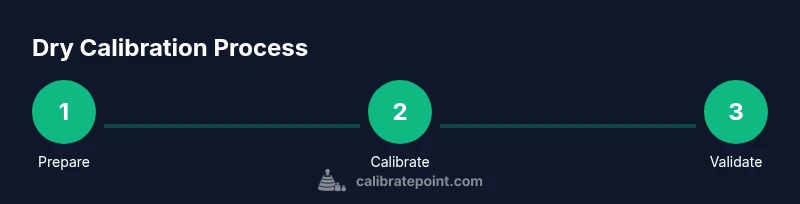
Power up the pH meter and inspect the electrode for cracks or contamination. Clean the electrode surface with a dry tissue and ensure there is no visible residue. Calibrate in a stable, wind-free environment to minimize drift.
Tip: If you detect contamination, gently blot and re-check; dirty surfaces skew readings more than any other variable. - 2
Choose your no-solution method
Decide whether you will use a dry reference material, internal offsets, or a device-supported no-solution protocol. Review the instrument manual for any no-solution calibration options and confirm that the method will be safe for your electrode chemistry.
Tip: If your device does not support no-solution calibration, halt and obtain buffers instead. - 3
Prepare reference materials
If using dry references, organize the materials and ensure they are within their expiration or usability window. Keep materials in a clean, dry container away from moisture to prevent degradation.
Tip: Label each reference clearly so you don’t mix up values during reading. - 4
Enter calibration mode and select two-point (if available)
Access the device’s calibration mode and choose the closest available option to a no-solution approach. If two-point calibration with liquid buffers is not possible, select the dry-reference or internal-offset path as allowed by the device.
Tip: Document the exact mode selected and why you chose it for future reference. - 5
Apply dry reference or engage offsets
Gently bring the electrode into contact with the dry reference material or apply the internal offset as instructed by the device. Record the reading and any displayed slope or offset values.
Tip: Wait a few seconds for the reading to stabilize before recording. - 6
Validate with cross-checks (if possible)
If you have test strips, compare the meter reading to the strip’s indicated pH. Use multiple measurements to assess stability and reproducibility. Note any discrepancies and adjust only according to the device’s documented capabilities.
Tip: Do not over-adjust; no-solution methods are inherently less precise.
Questions & Answers
Can you calibrate a pH meter without buffer solutions?
Yes, using dry-reference materials or internal offsets can provide a provisional baseline when buffers are unavailable. Expect higher uncertainty and plan to perform standard buffer calibration as soon as buffers are accessible.
Yes, you can calibrate without buffers using dry references or device offsets, but results are provisional and less precise.
What are the risks of dry calibration?
The main risk is reduced accuracy due to the absence of stable liquid references. Readings can drift with temperature, electrode condition, and reference material quality. Use as a temporary check only.
Risks include lower accuracy and drift, so treat results as provisional until buffers are available.
How do I know if the dry method is working?
Compare readings across multiple dry references or against an alternate cross-check method. Look for consistent values and minimal drift over several minutes. If readings vary widely, discontinue and revert to buffered calibration.
Check for consistency across multiple checks and avoid relying on a single reading.
Can I use test strips for validation?
Test strips can offer a rough cross-check but are not a substitute for buffered calibration. Use them to gauge if readings fall within a plausible range, not to certify accuracy.
You can use test strips for a rough check, but don’t rely on them for precision.
How often should I calibrate if I’m using no-solution methods?
Increase frequency of checks in dynamic environments, but always schedule a standard buffered calibration when possible to confirm accuracy and recalibrate device memory.
Calibrate more often in changing conditions, and switch to buffers when possible.
What should I do if readings drift after no-solution calibration?
Investigate electrode condition, re-clean, and attempt a buffered calibration as soon as buffers are available. Record drift patterns to help diagnostics.
If drift happens, check the electrode and plan for buffered calibration as soon as you can.
Watch Video
Key Takeaways
- Understand the limitations of dry-reference calibration.
- Log every no-solution calibration with method, environment, and readings.
- Revert to buffered calibration as soon as liquids are available.
- Validate with secondary checks when possible to support reliability.