How to Calibrate a pH Pen
Learn the practical, field-ready method to calibrate a pH pen with buffers, temperature considerations, and routine maintenance for consistent, accurate readings.


Calibrating a pH pen ensures accurate readings by adjusting offset and slope with standard buffer solutions. Typically perform a two-point or three-point calibration at room temperature, rinse between buffers, and store the electrode properly. This guide covers buffers, handling, and maintenance to keep measurements reliable for DIY projects and professional work.
Why calibrate a pH pen matters
Accurate pH readings are essential for reliable experiments, water testing, hydroponics, and quality control. A pH pen measures hydrogen ion activity, and its accuracy depends on sensor condition, temperature compensation, and proper calibration. According to Calibrate Point, proper calibration of a pH pen is critical for minimizing drift and ensuring repeatable measurements. The Calibrate Point team found that routine calibration paired with clean electrodes yields readings that remain stable across days. This foundational understanding helps you recognize that even small offsets can cascade into incorrect decisions about nutrient dosing, chemical adjustments, or sample classification. By calibrating consistently, you protect data quality and save time in the long run.
For field work or busy labs, a clear calibration routine reduces surprises during critical testing windows and helps you meet quality checks without reworking results.
What you need before you start
Before you reach for buffers, assemble everything in one workspace. You’ll want a clean bench, distilled water for rinsing, lint-free tissues, and a stable temperature environment. Use buffers that match your meter’s requirements and are within their labeled expiry date. Store buffers upright, sealed, and away from heat. If your instrument has temperature compensation (ATC), keep a thermometer nearby to monitor sample temperature. Finally, keep a calibration log to track when you calibrated, which buffers you used, and any anomalies observed. As a practical matter, Calibrate Point analysis shows that using fresh buffers and properly cleaning the electrode markedly reduces drift and improves your measurement confidence. With proper setup, you’ll experience smoother calibrations and fewer re-dos.
Buffer solutions and choosing calibration points
Most pH meters offer two-point or three-point calibration. The most common is a two-point calibration using pH 7.0 and either pH 4.0 or 10.0, depending on the measurement range you’ll encounter. When sensors drift, adding a neutral point (pH 7) helps center the slope; adding an acidic or basic buffer corrects the offset at one end of the range. For more rigorous work, a three-point calibration uses pH 4.0, 7.0, and 10.0. Always follow your manufacturer’s instructions, as some meters support auto-calibration, while others require manual adjustment. Prepare buffers at room temperature to minimize temperature effects on readings. Label each buffer clearly and inspect for contamination before use.
Temperature considerations and ATC
Temperature affects pH readings; most pH pens include Automatic Temperature Compensation (ATC). If your meter has ATC, you’ll still want to note the buffer temperature and sample temperature, as calibration at a different temperature can introduce a slight offset. Calibrate at the same temperature you plan to measure, or apply the correct compensation factor if your method requires it. Maintain a calm, stable temperature environment to reduce drift. If you’re operating in the field, consider a portable thermometer and keep buffers sealed to minimize temperature fluctuations during calibration.
Step-by-step workflow overview
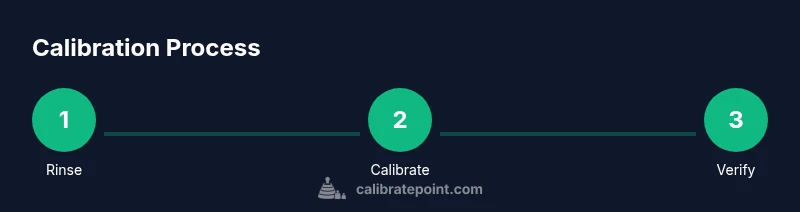
This flow provides an overview of a standard calibration: rinse the electrode, immerse in buffer, wait for stabilization, adjust the slope and offset, rinse, and record results. The exact knobs and screens vary by device, but the logic remains the same across brands. Keep buffers capped and at room temperature; never dip the electrode in a used buffer from a previous measurement, as this contaminates the buffer and distorts the calibration. After calibration, test the electrode with a control buffer to confirm accuracy across the expected range.
Cleaning, rinsing, and storage post-calibration
Between buffers and after calibration, rinse the electrode with distilled water and gently blot dry with a lint-free tissue. Do not rub vigorously, which can damage the sensor membrane. When stored, keep the probe in its storage solution or in a buffer solution recommended by the manufacturer to retain electrode hydration. This reduces dry-out drift and extends electrode life. If you won’t be using the pen for an extended period, store it according to the manufacturer’s guidance and avoid exposing it to extreme temperatures.
Troubleshooting and when to recalibrate
If readings drift by more than your acceptable tolerance, recalibrate following the steps above. Some signs you need recalibration include unstable readings after calibration, excessive humidity, or if buffers have aged past expiry. Record the calibration event and check that the electrode is clean and not fouled by sample residues. In field conditions with temperature changes, check ATC settings and temperature compatibility. If drift persists after recalibration, consider cleaning the sensor with manufacturer-approved cleaning solutions or replacing the electrode.
Documentation and traceability
Maintain a calibration log with date, buffer lot numbers, expiry dates, and operator initials. This practice enables traceability and audit readiness for quality control. If your lab uses a standard operating procedure, align your entries with it. Regular review of calibration history helps identify sensor drift patterns and plan preventive maintenance. Store past calibration records securely, and align your process with any applicable regulatory expectations for your industry.
Quick field calibration: a checklist
When you’re in the field, bring sealed buffer packs, a portable water bottle, and a small wipe towel. Calibrate at ambient temperature, verify with a quick check in a control buffer, and document the results. A simple checklist reduces the chance of skipping steps and keeps you consistent. In challenging environments, perform a quick mid-session check to ensure the device remains within acceptance criteria and calibrate again if necessary. Keeping a compact field kit with you helps sustain measurement integrity on site.
Tools & Materials
- pH pen with intact electrode(Ensure electrode is clean and not cracked)
- Calibration buffer solutions (pH 4.0, 7.0, and optional 10.0)(Check expiry date and proper storage)
- Distilled or deionized water(Used for rinsing between buffers)
- Beaker or calibration cup(Hold buffer during calibration)
- Pipettes or droppers(For precise transfer, avoid contamination)
- Lint-free tissues or kimwipe(Pat dry gently after rinsing)
- Calibration screwdriver or tool (if required by meter)(Only for meters with screw-type calibration controls)
- Storage solution or buffer for storage(Keep electrode hydrated when not in use)
- Gloves (optional)(Protect hands; avoid transferring oils)
Steps
Estimated time: 45-60 minutes
- 1
Power on and inspect
Turn on the pH pen and inspect the electrode for cracks or fouling. If the sensor looks damaged, replace it before calibration to avoid false readings.
Tip: A dirty or damaged electrode can give skewed results; address issues before starting. - 2
Rinse and prepare buffers
Rinse the electrode with distilled water, then place a clean buffer cup ready with pH 7.0 and either pH 4.0 or 10.0. Ensure buffers are at room temperature.
Tip: Never dip the electrode directly into buffers from a previous measurement to avoid cross-contamination. - 3
Calibrate at pH 7.0
Immerse the electrode in pH 7.0 buffer. Wait for the reading to stabilize, then save the value and adjust to 7.00 as required by your meter.
Tip: Stabilization time varies with temperature and old electrodes; be patient. - 4
Calibrate at the second point
Rinse, then immerse in the second buffer (pH 4.0 or 10.0). Wait for stabilization, adjust the slope or offset to align with the buffer's value.
Tip: Two-point calibration corrects offset and slope for a basic range. - 5
Verify with the third point (optional)
If using a three-point calibration, repeat the process with the third buffer and confirm readings across all points.
Tip: A three-point calibration reduces nonlinearity across a wider range. - 6
Rinse and dry
Rinse the electrode between buffers and gently pat dry with a lint-free tissue before testing samples.
Tip: Drying too aggressively can damage the tip; use a light touch. - 7
Test a control sample
Test a buffer or control solution to confirm that calibrated readings match expected values.
Tip: A quick verification helps catch calibration errors before sample testing. - 8
Record and store
Record the calibration details (date, buffers used, temperatures, operator) and store the electrode per manufacturer guidelines.
Tip: A good log helps track drift and device performance over time. - 9
Check temperature compensation
If your instrument uses ATC, confirm that readings align with the buffer temperature and adjust if necessary.
Tip: Temperature drift is a common source of error; verify compensations.
Questions & Answers
Do I need to calibrate before every measurement?
In most cases, calibrating before a set of measurements is recommended, especially after electrode cleaning or buffer changes. For frequent measurements, do a quick check to ensure there is no drift.
Yes, calibrate before key measurements or after sensor cleaning to ensure accuracy.
Can I calibrate with just two buffers?
Two-point calibration is common and adequate for many applications, typically using pH 7.0 and either 4.0 or 10.0. For broader accuracy, a three-point calibration with pH 4.0, 7.0, and 10.0 is preferred.
Two buffers work for many uses, but three-point gives better accuracy across the range.
What if the readings don’t stabilize?
If readings don’t stabilize, check electrode condition, rinse thoroughly, and confirm buffer temperatures. Re-calibrate or replace the electrode if instability persists.
Stability issues usually mean clean the electrode and re-try calibration.
How often should buffers be replaced?
Buffers should be replaced when expired or contaminated. Frequent calibration requires fresh buffers to maintain accuracy.
Replace buffers when they expire or smell odd; old buffers skew results.
Is temperature compensation necessary?
ATC helps correct readings for temperature changes, but calibrate at the same temperature you measure or apply the correct compensation factor.
Temperature matters; use ATC and calibrate at measurement temperature when possible.
What if the pH pen still reads wrong after calibration?
If issues persist, check sensor integrity, buffer quality, and electrode storage; consider recalibrating periodically and consult the manufacturer for service.
If it still reads wrong, inspect the electrode and buffers and recalibrate or replace.
Watch Video
Key Takeaways
- Calibrate with fresh buffers every session.
- Follow manufacturer steps for two- or three-point calibration.
- Record calibration data for traceability.
- Maintain electrode hydration and clean buffers.
- Verify temperature compensation matches measurement conditions.