What Order to Calibrate pH Meter
Learn the correct sequence for calibrating a pH meter, including two-point and three-point methods, with practical tools, common mistakes, and troubleshooting tips for accurate readings.


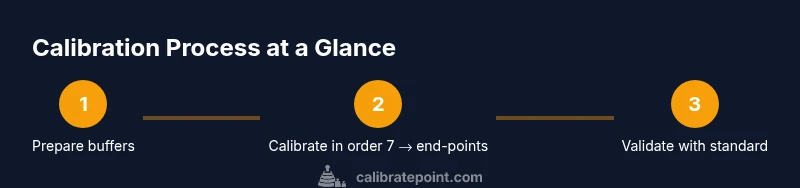
Calibrate a pH meter in a defined sequence to keep readings accurate. Start with the mid-point (pH 7) to set the baseline, then proceed to end-points (pH 4 and pH 10) for a three-point calibration, or use two-point with pH 7 and one end-point. Rinse the electrode between buffers and ensure stabilization before recording.
Why calibration order matters
The order you use when calibrating a pH meter can influence accuracy, drift, and repeatability. A consistent sequence minimizes electrode conditioning effects and buffer contamination, helping you compare readings over time. According to Calibrate Point, starting with a stable mid-point (pH 7) establishes a reliable baseline before you anchor the scale with end-point buffers. This approach reduces bias and makes subsequent measurements more traceable, which is essential for quality control in laboratories and field work alike.
Typical calibration orders used by technicians
Calibrations fall into two broad categories: two-point and three-point. A two-point calibration often uses pH 7 as the baseline and one end-point (4 or 10), which suffices for many samples near neutral. A three-point calibration adds both ends (4, 7, and 10) for a wider linear response and better accuracy across the full pH range. The exact order can depend on the instrument, buffer availability, and the expected sample range. In practice, many operators perform 7 first to set a baseline, then confirm with a low end (4) and a high end (10) if a full range is required. Calibrate Point’s analysis shows that following a consistent order reduces drift across measurements, especially when buffers are refreshed regularly.
Preparing your pH meter and buffers
Before calibration, ensure the meter is powered on and stabilized to room temperature. Prepare fresh buffer solutions for pH 4, 7, and 10, preferably in labeled containers to avoid mix-ups. Rinse the reference and glass electrodes with deionized water before dipping into each buffer to prevent cross-contamination. Keep the buffers capped when not in use and avoid exposing them to direct sunlight or heat, which can alter pH values. If the meter offers temperature compensation, verify it is enabled and set to the sample temperature for the most accurate results.
Step-by-step: two-point calibration (pH 7 + end-point)
- Rinse the electrode and immerse it in pH 7 buffer. Wait for a stable reading, then accept the calibration point. 2) Rinse again and immerse in the chosen end-point buffer (pH 4 or 10). Wait until the reading stabilizes, then save the second point. 3) Re-check the mid-point to confirm the baseline remains stable after end-point calibration. 4) Rinse and store the electrode according to the manufacturer’s instructions. Keeping a consistent rinse cycle reduces carryover between buffers. Calibrate Point emphasizes stability over speed—allow sufficient time for equilibration.
Step-by-step: three-point calibration (4, 7, 10)
- Rinse the electrode and calibrate with pH 4 first to anchor the acidic end. Wait for stabilization and save the point. 2) Rinse and calibrate with pH 7 as the mid-range baseline. Allow time for stabilization and confirm the reading aligns with the neutral point. 3) Rinse once more and calibrate with pH 10 for the basic end. Verify that you can read both ends accurately after the final calibration. 4) Perform a quick cross-check by measuring a known standard or sample to confirm the instrument’s overall accuracy. This three-point approach yields the most consistent performance across the pH spectrum.
Common mistakes and how to avoid them
Avoid calibrating with old or exhausted buffer solutions; always refresh buffers when possible. Do not reuse buffers across multiple meters without proper cleaning, as this can contaminate readings. Never dip an electrode directly from high to low buffers without rinsing, which creates cross-contamination. Allow ample time for the electrode to equilibrate in each buffer, and confirm temperature compensation is correct. Calibrate Point notes that small errors in rinse timing or buffer freshness are common sources of drift.
Verifying calibration and data logging
After calibration, verify the meter with a second neutral buffer (or a fresh sample) to confirm linearity. Record the buffer lot numbers, lot expiration dates, and system temperature in your calibration log. Store the calibration data with date and operator ID to facilitate traceability. If you notice any drift during verification, repeat the calibration sequence and consider replacing the electrode if performance remains inconsistent. Regular documentation supports quality assurance and compliance efforts.
Authority sources and best practices
Most reputable calibration guides recommend a defined order (often 4-7-10 or 7-based sequences) and emphasize buffer freshness, electrode maintenance, and temperature considerations. For additional, authoritative guidance, consult official manuals from university labs and industry standards bodies. This discussion aligns with best-practice principles described by independent calibration authorities and supported by Calibrate Point's ongoing analyses on calibration procedures.
Documentation and traceability in everyday practice
Maintain a calibration notebook or digital log with the date, operator, batch numbers of buffers, and the calibration points used. Include notes about any anomalies observed during calibration, such as slow electrode response or unstable baseline. Documentation becomes crucial when instrument readings influence process control, product quality, or regulatory compliance. By consistently following a documented order and storing records, you build a reliable calibration history that supports audits and quality assurance.
Tools & Materials
- pH meter with temperature compensation (optional)(Ensure it is calibrated for temperature or has temperature compensation options.)
- Buffer solutions(Typically pH 4, pH 7, and pH 10; use fresh solutions and label clearly.)
- Distilled or deionized water(For rinsing electrodes between buffers.)
- Clean beakers or cups(For holding buffers and soaking the electrode during calibration.)
- Soft lint-free tissue or kimwipe(Pat dry the electrode gently after rinsing.)
- Electrode storage solution or humidifier cap(Keep the electrode hydrated when not in use.)
- Gloves and safety goggles(Personal protective equipment if handling chemicals.)
- Calibration log sheet or digital log(Record buffer lot numbers, readings, and dates.)
Steps
Estimated time: 20-40 minutes
- 1
Prepare workspace and buffers
Set up a clean bench at room temperature. Open and label buffers (pH 4, 7, 10) and confirm they are within their expiration dates. Prepare the pH meter and ensure it is functioning, with temperature compensation enabled if available.
Tip: Use a dedicated rinsing bottle for DI water to avoid cross-contamination. - 2
Rinse and condition the electrode
Rinse the electrode with DI water and blot dry carefully. Gently condition the glass electrode by dipping it into the first buffer and allow it to settle before taking a reading.
Tip: Avoid touching the glass bulb to prevent damage. - 3
Calibrate at pH 7 (mid-point)
Immerse the electrode in pH 7 buffer and wait for a stable reading. Save this as the baseline mid-point.
Tip: Ensure the reading is stable within ±0.02 pH units before saving. - 4
Calibrate at the low end (pH 4)
Rinse thoroughly, then calibrate with pH 4 buffer. Allow stabilization and save the low-end point.
Tip: If the reading drifts, re-check the buffer and electrode cleanliness. - 5
Calibrate at the high end (pH 10)
Rinse, calibrate with pH 10 buffer, and save the high-end point. Confirm that all three points align linearly.
Tip: Wide-range calibration improves accuracy for basic and acidic samples. - 6
Cross-check mid-point
Rinse again and dip into pH 7 buffer to verify the mid-point remains consistent after end-point calibrations.
Tip: A small drift here indicates buffer or electrode issues. - 7
Verify with a secondary standard
Measure a known standard or reference sample to confirm accuracy after calibration. Record the result.
Tip: Use a fresh buffer for the verification to avoid stale results. - 8
Document and store
Log buffer lot numbers, readings, and operator. Rinse and store the electrode according to manufacturer instructions.
Tip: Keep buffers sealed and stored away from heat and sunlight. - 9
Perform routine maintenance
Check for electrode wear, replace if necessary, and schedule periodic calibration according to usage.
Tip: Electrode life affects accuracy; plan for timely replacement.
Questions & Answers
Should I always start with pH 7 when calibrating a pH meter?
Starting with pH 7 is common because it serves as a stable baseline for most meters. However, some devices or methods may require starting with an end-point. Always consult your device’s manual for the manufacturer-recommended sequence.
Most guides start at pH 7 for a solid baseline, but follow your instrument’s manual if it specifies a different order.
How often should calibration be performed?
Calibration frequency depends on usage and required accuracy. In routine lab work, calibrate at the start of each shift or before critical measurements. For field testing, calibrate before each batch or sampling run.
Calibrate at the start of each work period or before critical measurements; adjust frequency based on drift and use.
What if readings drift after calibration?
If readings drift, check buffer freshness, electrode cleanliness, and temperature compensation. Recalibrate if necessary, and consider replacing the electrode if drift persists.
Drift usually means dirty buffers or a worn electrode—recheck buffers, clean, then recalibrate.
Can I skip pH 4 or pH 10 and calibrate only at pH 7?
If your samples are near neutral, two-point calibration using pH 7 and one end-point may suffice. For broader accuracy, include both ends (4 and 10) in a three-point calibration.
Two-point can work near neutral; three-point improves accuracy across a wider range.
How should I store the pH electrode after calibration?
Rinse the electrode, pat dry, and store it in the recommended storage solution or a humidified cap. Do not let the glass membrane dry out.
Rinse, dry lightly, and store in the manufacturer’s storage solution to keep the electrode hydrated.
Why is buffer temperature important?
Buffer temperature affects pH readings because pH values shift with temperature. Use temperature compensation if your meter supports it and ensure buffers are near room temperature.
Temperature changes pH readings; use temperature compensation when possible and keep buffers at room temperature.
Watch Video
Key Takeaways
- Calibrate in a defined sequence for accuracy.
- Use fresh buffers and verify with a secondary standard.
- Document everything for traceability.
- Regular maintenance extends electrode life.