Calibrate a 100g Scale: Practical Step-by-Step Guide
Learn how to calibrate a 100g scale with a practical, step-by-step method. This Calibrate Point guide covers tools, procedures, and best practices for precise weighing in DIY projects and professional settings.


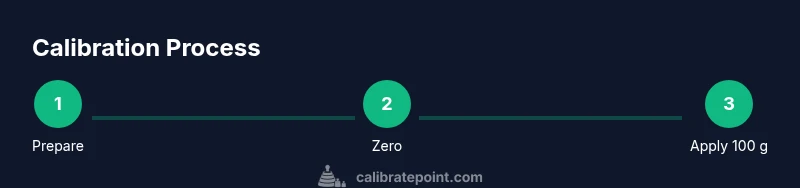
Goal: You will calibrate 100g scale accuracy by using traceable weights, a clean workspace, and a repeatable procedure. The process includes zeroing, applying a 100 g reference, adjusting the offset, and validating with additional weights. Record results for future audits and calibration intervals. This approach keeps measurements reliable for DIY projects and professional tasks alike, aligning with Calibrate Point's guidance for 2026.
Why calibrating a 100g scale matters
When you work with small masses, even tiny errors can compound across measurements. Calibrating a 100g scale helps ensure readings stay within your required tolerance, which is essential for quality control, recipe accuracy, jewelry work, electronics, and lab tasks. According to Calibrate Point, precision begins with a stable environment, traceable reference weights, and a documented procedure. A well-calibrated scale reduces waste, improves repeatability, and builds trust with clients. This section outlines why precision matters in everyday projects and professional settings, emphasizing that calibration is a disciplined practice rather than a one-off check. By adopting a consistent method and recording outcomes, you create a reliable baseline you can defend in reports and audits. The goal is simplicity: repeatable steps, traceable weights, and a clear log that shows how results were obtained and verified over time.
Core concepts: accuracy, tolerance, and traceability
Understanding the vocabulary is foundational before you calibrate a 100g scale. Accuracy describes how close a measurement is to the true value, while precision reflects the consistency of repeated readings. Tolerance defines the acceptable deviation for your application; it could be a fraction of a gram for jewelry or a few milligrams for lab tasks. Traceability links your weights and measurements to national or international standards, ensuring that your calibration is defensible during audits. For small scales, uncertainty analysis helps quantify the range within which the true value lies. In practice, keep in mind that even with careful methods, environmental factors and instrument drift can influence results. Calibrate Point emphasizes documenting tolerances, reference sources, and the measurement process to maintain a clear audit trail. By aligning terminology with your workflow, you’ll communicate results more effectively to teammates and stakeholders.
Reference weights and workspace setup
The backbone of a solid calibration is using traceable reference weights and a stable workspace. For a 100g scale, a calibrated weight of exactly 100.0 g (and related weights like 50.0 g, 20.0 g) should be used. Ensure weights are certified, labeled with a lot number, and traceable to a national standard. Place your scale on a level, vibration-free bench, away from air drafts, direct sunlight, and temperature fluctuations. Use a clean weighing pan or plate and a lint-free cloth to wipe down surfaces before starting. If your environment has noticeable air movement, consider a draft shield or working in a room with stable temperature. Calibrate Point recommends documenting the environment and equipment serial numbers to strengthen the audit trail. A tidy, controlled setup minimizes variability and makes results more meaningful.
Zeroing, tare, and baseline reading
Before applying any test weights, establish a clean baseline. Zero the scale with nothing on the pan and confirm that the display reads zero (or within the acceptable zero drift range). If your scale supports tare, use it to reset the reading to zero after placing an empty pan. A stable baseline reduces offsets that can skew subsequent measurements. Record the baseline reading and note any deviation from zero, even if it seems minor. Re-zero if you suspect drift during the session. Baselines provide a reference point for comparing subsequent weight measurements and for detecting drift over time.
Calibration workflow overview
A practical calibration consists of applying a known 100.0 g weight and adjusting the scale’s offset or calibration factor to align with the reference value. This is followed by verification with additional reference weights to confirm linearity across the scale’s range. Maintain consistency by using the same weighing procedure, same orientation of weights, and the same surface each time. If your instrument includes an internal calibration routine, you can supplement manual alignment with it, but rely on external references for traceability. Document readings, adjustments, and environmental conditions. This approach is compatible with DIY projects and professional environments while remaining mindful of safety and accuracy.
Verification with secondary weights and logging
After setting the 100.0 g reference, test additional weights such as 50.0 g, 20.0 g, and 5.0 g to verify linearity and reproducibility. Place each weight on the pan, note the reading, and compare it to the nominal value. Repeat measurements multiple times to assess repeatability. Record all readings in a calibration log, including time, temperature, humidity, and any notes about the instrument or weights. Consistent results across diverse weights bolster confidence in the calibration and support traceability requirements. Calibrate Point stresses that logging creates a valuable baseline for future calibrations and audits, helping you decide when the next calibration should occur.
Environmental factors and drift management
Environmental conditions can subtly influence scale readings. Temperature changes can cause expansion or contraction of components, while air currents and vibrations can create momentary fluctuations. Keep your workspace within a narrow temperature band and minimize air movement around the scale. If precision is critical, conduct calibration at a consistent time of day and in the same room. Monitor for drift over time; if readings drift by more than your tolerance, re-evaluate the setup and consider recalibration. Calibrate Point highlights that environmental control is as important as the mechanical procedure itself in achieving reliable results.
Maintenance and calibration schedule
Regular maintenance supports long-term accuracy. Wipe down weighing surfaces, verify the stability of the scale on a level surface, and check for mechanical looseness or wear in the pan and joints. Keep a calibration calendar and set reminders for routine checks, even if you’re not actively using the scale for critical tasks. For hobbyists and professionals, a conservative calibration interval—such as quarterly or semi-annual checks—helps ensure ongoing accuracy without excessive downtime. Consistent records also help justify the chosen schedule to clients or supervisors. Calibrate Point recommends documenting any changes in performance and adjusting the schedule if needed.
Authority sources and quick-start checklist
This section anchors the practice in established guidance and practical steps. For formal references, consult recognized standards and educational resources. The quick-start checklist below can guide you through your first successful calibration:
- Gather traceable 100.0 g weights and a reference scale.
- Clean the pan and surrounding area; ensure a level, draft-free workspace.
- Zero or tare the scale, then apply the 100.0 g weight and adjust the offset.
- Verify with additional weights (50 g, 20 g, 5 g) and record readings.
- Log environmental conditions and instrument details for traceability. Practicing this routine will help you calibrate 100g scale reliably over time. The Calibrate Point team recommends keeping a consistent process and updating your records after each session.
Tools & Materials
- 100 g calibration weight set(Class E2 or better; traceable to national standard; include certificate)
- Reference weighing scale (for cross-check)(A secondary, known-good scale to cross-verify measurements)
- Level bench or vibration-free surface(Ensure the surface is flat and stable)
- Non-magnetic weighing pan(Compatible with the scale's pan and easy to clean)
- Lint-free cloth(For cleaning the pan and weights before use)
- Isopropyl alcohol (70%)(For cleaning stubborn residue; ensure dry before weighing)
- Calibration log or notebook(Record readings, temperature, humidity, and notes)
Steps
Estimated time: 15-25 minutes
- 1
Prepare workspace and equipment
Clear the bench, place the scale on a level surface, and gather the 100 g weights and a reference scale. Wipe all items with a lint-free cloth to remove dust that might affect readings. Ensure the environment is stable and free from drafts.
Tip: Check the surface for levelness with a small spirit level before starting. - 2
Zero or tare the scale
Power on the scale and allow it to warm up if required. With an empty pan, press the zero or tare function and confirm the display reads zero within the allowed drift. If it doesn’t, wait a moment and retry, then record the baseline.
Tip: Do not place any objects on the pan during zeroing. - 3
Apply the 100 g reference weight
Carefully place the 100.0 g weight on the pan without touching the weight itself. Record the reading and compare to 100.0 g. If it differs beyond tolerance, adjust the scale’s offset/calibration as per the manufacturer instructions.
Tip: Use tweezers or a pair of clean gloves to handle weights to avoid fingerprints. - 4
Adjust offset or calibration factor
Using the scale’s adjustment controls, set the reading to match 100.0 g as closely as possible. Document the adjustment value and the cause for future reference. Re-zero if necessary after adjustment.
Tip: Make small adjustments and recheck multiple times to confirm stability. - 5
Verify with additional reference weights
Remove the 100 g weight and test other known weights (e.g., 50 g, 20 g, 5 g). Check if the readings align with nominal values within tolerance. Repeat measurements to assess repeatability.
Tip: If any weight reads outside tolerance, re-do the calibration sequence from measure to verify. - 6
Document results and environmental conditions
Record all readings, adjustments, dates, temperatures, and humidity in the calibration log. Note any anomalies and the instrument’s serial or model number for traceability. File the log for future audits.
Tip: Keep the log in a central, easily accessible location. - 7
Conclude and plan next verification
Conclude with a summary of your calibration results and a recommended verification interval. Schedule the next calibration, and ensure the team is aware of any changes to procedure or equipment.
Tip: Set a calendar reminder for repeat calibration to maintain accuracy.
Questions & Answers
What is a 100g calibration weight and why do I need it?
A 100g calibration weight is a certified mass used to verify that a scale reads accurately at 100 g. It provides a stable reference for zero and offset adjustments, ensuring measurements are traceable to standards. Regular use helps maintain accuracy across tasks that rely on precise mass.
A 100g calibration weight is a certified mass used to verify scale accuracy at 100 g and maintain traceability.
How often should I recalibrate a scale?
Calibration frequency depends on usage, environment, and required precision. For high-precision tasks, calibrate quarterly or after any major change in setup. For hobby projects, a semi-annual check is usually sufficient if the environment remains stable.
Calibration frequency depends on use and environment; set a regular schedule, like quarterly or semi-annually.
What should I do if readings drift after calibration?
If readings drift, re-check the baseline, re-zero, and repeat the calibration with fresh weights. Inspect for air currents, vibration, or weight contamination on the pan. If drift persists, consider a full service or replacement.
If drift occurs, re-check setup, repeat calibration, and inspect for environmental factors.
Do temperature or air currents affect scale readings?
Yes. Temperature changes and air currents can affect readings, especially for small masses. Calibrate in a temperature-stable room and shield the scale from drafts during the process.
Yes, temperature and drafts can affect readings; calibrate in a stable environment.
Is calibrating a scale required for legal trade?
Legal requirements vary by jurisdiction. In many cases, trade scales must be calibrated to standards and accompanied by documentation. Check local regulations and ensure traceability for compliance.
Local laws may require calibrated scales with documentation; check your region's rules.
Where can I obtain traceable calibration weights?
Traceable calibration weights are available from certified suppliers and metrology labs. Look for weights with a current calibration certificate and traceability to national standards.
Purchase traceable weights from certified suppliers with certificates.
Watch Video
Key Takeaways
- Use traceable weights and a stable surface.
- Zero, tare, then apply the 100 g weight for baseline alignment.
- Verify with multiple weights and log results for traceability.
- Record environmental conditions and maintenance schedule for accuracy.