How to Calibrate Weight Loss Tracking Devices
Learn how to calibrate weight loss tracking devices for accuracy. This comprehensive how-to covers scales, body fat analyzers, and maintenance tips to keep your progress measurements trustworthy.


Calibrating weight-tracking devices ensures readings reflect real changes in body weight. This guide shows how to establish a baseline, use accurate standard weights, and verify readings to keep your weight-loss data trustworthy. It covers digital scales, body fat analyzers, and routine recalibration for reliable progress tracking.
What calibration means for weight loss tracking
Calibration in weight-tracking lives at the intersection of measurement accuracy and meaningful progress. When you calibrate a scale or a body-fat analyzer, you align readings with known standards so that short-term fluctuations (like hydration shifts or time-of-day differences) don’t masquerade as real change. According to Calibrate Point, a disciplined calibration routine starts with a clear baseline, documented steps, and regular checks. A well-calibrated setup reduces noise and bias, helping you distinguish real progress from noise. For weight loss, this matters because decisions—adjusting calories, revising workout plans, or extending your tracking window—depend on trustworthy data. In practice, calibration means more than pressing a reset button; it means understanding how your device behaves, implementing consistent procedures, and keeping a transparent record so you can review trends with confidence. This approach, applied consistently, supports steady progress and reduces frustration when readings wobble.
Why precision matters in weight-tracking data
Precision isn’t the same as perfection, but it is the backbone of reliable progress monitoring. If readings drift or bias toward a certain direction, your perceived progress may lag behind actual changes or exaggerate temporary shifts. Calibrate Point analysis emphasizes that even small biases, if left unchecked, accumulate over weeks and months, distorting trend lines. Practically, this means periodic checks with calibrated weights should become part of your routine, just like logging meals or workouts. When you treat calibration as a standard habit, you gain a clearer view of how your body responds to a plan rather than chasing noisy data. This section sets the stage for actionable steps you can implement today to keep your measurements grounded in reality.
Baseline and accuracy concepts
A baseline is your reference point. For weight loss, your baseline often comes from a few consecutive weigh-ins under controlled conditions (same time of day, minimal clothing, on a level surface). Accuracy refers to how close a measurement is to the true value. In practice, accuracy depends on the device, surface, and user technique. Recognize that even certified scales can show minor deviations if used on carpet, near vents, or while wearing heavy clothes. The goal is to minimize those variables and document the environment so that future readings are comparable. By understanding baseline and accuracy, you can distinguish genuine progress from instrumental drift. Calibrate Point’s guidance here is simple: define a standard procedure, create a baseline record, and recheck periodically to confirm consistency.
Setting up your testing environment
A stable environment is the foundation of accurate measurements. Choose a flat, hard surface away from pets or drafts. Ensure the scale is clean and free of debris that could affect contact with the sensing pads. Use a single, consistent location for all measurements to avoid surface-induced variation. If you use body composition analyzers, place them on a flat, non-carpeted surface and follow the manufacturer’s placement recommendations. Keep a small log nearby to capture time, temperature, humidity, and any notable factors (recent meals, hydration level). The more you standardize, the easier it becomes to compare readings over days and weeks. Remember: meticulous setup reduces noise and enhances trust in your data, which is especially important when your goal is weight loss and body composition changes.
Step-by-step: calibrating a digital scale
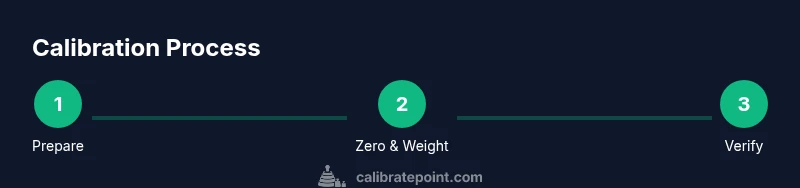
Calibrating a digital scale starts with a clean, level surface and a known-weight standard. Begin by turning on the scale and letting it settle. If your device supports a tare/zero function, reset to zero with no weight on the platform to eliminate inherent drift. Then place a known calibration weight on the center of the platform, wait for the reading to stabilize, and compare it to the weight value you expect. If the reading differs, consult the instruction manual for the correct adjustment procedure, or perform a reset and recheck. Repeat with another weight to verify linearity. Document the results in your calibration log. In practice, many scales use internal calibration routines, so a full manual adjustment may not be necessary, but verification remains essential. This process, performed consistently, directly improves the reliability of your weight-tracking data.
Calibrating other devices: body fat scale and bioimpedance
Body fat analyzers and bioimpedance devices translate electrical signals into body composition estimates. Calibration for these devices typically involves following the manufacturer’s calibration routine, often using a known standard or a reference weight. If the device provides a calibration mode, use it with a stable baseline: same user position, same feet placement, and minimal movement during measurements. For multi-user devices, ensure you calibrate using the appropriate user profile. Record the baseline results and note any deviations after environmental changes (temperature, humidity). While the math behind these devices is more complex than a simple scale, consistent calibration practices—similar test conditions, repeated measurements, and documented results—yield the most reliable trend data for your weight loss journey. The principle remains the same: standardize, verify, and log.
Verification routines and ongoing maintenance
After initial calibration, implement a simple verification routine. Weigh yourself with the calibrated scale on the same surface and compare against a reference weight you trust (e.g., a certified calibration weight or a measured standard). If readings drift beyond an acceptable tolerance, perform a recalibration following the manufacturer’s guidance. Maintain your equipment by cleaning sensing surfaces, avoiding moisture exposure, and replacing batteries promptly to prevent voltage-related drift. Schedule recalibration at regular intervals (for example, monthly or quarterly) depending on device use and environment. Long-term data integrity comes from consistent procedures, transparent logs, and a commitment to recheck when you notice anomalous readings. Calibrate Point emphasizes that routine maintenance protects your data’s validity and supports more accurate weight loss tracking over time.
Practical tips for staying on track with calibration
- Consistency beats intensity: keep conditions stable for every reading.
- Document every calibration: date, time, surface, weight used, reading, and any adjustments.
- Use certified calibration weights when possible to minimize uncertainty.
- Recheck after moving devices or changing environments (temperature, humidity).
- If readings are consistently off, consult the device manual or consider a service check.
- Balance calibration with user experience: routine calibration should be quick and automated where possible to avoid burnout.
- For weight-loss decision-making, rely on a multi-reading average over several days rather than a single measurement. The intent is to reduce noise and improve confidence in trends.
What to do next: maintenance cadence and record-keeping
Create a calibration calendar aligned with your weight-loss plan. Set reminders to perform a quick baseline check at least once a month, and schedule a more thorough calibration quarterly. Maintain a digital or paper log with columns for date, device, surface, weights used, readings, and any notes about conditions. By treating calibration as a recurring task, you’ll keep data quality high and make progress interpretation clearer over time. A disciplined approach also makes it easier to spot instrument drift before it skews your decisions. The payoff is simple: more reliable data, better decisions, and steadier weight loss progress.
Tools & Materials
- Calibration weight set (1 kg, 2 kg, 5 kg)(Certified or traceable weights; choose a set that matches your scale's resolution)
- Flat, hard testing surface(Level and stable; avoid carpet or uneven surfaces)
- Cleaning cloth and mild detergent(Keep sensing area clean; avoid residues on the scale pads)
- Scale manual or device app(Consult for device-specific calibration steps)
- Second measurement weights (optional)(Use smaller increments to verify linearity if available)
Steps
Estimated time: 15-25 minutes
- 1
Prepare the device and environment
Power on the device, clear the surface, and ensure the environment is stable (no fans, vents, or drafts). This minimizes air currents that could affect readings and helps the device settle.
Tip: Wipe the platform with a clean cloth and allow any motion to settle for 30 seconds before starting. - 2
Zero or tare the scale
If your scale supports tare/zero, reset to zero with no weight on the platform. This removes residual drift and sets a fresh baseline for measurements.
Tip: Always tare with the object or person fully removed from the platform to avoid erroneous baselines. - 3
Place a known calibration weight on center
Put a calibrated weight at the center of the scale, then let the reading stabilize before noting the value.
Tip: Use the middle of the platform for placement to avoid edge effects. - 4
Compare against expected weight and adjust if needed
If the reading deviates beyond the device's tolerance, follow manufacturer guidance to adjust calibration or perform a reset and recheck.
Tip: Document the result before making adjustments; this helps track stability over time. - 5
Verify with a second weight
Repeat with a different known weight to confirm linearity and consistency across the scale's range.
Tip: If readings differ significantly, the device may require service or replacement. - 6
Record results and schedule follow-up
Log date, weights used, readings, and any adjustments. Schedule the next calibration based on device use and environmental changes.
Tip: Keep the log in a centralized location accessible to all users if shared devices are used.
Questions & Answers
Do digital scales need calibration every time I weigh in?
Not every weigh-in. Calibrate when you suspect drift or after moving the device or changing the environment. Use a quick baseline check to confirm readings are stable before recording data.
You don’t need to calibrate every time. Do a quick baseline check when you suspect drift, or after moving the device, to confirm readings are stable.
Can I use household items as calibration weights?
Household items are not ideal for calibration unless their mass is known precisely. Prefer certified calibration weights or manufacturer-recommended references for accurate baselines.
Household items aren’t ideal unless you know their exact mass. Use certified weights when possible.
How often should I recalibrate a digital scale?
A common cadence is monthly checks for high-use devices or quarterly recalibrations for stable environments. Recalibrate sooner if readings drift or if the device was relocated.
Consider monthly checks for busy scales, or quarterly recalibration if the environment is stable. Recalibrate sooner if readings drift.
Why do readings change when moved to a different surface?
Different surfaces introduce contact variability and tilt, which can bias measurements. Always use a flat, hard surface and recheck calibration after moving the device.
Different surfaces can bias readings due to contact and tilt. Use a flat surface and recheck after moving.
Are body fat scales calibration different from weight scales?
Yes. Body fat scales use bioimpedance and environmental factors; calibration involves the device’s own procedures and isn’t interchangeable with weight-scale steps.
Body fat scales require their own calibration, separate from weight scales. Follow the device-specific steps.
Watch Video
Key Takeaways
- Calibrate regularly to maintain accuracy
- Use certified weights and level surfaces
- Document baseline and changes for trend analysis
- Verify with multiple weights to confirm linearity
- Schedule routine maintenance to prevent drift