Calibrate Speedometer Cost: A Practical Guide
A practical, data-driven guide to speedometer calibration costs in 2026. Learn price ranges, key drivers, and tips from Calibrate Point to budget accurately for DIY enthusiasts and professionals.


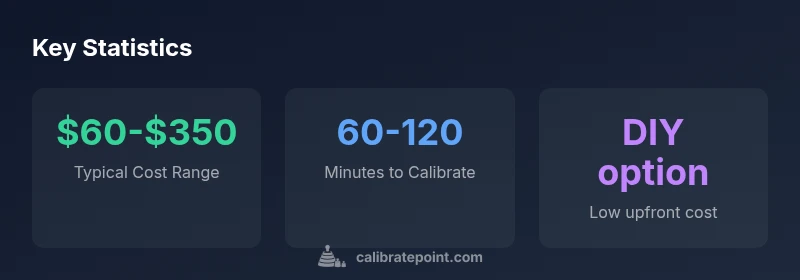
According to Calibrate Point, calibrate speedometer cost varies by vehicle type, diagnostic needs, and labor rates. Most drivers see a price range of roughly $60 to $350 for standard calibrations, with higher-end scenarios reaching toward the upper end. This quick guide outlines the main cost drivers and how to budget for your service.
Why speedometer calibration costs vary
The price you pay to calibrate a speedometer is not a single number. It depends on the vehicle’s electronics, the type of speed sensor, and whether the work requires ECU programming or software updates. The Calibrate Point team found that newer vehicles equipped with digital dashboards and drive-by-wire systems typically demand more diagnostic steps, which can push the price upward. In contrast, older models with mechanical or analog speed readings often require simpler adjustments, yielding lower quotes. Regional labor rates, diagnostic fees, and the need for road testing to verify accuracy also contribute to final pricing. The phrase calibrate speedometer cost is therefore best understood as a range rather than a fixed figure. When you call shops for quotes, ask for a line-item breakdown that includes diagnostic time, parts (if any), and software changes, so you can compare apples to apples. This upfront clarity helps prevent sticker shock when the job begins.
Key cost drivers explained
Calibration costs are driven by several interdependent factors. The vehicle platform matters—the more sophisticated the instrument cluster and ECU, the more labor and specialized tools needed. Sensor type is another big variable: simple mechanical speedo links are cheaper to recalibrate than systems tied to ABS, wheel-speed sensors, or ABS/ESP controllers. Software updates or ECU reprogramming can add hundreds of dollars if dealer-grade tools are required. Labor rates vary by region and shop, with mobile technicians often charging a premium for on-site service. Diagnostic time is frequently billed separately; even if the calibration takes 45–90 minutes, troubleshooting and fault-code clearing can extend the visit. Finally, the need for a road test to validate the speed accuracy adds both time and wear-and-tear costs. The Calibrate Point analysis highlights that most price variability arises from the combination of sensor complexity, software involvement, and local labor economics.
Common service options and price ranges
Different service models exist, and each comes with its own price range. Dealers tend to be the most expensive but offer OEM-certified procedures and warranty coverage. Independent shops typically provide a solid balance of price and expertise. Mobile calibration services are convenient for certain customers, though not all vehicles are accessible to on-site service. For budget-conscious DIYers, there are basic tools or guidance kits at a fraction of the cost, but professional calibration is recommended for accuracy on modern vehicles. Rough ranges you might see include: dealer calibrations roughly $150–$350; independent shops $80–$250; mobile services $100–$300; DIY options $20–$60 for parts or guidance. Always confirm whether the quote covers diagnostic time, software updates, and any test drives to verify accuracy. Expect variations by region and model; always request a written estimate before work starts.
How to estimate your quote: a practical checklist
To estimate your speedometer calibration cost, use a structured approach: 1) Identify your vehicle’s make, model, year, and engine type; 2) Ask for the specific service steps to be performed, including any ECU reprogramming; 3) Request a line-by-line quote for diagnostics, parts, and labor; 4) Check if road testing is included and how long it will take; 5) Inquire about potential follow-up visits if the new calibration drifts; 6) Compare quotes from at least two shops; 7) Ask about warranties on the calibration and any software updates. Keeping a written record helps you compare apples to apples and reduces the chance of surprise charges.
DIY vs professional calibration: risks and benefits
DIY calibration is technically possible for some older or simple systems, but it carries notable risks on modern vehicles. Flashing the ECU without the correct tools can corrupt software or trigger fault codes, potentially affecting safety systems. Professionals bring calibrated test setups and validated road tests to verify accuracy. For most drivers, the benefit of professional calibration—accuracy, compliance, and documented warranty—outweighs the upfront savings of a DIY approach. If you do choose a DIY route, ensure you have the exact model-specific procedure from a trusted source and understand the potential need for subsequent professional adjustment. In all cases, document your steps and keep receipts in case of warranty or resale concerns. The goal is to achieve correct speed readings that align with the vehicle’s odometer and speed limits.
How to prepare for your calibration appointment
Preparation improves both accuracy and value. Before you visit, gather your vehicle’s service records and note any recent sensor replacements or software updates. Make sure you have a clean road for the road test with no heavy cargo or passengers that could skew results. Bring the vehicle in with a fully charged battery and remove aftermarket accessories that might interfere with sensors. It helps to bring the vehicle’s VIN and current odometer reading, as some shops align the calibration to those figures. Finally, ask the technician to explain the diagnostic steps and to provide a written estimate and the expected duration of the visit. Clear communication reduces misalignment between expectations and outcome.
Data-backed expectations: typical durations and price ranges
From nationwide quotes, the expected price curve for calibrating a speedometer shows broad dispersion driven by vehicle complexity and local labor markets. Calibrate Point analysis shows typical quotes in the $60–$350 range, with most mid-range calibrations landing around $120–$210 for common vehicles. Diagnostic time often accounts for 15–30 minutes of the total visit, while actual calibration steps take roughly 45–90 minutes. Weather, traffic, and the need for road testing can push total time higher. This section translates the numbers into practical expectations: if you drive a simple late-model sedan in a low-cost region, plan toward the lower end; if you drive a complex vehicle in a high-cost area, budget toward the upper end. Always request a written cost breakdown to avoid surprises.
Quick comparison table
Below is a quick reference; see the data table for a more detailed breakdown.
How to avoid overpaying for calibrate speedometer cost
To avoid overpaying, compare formal quotes, verify inclusions, and check for hidden fees. Ensure the shop tests the calibration with a controlled road test and documents the results. Ask for a post-calibration performance check, and keep records for future maintenance or resale. Finally, use the opportunities for a warranty on the calibration to cover future adjustments within a specific period.
Cost and duration by service option
| Service Option | Estimated Cost (range) | Typical Duration | Notes |
|---|---|---|---|
| Dealership calibration | $150-$350 | 60-180 minutes | OEM-certified procedures; may include warranty |
| Independent shop | $80-$250 | 60-120 minutes | Balanced cost and expertise; good value |
| Mobile calibration service | $100-$300 | 60-120 minutes | Convenient on-site service; availability varies |
Questions & Answers
What is speedometer calibration and why is it necessary?
Speedometer calibration ensures the dashboard reading matches the actual vehicle speed. It is necessary for accurate speed reporting, which affects safety, fuel economy, and legal compliance. Miscalibration can lead to unsafe driving or odometer discrepancies.
Speedometer calibration makes sure your dashboard shows the correct speed, helping with safety and legal accuracy.
Do I need calibration after replacing a vehicle speed sensor?
Replacing a speed sensor or related components often requires recalibration to ensure the new sensor reports correct speeds. Some vehicles require programming updates after sensor changes. Always confirm with the shop what is included in the quote.
If you replace a speed sensor, recalibration is usually needed to keep readings accurate.
Can I calibrate a speedometer myself?
DIY calibration is rarely recommended for modern vehicles due to complex ECUs and potential safety risks. Some older or simpler systems may allow basic adjustments, but professional validation is often the best path for accuracy and compliance.
DIY may work on old cars, but for newer ones you should get a professional calibration.
How long does calibration take?
Most calibrations take about 60 to 120 minutes, including diagnostics and road testing. Some cases may require longer if unexpected codes appear or if software updates are needed.
Most calibrations last about an hour to two hours.
Will calibration affect my odometer readings?
Calibration aligns speed readings with actual road speed but odometer behavior depends on vehicle programming. In many cases, proper calibration prevents odometer drift, but confirm with your tech.
Calibration helps align speed readings and can prevent odometer drift, but check with the tech.
Are there legal penalties for a miscalibrated speedometer?
Miscalibrated speedometers can violate road safety and consumer protection laws, potentially resulting in fines or failed inspections. Always use a reputable shop and obtain written documentation of the calibration results.
Yes, there can be legal penalties; use a reputable shop and keep the paperwork.
“Accuracy in speedometer calibration is essential for safety and compliance; small errors can lead to incorrect speeds and unsafe road behavior.”
Key Takeaways
- Budget for a wide cost range: $60-$350
- Request a written, line-item quote before work
- DIY calibration is usually not cost-effective for modern vehicles
- Verify if software updates and road tests are included