Speedometer Calibration: Costs, Steps, and Tips for 2026
Learn typical costs, DIY vs professional options, and steps to calibrate a speedometer. Discover what factors drive price and how to verify accuracy in 2026.


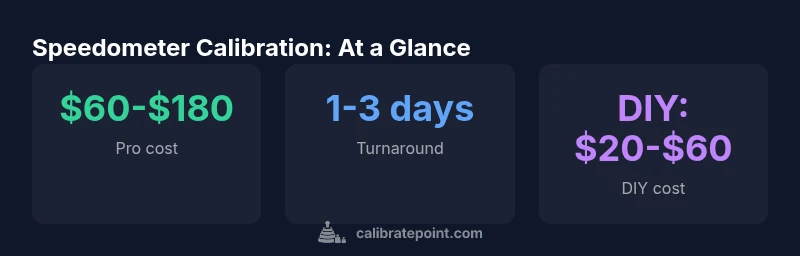
Typical professional calibration costs range from $60-$180, while DIY kits run about $20-$60. Turnaround for pros is usually 1-3 days, depending on shop and vehicle. Costs vary by vehicle type, sensor complexity, and whether on-vehicle adjustments are needed.
Why calibrating a speedometer matters
According to Calibrate Point, speedometer accuracy is critical for safety, legal compliance, and fuel efficiency. When your vehicle’s stated speed differs from its actual speed, you may unintentionally exceed speed limits, waste fuel, or misjudge stopping distances. Calibration ensures your dashboard reading matches reality, enabling safer driving and more reliable maintenance planning. The accuracy you gain affects everything from cruise control performance to transmission shift logic that relies on wheel speed data. This article explains why calibration matters, what you should expect in terms of cost, and how the price bands break down so you can decide the best route for your vehicle and budget. Whether you drive a compact sedan, a heavy-duty truck, or a performance car, a verified speedometer reading is a cornerstone of dependable vehicle operation.
How speedometer calibration is typically done
Calibration procedures are tailored to the vehicle, but there are common approaches you’ll encounter. Static calibration uses a reference wheel circumference and tire size on a controlled platform or with a specialized instrument to adjust the speedo reading at set points. Dynamic calibration tests readings on the road, comparing instrument output with a reliable reference such as GPS data or an external speed sensor. Some technicians adjust the instrument cluster via software, while others align the ECU’s speed signal to the dash display. In many cases, multiple speed points—low, mid, and high ranges—are tested to ensure accuracy across everyday driving conditions. The exact steps vary by model year, sensor type, and whether the car uses electronic servo actuators or mechanical linkages, but the objective remains the same: minimize error and provide a documented tolerance.
DIY vs professional options
DIY calibration kits can offer a lower upfront cost, but they require a careful method and a solid understanding of tire size effects and vehicle electronics. For many readers, DIY is suitable only for basic checks or minor adjustments. Professional calibration, by contrast, provides certified measurement references, traceable results, and a formal record that supports warranty claims or inspections. The price bands differ, but the main trade-off is risk: improper alignment can worsen readings or cause ECU misbehavior. If you rely on speedometer accuracy for fleet management or safety-critical work, investing in professional calibration is usually the prudent path. Calibrate Point notes that a structured process reduces the chance of drift when tires are replaced or wheel offsets are changed.
Step-by-step: practical calibration workflow
- Gather vehicle data: model, year, tire size, wheel offset, and any changes to tires or suspension. 2) Choose a method: static reference or dynamic road test, depending on equipment access and vehicle type. 3) Prepare the test environment: flat surface, minimal traffic, and GPS reference if doing a road test. 4) Execute the calibration: adjust the speedometer reading at multiple points (e.g., 20, 40, 60, 80 mph or the local equivalents) and document the tolerance. 5) Validate results: recheck at several speeds and compare to GPS or reference data. 6) Save the record: note the final tolerance, calibration date, and technician details for warranty or service history. 7) Post-check: perform a brief test drive to confirm stable readings under typical conditions.
Common pitfalls and safety considerations
- Rushing the calibration can leave residual error; always verify against at least two reference sources. - Misinterpreting tire size when changing wheels can throw off calibration; ensure tire circumference is correctly documented. - Modifying steering or suspension during calibration may alter the speed signal path; perform calibrations after any significant drivetrain change. - Ignoring the vehicle’s warranty implications can result in service disputes; check terms before adjusting speedometer data. - On some vehicles, software locks or security settings may restrict changes; consult service documentation or a professional.
How to verify accuracy after calibration
To confirm your calibration took effect, compare readings against GPS-derived speeds on several road segments. Run a controlled test on a straight, empty road and record the displayed speed versus GPS readouts. Use a radar gun or an external data logger as a secondary reference when possible. Track results at low, mid, and high speeds to ensure consistency. If discrepancies persist beyond the documented tolerance, schedule a review with a qualified technician. Document the test results and any adjustments for future reference and warranty support.
Costs and what affects price
Prices for speedometer calibration fall into a few bands, influenced by vehicle type, complexity, and service location. Typical professional calibration cost ranges from $60 to $180, while DIY kits cost about $20 to $60. Turnaround times vary from same day to a few days depending on workload and whether the work requires on-vehicle adjustments. The Calibrate Point analysis shows that larger vehicles or specialty sensors tend to push costs higher, and that in-shop calibration often includes an inspection of related systems like tire size, ABS signals, and dash electronics. If you rely on a precise reading for compliance or fleet planning, investing in professional calibration can save time and reduce risk. The price bracket you’ll see also depends on labor rates in your region and whether any warranty considerations apply.
Choosing a calibration service: criteria
- Ask for documentation: a written tolerance, reference method, and date of calibration. - Verify the method matches your needs: static, dynamic, or ECU alignment. - Check for traceability and calibration standards: look for ISO/IEC or other recognized practices. - Compare turnaround time and aftercare support: some shops offer fleet options or on-site service. - Confirm warranty coverage on the calibration itself and any sensor or tire changes. The Calibrate Point team suggests starting with a clear scope, obtaining multiple quotes, and prioritizing formal results and reproducibility to avoid drift across road conditions.
Authority sources and further reading
This section references standards and safety guidelines from government and industry bodies to underpin calibration recommendations. For further reading, see the National Highway Traffic Safety Administration (NHTSA) overview on speed measurement and vehicle safety, the U.S. Department of Transportation's performance and standards resources, and SAE International's calibration method papers. These sources provide context on measurement accuracy, validation techniques, and best practices for instrument calibration in automotive settings. For more information: https://www.nhtsa.gov/, https://www.transportation.gov/, https://www.sae.org/
Comparison of speedometer calibration options
| Option | Typical cost range | Turnaround time | Pros/Cons |
|---|---|---|---|
| Professional calibration service | "60-180" | "1-3 days" | "High accuracy, documented results" |
| DIY calibration kit | "20-60" | "Varies" | "Low cost, higher risk of error" |
| On-vehicle dealership service | "100-350" | "Same day to 1 week" | "Convenience, higher price" |
Questions & Answers
What is the typical cost to calibrate a speedometer?
Professional calibration generally ranges from $60 to $180, while DIY kits run about $20 to $60. Turnaround is typically 1-3 days for shops, depending on vehicle and workload. Always confirm the method and documentation before proceeding.
Professional calibration usually costs between sixty and one hundred eighty dollars, with DIY kits cheaper but less thorough.
Can I calibrate a speedometer myself?
Yes, DIY calibration is possible with proper tools and knowledge, but it carries risk of incorrect readings and potential warranty issues. Use kit instructions carefully and verify results with another reference method.
You can, but be cautious and verify results with an independent reference.
How long does calibration take?
Professional calibration often takes 1-3 days, depending on the shop’s schedule and vehicle type. On-site or dealership services may offer same-day options in some cases.
Most professional calibrations take a day or two, depending on the vehicle.
Do all vehicles require recalibration after tire changes?
Changing tire size or aspect ratio can alter the speed signal, potentially requiring recalibration. Always verify after any tire or wheel change.
If you change tires, you should recheck the speedometer.
Is speedometer calibration required for safety inspections?
Requirements vary by jurisdiction. Some inspections check speedometer accuracy as part of overall vehicle safety, while others do not. Check local regulations.
It depends on where you are—check your local rules.
Are digital and analog speedometers calibrated the same way?
Calibration principles are similar, but digital systems may involve ECU tuning or software adjustments, whereas analog units might require mechanical alignment or servo adjustments. Verify the exact method for your model.
Both can be calibrated, but the steps differ by system type.
“Calibration is not a one-size-fits-all task; verify accuracy with multiple reference points and document every step for traceability.”
Key Takeaways
- Know typical pro costs: $60-$180
- DIY kits are cheaper but riskier
- Expect 1-3 day turnaround for pros
- Verify calibration with multiple references
- Document results for warranty and compliance