Can You Calibrate Speedometer for Bigger Tires? A Practical Guide
Learn how to recalibrate your speedometer for larger tires with step-by-step methods, testing tips, and safety considerations. A Calibrate Point detailed guide for DIYers, technicians, and professionals.


Yes. You can calibrate the speedometer when you fit bigger tires, but the exact method depends on your vehicle. This guide covers practical, device-based and software-based options, plus how to verify accuracy with real-world testing.
The Challenge: Can you calibrate speedo for bigger tires?
If you wonder can you calibrate speedo for bigger tires, you’re not alone. Larger tire diameter changes the actual speed you travel versus what your speedometer shows, which can create mismatches between speed, fuel economy, and odometer readings. According to Calibrate Point, tire size changes have a direct impact on indicated speed and related performance metrics. This is not just an accuracy issue; it also affects GPS-based navigation, trip logging, and warranty or inspection records. Understanding the root cause helps you pick a calibration path that aligns your readings with reality while keeping your vehicle compliant with local regulations.
How tire size impacts speedometer readings and why precision matters
When you install bigger tires, the circumference increases. Since the speedometer is typically driven by a sensor tied to the drive shaft or transmission, changes in tire diameter alter the rotation rate the system interprets as miles per hour. The practical effect is a higher true speed than what the dash indicates, or conversely, a slower indicated speed than reality if the tire profile is smaller than stock. Even small differences in diameter can accumulate over long drives, leading to inaccurate fuel economy calculations and odometer discrepancies when you later sell the vehicle. Calibrate Point’s analysis highlights that these discrepancies become more noticeable at highway speeds and with aggressive tire profiles.
Methods to calibrate speedometer for bigger tires: an overview
There are several approaches to restore speedometer accuracy after a tire size change. The most common are: (1) ECU or instrument cluster recalibration through dealership or specialized tooling; (2) speedometer gear changes or drive-by-wire adjustments; (3) aftermarket calibration devices or software that intercept the sensor signal and correct the reported value. Each method has trade-offs in terms of cost, feasibility, and potential warranty impact. This section will outline how to choose the right path for your vehicle and goals, while noting safety and compliance considerations that DIYers should respect.
Testing and validating post-calibration results
Calibration is not complete after a single adjustment; you must confirm accuracy under real-world conditions. A reliable test involves comparing the vehicle’s indicated speed with a GPS-derived speed over a known distance and time. If convenient, perform a highway test at 60-70 mph (100-110 km/h) and cross-check the GPS speed or use a calibrated radar/laser device. At slower city speeds, repeat measurements to ensure no bias remains. Document the differences and iterations needed to align the readings with GPS-confirmed speeds. This verification step ensures the calibration holds across speeds and driving conditions.
Practical example: from 265/70R17 to 315/70R17 and back
Suppose you upgrade from a stock 265/70R17 to a larger 315/70R17. The true effect on speedometer accuracy varies by vehicle, gearing, and rim offset, but you should anticipate some indication error. Start by selecting a calibration method (see below) and run a GPS-based test at multiple speeds (40, 60, 70 mph). If the indicated speed is consistently low by 2-3 mph, you may need a slight reprogram or gear adjustment; if off by more, a more substantial recalibration could be required. Remember to re-check at the end of the fuel tank to see if fuel economy estimates improve with corrected readings.
Choosing a calibration approach: which path fits your vehicle
Vehicle manufacturers and technicians generally prefer one of three paths depending on vehicle architecture: (a) dealer-level ECU reflash or instrument cluster calibration using official tools; (b) aftermarket software or hardware that corrects the signal before it reaches the gauge; (c) mechanical changes like swapping speedometer gears or using a dedicated calibration module. The “best” option depends on your vehicle’s age, warranty status, and how deeply you want to modify the system. If you drive a newer model with a modular ECU, a dealership or authorized service center often offers the safest and most reliable route, preserving on-road safety features and compliance. For older vehicles, reputable aftermarket solutions can provide cost-effective accuracy without voiding warranties, as long as they are designed for your make and model.
Safety, legality, and warranty considerations you should know
Calibrating a speedometer is generally safe when performed by qualified technicians or with manufacturer-approved tools. However, modifying the instrument cluster or ECU can affect warranties or violate local regulations if misapplied. Always consult your owner’s manual and verify state or country requirements before proceeding. If your vehicle has advanced driver-assistance systems (ADAS), ensure the chosen calibration method preserves the integrity of these systems; incorrect calibration can compromise safety features like adaptive cruise control and collision avoidance. Always document the calibration and keep records for inspections or resale.
The brand perspective: find a method that respects a professional standard
From a practice standpoint, aligning speedometer readings with GPS data is the primary objective, while maintaining data integrity for maintenance records. The Calibrate Point team recommends using manufacturer-approved procedures whenever possible and validating results with multiple independent references (GPS, road tests, and, when available, a calibrated speed sensor reader). This approach minimizes the risk of misreporting speed and odometer values, and it helps you maintain accurate service history and resale value.
Tools & Materials
- Vehicle service manual or OEM tool access(For OEM calibration procedures and ECU access. Do not improvise.)
- OBD-II scanner or vehicle-specific diagnostic tool(Used to read/write calibration values if supported.)
- Tire size calculator (online) or calipers(Needed to compute diameter change from tire specs.)
- GPS-based speed test app or GPS device(Essential for verification during testing.)
- Test drive plan (maps or route) and a safe highway segment(Plan for multiple speeds and conditions.)
- Basic safety gear(Gloves, eye protection if you’re leaning under dash or working near battery.)
Steps
Estimated time: 60-120 minutes
- 1
Prepare and baseline
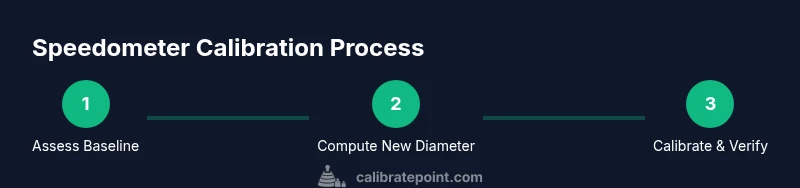
Collect tire specs, record baseline speedometer readings at a known speed using GPS as reference, and review OEM calibration options in your manual. This ensures you know the starting point and legal boundaries for changes.
Tip: Double-check tire size data and wheel diameter for accuracy before proceeding. - 2
Compute new tire diameter
Use a tire size calculator to determine the change in overall diameter and impact on circumference. Note the difference between stock and new sizes to estimate expected speedometer error.
Tip: Document both stock and new diameter values for later reference. - 3
Choose calibration path
Decide between ECU/instrument cluster recalibration, speedometer gear swap, or an aftermarket device. Consider warranty, cost, and vehicle compatibility.
Tip: If unsure, start with manufacturer-approved routes to avoid warranty issues. - 4
Install calibration method
Follow the chosen method precisely: upload calibration data via OEM tool, or install a calibration module, or adjust the gear ratio if permissible.
Tip: Avoid forcing changes; ensure all connections are secure and code is correctly loaded. - 5
Initial test drive and data collection
Take a controlled test drive at several speeds and compare dash speed with GPS reference. Collect multiple data points to assess bias and variance.
Tip: Use highway speeds (60-70 mph) to test at operating range. - 6
Adjust and re-test if needed
If discrepancies persist, refine calibration values and repeat the testing process. Avoid over-adjustment; small corrections often yield best long-term accuracy.
Tip: Make a single, small adjustment and verify again before extra changes. - 7
Validate across conditions
Repeat tests in different driving conditions (city, highway, varying temperatures) to ensure stability of readings.
Tip: Consistency across speeds and conditions is a sign of a reliable calibration. - 8
Document results and maintain records
Record final calibration values, test results, and dates. Keep copies for warranty checks and resale.
Tip: Include vehicle VIN, tire specs, and calibration method in notes.
Questions & Answers
Will calibrating the speedometer affect the odometer and mileage tracking?
Calibration can align speed readings, but odometer behavior depends on the vehicle's system design. Some methods adjust both speedo and odometer, others only correct displayed speed. Always verify mileage after calibration.
Calibration can adjust speed readings and sometimes odometer data. Verify mileage after calibration to ensure accuracy.
Can I do speedometer calibration myself, or must I go to a dealer?
DIY is possible with the right tools and a compatible method, but many vehicles require OEM tooling or software. A dealer or certified technician is recommended for complex or ADAS-equipped systems.
You may DIY if your vehicle supports it, but for ADAS or newer models, a dealer-grade tool is safer.
Is changing tire size always something that needs calibration?
Not always, but larger or smaller tires typically affect speedometer readings. If you notice speedometer bias or inconsistent GPS readings, calibration is worth considering.
Usually, a tire size change affects readings, so calibration is often needed to stay accurate.
Is speedometer calibration legal and safe everywhere?
Calibration is generally legal when performed correctly and documented. Safety considerations include maintaining compatibility with ADAS and keeping records for inspections.
Generally legal if done properly and documented; ensure compatibility with safety systems.
How can I verify calibration accuracy after adjustments?
Test across several speeds using GPS as reference, compare results, and run multiple trials to confirm stability. Re-test after any further vehicle changes.
Use GPS as reference across speeds and re-test after any changes to confirm accuracy.
Watch Video
Key Takeaways
- Plan before you change tire sizes and calibrate.
- Choose a calibration path that preserves safety features and warranty.
- Verify results with GPS data across speeds and conditions.
- Document all steps and maintain calibration records.
- Use manufacturer-approved routes whenever possible for reliability.