Calibrate a Good Cook Thermometer: Practical Guide
Learn how to calibrate good cook thermometer for precise kitchen results. This guide covers ice-water and boiling-water methods, safety and tips for beginners.


Goal: learn how to calibrate a good cook thermometer using two reliable methods—the ice-water test and the boiling-water test (sea level). You’ll need ice, water, a pot, and a clean thermometer. This quick answer covers the essential steps and safety tips to achieve accurate readings.
Why calibrate a good cook thermometer matters
In daily cooking, precise temperature readings are the difference between safe, delicious meals and undercooked or overcooked dishes. A misread thermometer can lead to undercooked poultry or overdone roasts, wasting ingredients and posing safety risks. According to Calibrate Point, calibrating a good cook thermometer is a foundation skill for any kitchen professional or serious DIY enthusiast. When you routinely verify and adjust your thermometer, you improve consistency, food safety, and overall cooking quality. Most households rely on a thermometer to gauge meat doneness, oven accuracy, and hot spots in pans. A well-calibrated tool helps you reproduce reliable results, whether you’re searing steak, simmering sauces, or tempering chocolate. Calibration isn’t a one-and-done task—it's an ongoing practice that pays dividends across dozens of dishes.
To get started, recognize that different thermometer types require slightly different approaches. Dial thermometers with a calibration nut may be adjustable; digital thermometers often store factory calibrations but can drift. In professional kitchens, maintaining calibration logs is common, enabling rapid troubleshooting if readings drift over time. The goal is not a perfect, unchanging number but consistent accuracy within the device's stated tolerance. This guide focuses on practical, repeatable methods you can perform at home with common kitchen supplies, ensuring you calibrate good cook thermometer effectively.
How thermometer types affect calibration
Different thermometer designs respond differently to calibration. Analog dial models often use a small calibration nut that you turn with a screwdriver, while digital models rely on firmware or internal offsets rather than hardware tweaks. Glass-encased probes can drift if the stem is damaged or bent, and remote probes may require recalibration of the entire system. Knowing your device type helps determine whether a hardware adjustment is possible or if you must rely on software refresh and reference checks. In all cases, the underlying principle remains the same: verify accuracy with a known reference and correct the discrepancy within manufacturer guidelines.
The two primary calibration methods: ice water and boiling water
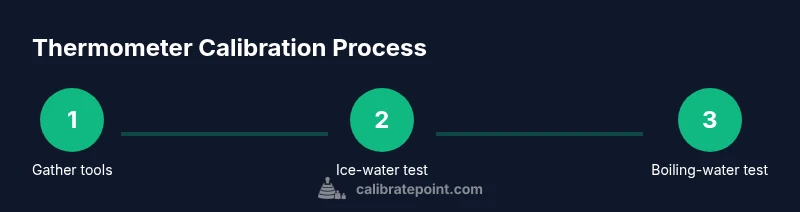
Two reference methods cover common home settings. The ice water test sets a reliable 0 C (32 F) reference at sea level. Fill a cup with crushed ice and add enough cold water to create a slushy mixture, then insert the thermometer stem into the center without touching the sides or bottom. Allow it to stabilize and read the temperature; the reading should be near 0 C. The boiling water test provides another reference point around 100 C (212 F) at sea level. Bring water to a rolling boil, insert the thermometer, and wait until the reading stabilizes. At higher elevations, boiling temperature drops, so adjust expectations accordingly and follow the device's guidance.
Safety and best practices during calibration
Safety comes first when calibrating in the kitchen. Use heatproof gloves or tongs to handle hot containers, keep children away, and work on a stable surface. Ensure the calibration area is clean and free of splashes that could contaminate food or equipment. Clean the thermometer before and after tests to prevent cross contamination. If using a calibration screw, turn it slowly in small increments and recheck after each adjustment. If any step feels risky or the device feels damaged, stop and seek professional service.
Interpreting readings and adjusting dial thermometers
Interpreting the two reference readings helps you decide how to adjust. For dial thermometers with a calibration nut, tightening or loosening the nut slightly will shift the pointer. Make very small adjustments and retest in both ice water and boiling water. For digital units, adjustments are often software based or require a reset to factory calibration; consult the user manual. If the readings remain inconsistent, replace the unit or have it serviced. Maintaining a calibration log helps you track drift over time and plan replacements more accurately.
Verifying calibration with real cooking scenarios
Calibration is not only about fixed tests; it translates to real kitchen tasks. Check meat temperatures during roasting, verify sauce temperatures during reduction, and test the oven by baking a standard recipe with thermometer checks. When multiple tests align, you can trust the readings during complex processes like candy making or low-and-slow roasts. If you notice drift across several cooking tasks, perform a recheck and adjust accordingly to preserve safety and quality.
Maintenance, storage, and when to recalibrate
Store your thermometer away from heat and direct sunlight to minimize drift. Keep probes clean and dry, and avoid bending the stem. Recalibrate after accidental drops, after long storage, or if readings no longer match references. Create a simple monthly or quarterly calendar reminder to perform quick checks. Proper maintenance saves time and ensures consistent results in busy kitchens.
Calibrate good cook thermometer: practical tips from Calibrate Point
Calibrate good cook thermometer routines pay off in everyday cooking. By maintaining a simple log, you can identify drift patterns and intervene early. The Calibrate Point team emphasizes consistent checks, using both ice water and boiling water references, and documenting outcomes for future reference. These steps create trustworthy readings across all recipes, from poultry to candy making.
Common myths about thermometer calibration
Myth: Calibration is only for professional kitchens. Truth: Home cooks also benefit from regular calibration to ensure safety and accuracy. Myth: Any test method yields the same result. Truth: Ice water and boiling water provide different reference points; use both for a robust check. Myth: Calibration is a one-time fix. Truth: Ongoing maintenance and periodic rechecks prevent drift over time.
Tools & Materials
- Thermometer (dial or digital)(Ensure it's clean and functional)
- Ice(Crushed ice or ice cubes to create slurry)
- Water(Cold water for ice bath and hot water for boil test)
- Pot or kettle(For boiling water test)
- Thermometer calibration tool(Dial thermometers may have a calibration nut)
- Notebook or calibration log(Document readings and adjustments)
- Gloves or oven mitts(Safety when handling hot water)
Steps
Estimated time: 45-60 minutes
- 1
Gather tools and prepare safety
Collect all required items and set up a clean workspace. Make sure the thermometer is clean and free of old residues. Read safety guidelines to manage hot water and ice handling safely.
Tip: Wash your hands, wear gloves if handling hot liquids, and keep kids and pets away. - 2
Prepare ice-water test
Create a slurry with crushed ice and cold water in a cup or container. Submerge the thermometer probe without touching sides or bottom to avoid inaccurate readings.
Tip: Use enough ice to keep the mix near 0 C as you test. - 3
Ice-water reading and adjustment
Wait until the reading stabilizes, then compare to 0 C. If your thermometer allows adjustment, make a minor turn on the calibration nut or adjust via menu; recheck after stabilization.
Tip: Make only small adjustments and recheck to confirm. - 4
Prepare boiling-water test
Bring a pot of water to a rolling boil. Insert the thermometer and wait until it stabilizes away from the pot edges where heat is uneven.
Tip: Be careful of steam and hot surfaces; use tongs if needed. - 5
Boiling-water reading and adjustment
Compare the reading to 100 C. If adjustable, apply small changes and retest. Digital thermometers may require firmware calibration rather than hardware tweaks.
Tip: Don’t force a major adjustment; drift is usually small. - 6
Record results and verify
Document the two reference readings and any adjustments. Repeat tests to confirm consistency across both ice and boil references.
Tip: Keep a calibration log for future checks. - 7
Finalize and maintain
Store the thermometer properly and schedule periodic checks. Consider a simple maintenance routine to ensure ongoing accuracy.
Tip: Recalibrate after major temperature changes in your kitchen.
Questions & Answers
What is the purpose of calibrating a cook thermometer?
To ensure readings are accurate and within device tolerance, preventing undercooked or overcooked foods. Calibration helps maintain food safety and cooking quality.
Calibrating your thermometer keeps readings accurate, helping you cook safely and perfectly.
Can all digital thermometers be calibrated?
Many digital thermometers do not have user adjustable calibration, while some models offer calibration options or re-calibration via firmware. Check your manual.
Some digital thermometers can be recalibrated, others cannot; consult the manual.
What temperatures should ice water and boiling water tests target?
Ice water test targets 0 C (32 F) at sea level; boiling water targets 100 C (212 F) at sea level. Altitude changes boiling temperature.
Ice water is zero degrees and boiling water is one hundred degrees at sea level, with adjustments for altitude.
How often should I calibrate my thermometer?
Calibrate after any drop, after long storage, or whenever readings seem off. Regular checks maintain accuracy.
Calibrate after a drop or if readings drift over time.
What if the thermometer cannot be adjusted?
If it cannot be adjusted, use it as is or replace. Some devices may require professional service.
If you cannot adjust it, consider replacement or professional service.
Is there a maintenance routine for thermometers?
Regular cleaning, safe storage, and periodic calibration checks help keep accuracy and extend device life.
Keep it clean, stored properly, and test calibration regularly.
Watch Video
Key Takeaways
- Test with ice water and boiling water to verify accuracy
- Document readings to track drift over time
- Adjust only small amounts and recheck
- Log maintenance and recalibration dates
- A well-calibrated thermometer improves safety and cooking quality