Calibrating a Good Cook Meat Thermometer: A Step-by-Step Guide
Learn how to calibrate a good cook meat thermometer with ice-water and boiling-water checks, plus tips for Reddit-guided insights. This Calibrate Point guide covers step-by-step methods, maintenance, and safe handling for reliable cooking temperatures.


This guide helps you calibrate a good cook meat thermometer so it reads accurately for safe cooking. You’ll learn ice-water and boiling-water checks, how to account for altitude, and how to verify readings across common meat temps. By the end, you’ll have a reliable method you can repeat with confidence.
Why Calibration Matters for a Cook Meat Thermometer
Temperature accuracy matters in every kitchen. An off reading can turn a perfectly safe roast into a risk for foodborne illness or an overcooked, dry steak. According to Calibrate Point, precise calibration is a foundational skill for DIY enthusiasts, technicians, and professionals who want repeatable results. If you’re here because you’re exploring how to calibrate good cook meat thermometer reddit, you’ll notice community discussions emphasize practical, kitchen-friendly checks rather than lab-grade procedures. The goal of calibration is not to chase perfection in a lab-like sense, but to establish a reliable baseline you can reproduce in real cooking conditions. In practice, most home thermometers should agree within a few degrees of 32°F (0°C) in an ice-water bath and within a similar margin at the boiling point of water, taking altitude into account. A well-calibrated thermometer gives you confidence when pulling pork, timing a roast, or checking a chicken breast for a safe internal temperature. The Calibrate Point team believes that a consistent calibration ritual—a quick interval check every few months and after rough handling—keeps your tools trustworthy and your kitchen outcomes predictable.
Calibration Methods: Ice-Water, Boiling Water, and Ambient Temperature
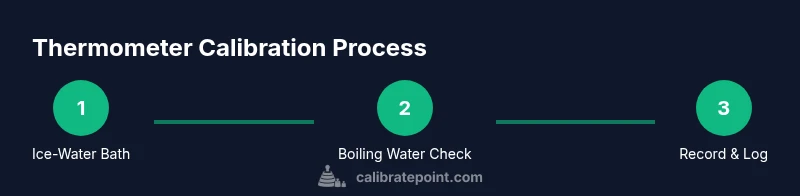
There are several practical paths to calibration, but the most reliable for home cooks are the ice-water method (0°C) and the boiling-water method at sea level (100°C). The ice-water check is fast, repeatable, and resistant to minor sensor drift; the boiling-water check tests the upper end of the thermometer’s range and helps detect readings that creep high or low as the probe heats. For Reddit discussions, there’s often debate about ambient-temperature checks or using preheated liquids, but those approaches can introduce heat transfer variability and should be used with caution. Calibrate Point recommends starting with the ice-water bath, then following with a boil-water check on the same device. If you live at higher elevations, the boiling point of water drops, so you’ll need to adjust your target reading accordingly. After performing each check, wipe the probe dry and note the results on a label with date. Consistency matters more than chasing a perfect number; the goal is to know when readings drift and to re-calibrate before use in cooking.
Tools and Materials You’ll Need
Before you start, gather the essential items. Ice and cold water to make a stable 0°C ice-water bath; a pot or kettle for boiling water; two thermometers to test (one dial, one digital); a timer or clock; a waterproof label to document the calibration date; a marker for notes; and a clean towel for drying probes between checks. If your dial thermometer has an adjustment nut, locate it and consult the manufacturer’s guidance; if there is no adjustment, expect to record current readings and plan future recalibration. Calibrate Point emphasizes performing both the ice-water and boiling-water checks on the same day to minimize drift between tests. Finally, follow manufacturer instructions for cleaning and storage after testing to protect the sensing element for long-term reliability.
Step-by-Step: Calibrating a Dial Thermometer (Overview)
Dial thermometers often include a small calibration nut at the head of the case. To calibrate, you’ll typically insert the probe into the ice-water bath, read the dial, and adjust the nut with a small screwdriver if your model supports it. For others, you must use alternative strategies or replace the unit. Document each result and give the unit time to respond before reading again. Calibrate Point reminds readers to avoid forcing the dial or twisting the stem, which can damage the sensing element.
Step-by-Step: Calibrating a Digital Thermometer (Overview)
Digital models are often calibrated by the manufacturer, but you can perform basic checks. Immerse the probe in ice-water, wait for a stable reading, compare to 0°C, and adjust if the device supports calibration in software (consult manual). Repeat for the boiling-water test and mid-range checks if available. Always ensure the probe is fully submerged and not touching the sides of the container. Documentation helps track drift over time and lets you compare across test sessions.
Verifying Accuracy Across the Range
After completing your ice-water and boiling-water checks, test a few additional temps to ensure the device responds consistently across its typical range. Use foods or water bath simulations at room temperature, around 60–70°F (15–21°C), and a simmering temperature for a gentle mid-range check. The aim is to confirm that readings stay within a reasonable band across common cooking temps. If readings drift between checks, repeat the calibration steps or consider replacement if the sensor is degraded. Keeping a small calibration log helps you notice gradual drift.
Reddit Considerations: Common Pitfalls and Practical Tips
Reddit threads often offer practical, kitchen-tested tips but can also propagate myths. Treat anecdotes as starting points, then verify with controlled checks. A common pitfall is relying on ambient-temperature checks alone or using liquids that aren’t at stable, known temperatures. Calibrate Point cautions that drift can come from wet probes, drafts, or uneven immersion. Always dry probes between tests and keep lids on containers when needed to limit evaporation. If you see inconsistent results across devices, prioritize accuracy for the most frequently used thermometer and retire the rest when drift becomes obvious.
Maintenance and Safe Handling
Once calibrated, clean and dry probes thoroughly according to the manufacturer’s guidance, and store thermometers upright to protect delicate sensing elements. Regular maintenance includes inspecting for cracks, loose probes, or loose calibration nuts on dial models. Replace worn gaskets and keep metal probes free of corrosion. Develop a simple routine: after every few uses, wipe clean, dry, and recap. Regular calibration after accidental impacts (drops, hits against a sink) helps maintain consistent results.
Final Guidance and Calibrate Point’s Verdict
The most reliable calibrations come from a repeatable routine you can perform without specialized equipment. Ice-water and boiling-water checks are the backbone of accuracy, with altitude-aware adjustments for boiling points. Documentation and regular repetition help you catch drift early and prevent unsafe cooking. Calibrate Point’s verdict is that a short, consistent calibration ritual—performed a few times per year and after any rough handling—will pay dividends in safety, flavor, and confidence in every kitchen task.
Tools & Materials
- Ice-water bath (0°C)(Use crushed ice and cold water to reach a stable 0°C)
- Boiling water source(A pot or kettle brought to a rolling boil)
- Dial thermometer(Check calibration nut accessibility if present)
- Digital thermometer(Test with ice-water and boiling-water checks)
- Timer or clock(Track stabilization time (30–60 seconds))
- Waterproof label(Date and results for each test)
- Marker(Label tests and notes)
- Soft towel(Dry probes between checks)
- Small screwdriver(Only for models with an adjustable calibration nut)
Steps
Estimated time: 15-25 minutes
- 1
Set up calibration area
Clear a clean workspace away from drafts and heat sources. Have all tools within reach and a timer ready. This reduces errors from environmental fluctuations and makes the process repeatable.
Tip: Prep a dedicated space to build muscle memory for future calibrations. - 2
Create ice-water bath
Fill a glass or container with ice, then add cold water to reach a stable, near-0°C bath. Allow the mixture to settle for about 60 seconds so the temperature stabilizes.
Tip: Avoid tapping the ice to prevent sudden temperature shifts. - 3
Test dial thermometer in ice-water
Insert the probe into the ice-water bath, ensuring it doesn’t touch sides or bottom. Wait 30–60 seconds and read the dial. Dry the probe before any further checks.
Tip: If the dial doesn’t show 0°C (32°F), note drift and move to the next test. - 4
Adjust dial thermometer (if possible)
On models with an adjustment nut, gently turn it to align with 0°C. Do not force components—consult the manual if the nut is stiff. Record the adjustment and test again in ice-water.
Tip: Make tiny adjustments and re-test until stable. - 5
Set up boiling-water test
Bring water to a rolling boil in a clean pot. Ensure the probe is fully submerged and not touching the container sides. Read after 15–20 seconds of immersion.
Tip: Note altitude because boiling point varies with elevation. - 6
Test thermometer in boiling water
Immerse the probe and check that the reading is near 100°C (212°F) at sea level. If not adjustable, record drift and plan a follow-up calibration later.
Tip: If it reads far from target, consider rechecking with a new probe. - 7
Cross-check mid-range and document
Test a mid-range temperature (e.g., around 60–70°C) to assess linearity. Record all readings, dates, and device models in a calibration log.
Tip: Consistency across tests is more important than a single perfect reading. - 8
Dry, clean, and store probes
Wipe probes dry, clean any residue, and return them to storage. Use a soft cloth and follow manufacturer guidance for storage posture.
Tip: Keep probes dry to prevent corrosion and measurement drift. - 9
Analyze results and plan next steps
Compare ice-water and boiling-water results. If drift exceeded your tolerance, repeat or replace the thermometer. Consider setting a routine calibration cadence.
Tip: Keep a small log to detect gradual drift over time.
Questions & Answers
Should I calibrate both dial and digital thermometers?
Yes. Calibrating both types ensures you can trust readings from multiple devices in the kitchen. Digital models often have software-based calibration, while dial models may require a nut adjustment or substitution if drift persists.
Yes. Calibrate both types to ensure reliability across devices; use software options for digital models and mechanical adjustments where available for dial models.
What should the reading be in ice water?
In an ice-water bath, the thermometer should read 0°C or 32°F. If it does not, document the drift and either adjust (if possible) or plan a calibration after cleaning and drying the probe.
Ice water should read 0°C or 32°F. If not, note the drift and proceed with possible adjustment or re-check after cleaning.
Does altitude affect calibration?
Yes. Higher altitudes lower the boiling point of water. Use the altitude-adjusted reference temperature for the boiling-water check and document any adjustments you make.
Yes. Boiling point drops with altitude, so adjust the reference temperature accordingly and record the change.
How often should I calibrate?
Calibrate every few months if you use your thermometer frequently, and after any rough handling or suspected drift. More frequent checks are prudent during high-use periods in the kitchen.
Calibrate every few months, or after rough handling; more often if you’re cooking professionally.
Can I calibrate using an oven or other heat source?
Ovens are not ideal for calibration because they don’t reach stable, known temps quickly. Stick to ice-water and boiling-water checks for accuracy.
No—avoid ovens for calibration. Use ice-water and boiling-water checks for accuracy.
What if my thermometer cannot be adjusted?
If adjustments aren’t possible, use the drift data to decide if the device should be retired or treated as a reference check only. Regular cross-checks can still provide useful insights.
If you can’t adjust it, note the drift and decide if it should be retired; continue testing to know its limits.
Watch Video
Key Takeaways
- Calibrate regularly with ice-water and boiling-water checks
- Document each result to track drift over time
- Altitude changes the expected boiling point
- Dry probes between tests and clean after calibrations
- Use a simple log for long-term accuracy