How to Calibrate Weber Grill Thermometer: A DIY Guide
Step-by-step instructions to calibrate your Weber grill thermometer using ice-water and boiling-point methods. Learn tools, step-by-step actions, troubleshooting, and maintenance tips from Calibrate Point.


You can calibrate a Weber grill thermometer by comparing its readings with a trusted reference thermometer using ice-water and boiling-point tests, then adjusting the offset if your model allows. Gather ice, water, a reference thermometer, a safe workspace, and your Weber thermometer. This quick calibration sets you up for accurate cooking temperatures across grills.
Why accurate calibration matters when grilling with Weber and how Calibrate Point guides you
Precision matters for food safety and flavor. A misread grill thermometer can mean undercooked meat or overcooked steaks. According to Calibrate Point, routine calibration ensures your Weber grill thermometer consistently reflects true temperatures, reducing guesswork and improving repeatable results. By calibrating, you align your device with standard reference temperatures, which helps you manage hot spots and maintain even cooking. This guide emphasizes practical, actionable steps you can perform in a home workshop or BBQ setup, with clear safety considerations and model-aware adjustments. You will learn how to verify accuracy, choose appropriate test methods, and interpret offset readings without needing specialized equipment beyond a few common items.
Understanding thermometer accuracy and the basics of calibration
Grill thermometers measure temperature at the grate or near the food, but their placement, ambient conditions, and immersion depth can affect readings. Calibration is the process of ensuring the thermometer reads true ambient temperatures when exposed to known references. In practice, this means testing against ice water (0°C/32°F) and, if feasible, a controlled boil (100°C/212°F at sea level). This section also outlines the kinds of Weber thermometers (dial vs digital) and why calibration steps might differ slightly between models. Emphasize that a calibrated instrument improves confidence during long cooks and when following precise recipes that rely on temperature control.
Ice-water and boiling-point tests: two reliable calibration methods
The ice-water test anchors the thermometer to 0°C (32°F) by immersing the probe in a slushy ice-water bath. The boiling-point test anchors to 100°C (212°F) under standard atmospheric pressure, typically requiring a rolling boil. Both tests assume standard sea-level pressure; for high altitude, adjustments are necessary. This section explains why both tests are valuable: ice-water is stable and quick, while boiling provides a higher-range reference. Calibrate Point recommends starting with the ice-water method to establish a baseline, then performing a boiling test if you regularly cook at higher temperatures.
Safety notes and environmental considerations for backyard calibrations
Calibration activities should occur in a well-ventilated area away from open flames and with heat protection for hands. Use tongs or heat-resistant gloves when handling hot equipment. Keep children and pets away from the grill during calibration. If your grill is gas-powered, ensure the burner is fully off before inserting probes and do not leave probes unattended near hot surfaces. Environmental factors such as wind, ambient temperature, and altitude can affect readings, so consider repeating tests under your typical cooking conditions for the best results.
Tools and materials you’ll need (and optional items that help)
A reliable reference thermometer, ice, clean water, a pot or container for the ice bath, a kettle or heat source for the boil test, a clean towel or cloth, and your Weber grill thermometer. Optional but helpful: a calibrated digital instant-read thermometer, a notebook for logging results, and a small insulated bag to transport test liquids. Calibrate Point emphasizes using a properly calibrated reference thermometer for accuracy—cheap or uncalibrated references can lead to false offsets.
How to set up a calibration workspace and record results
Prepare a clean, stable surface near your grill. Label the test containers and ensure your reference thermometer is working and readable. Before starting, note the ambient conditions and the model of your Weber thermometer. Record the readings immediately after stabilization in each test to build a simple baseline log. A consistent logging habit helps you monitor drift over time and determine when recalibration is due.
Step-by-step workflow overview: what you’ll actually do
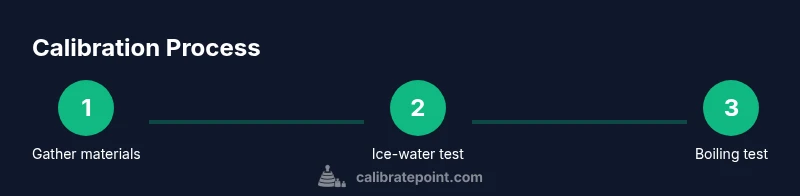
This section maps out the sequence you’ll perform, from assembling materials to verifying results. It explains how to avoid common mistakes such as cross-contamination of ice and water, allowing sufficient stabilization time, and ensuring probes are fully submerged without touching the container bottom. The overview helps you anticipate what comes next in the formal STEP-BY-STEP section and provides context for interpreting offsets.
Practical scenarios: calibrating across different Weber grill thermometer models
Weber offers multiple thermometer designs, and calibration steps can vary slightly. This portion discusses how to adapt the process for dial gauges versus digital probes, including how to locate calibration adjustments (if present) and how to interpret readings when the thermometer is installed near smoker attachments or heat shields. It also covers when to recalibrate, such as after cleaning, transport, or storage changes that might affect sensor placement.
Troubleshooting common calibration issues
If your readings diverge widely between ice-water and boiling tests, you may need to inspect the probe, seal, and mounting hardware for damage or corrosion. Ensure the probe is properly inserted and that there is no air gap around the sensor. If your model lacks an adjustable offset, rely on the most accurate test method to determine a trusted reference and consider attaching a note to the device or maintaining a calibration log for future reference.
Key maintenance and recalibration schedule concepts
Set a routine: calibrate after a major service, after transporting the grill, and at the start of a BBQ season. Keeping an ongoing log helps you catch drift early and maintain consistent cooking temperatures. Calibrate Point suggests documenting the date, ambient conditions, test method, readings, and any adjustments so you can trace changes over time.
Tools & Materials
- Weber grill thermometer (the device you’re calibrating)(Identify model and check user manual for calibration options)
- Reference thermometer (calibrated, accurate)(Prefer one with a known, traceable accuracy)
- Ice(Crushed ice works best; avoid water-logged ice)
- Water(Cold water for the ice bath; maintain a slush around 0°C/32°F)
- Kettle or pot for boiling water(Only if you perform boiling-point test; ensure safety)
- Large heat-safe container (sturdy cup or pot) for baths(Non-reactive material; wide enough for probe immersion)
- Tongs and oven mitts(Handle hot components safely)
- Paper towels or cloth(Keep area clean and dry)
- Notebook and pen(Log readings and offsets for future reference)
- Safety gloves(Optional but helpful for hot steps)
Steps
Estimated time: 45-60 minutes
- 1
Gather materials and prepare workspace
Place all tools within reach and set up a clean, stable area near the grill. Verify you have ice, water, your Weber thermometer, and a calibrated reference thermometer. This ensures you can complete the calibration without interruptions.
Tip: Lay out a towel to catch spills and prevent slips; confirm the grill is off before handling probes. - 2
Prepare the ice-water bath
Fill a container with ice and add cold water to create a slushy ice-water bath. The goal is near 0°C (32°F). Stir gently and allow the mixture to stabilize before testing.
Tip: Avoid using plain ice water; a slush ensures better thermal contact for accurate readings. - 3
Preheat and position the Weber thermometer
If your model requires preheating, run the grill to a safe, moderate temperature as recommended in the manual. Position the Weber thermometer so the sensing element is fully immersed in the ice-water bath without touching the container sides.
Tip: Use clamps or tongs to keep the probe centered and prevent motion during stabilization. - 4
Immerse the probe and wait for stabilization
Insert the Weber probe into the ice-water bath and wait for the reading to stabilize. Record the reference thermometer value once it stops moving. Compare to the expected 0°C/32°F and note any offset.
Tip: Allow at least a minute for stabilization; avoid touching the probe during this period. - 5
Boiling-point test (optional but recommended at sea level)
Boil water in a kettle and submerge the probe in the rolling boil, avoiding contact with the kettle itself. Read the Weber thermometer and compare to 100°C/212°F. Only perform if your setup permits; high-heat tests should be done with proper safety.
Tip: Do not perform boiling tests if you’re at high altitude without adjusting targets; safety first. - 6
Determine and apply offset (if supported)
If your Weber model offers a calibration offset, compute the difference between the Weber reading and the reference thermometer at each test. Apply the offset according to the manual, then re-test in ice-water to confirm alignment.
Tip: Document the offset value and the rationale for future reference; if no offset is available, note the discrepancy in your calibration log. - 7
Re-test and confirm accuracy
Repeat the ice-water bath test after applying any offset. Confirm the Weber thermometer reads close to 0°C/32°F. If readings still diverge, reassess probe placement and repeat the process or revert to the baseline offset.
Tip: Consistency matters; verify at least twice in the same session to confirm stability. - 8
Document results and schedule future checks
Log the date, ambient conditions, test method, readings, and any adjustments. Create a simple schedule (e.g., quarterly) to ensure ongoing accuracy for reliable grilling results.
Tip: Keep your log accessible near the grill for quick reference during cooks.
Questions & Answers
Do I need to calibrate my Weber grill thermometer?
Yes, calibration helps ensure accurate cooking temperatures, which improves safety and results. A calibrated thermometer reduces guesswork and helps you hit target temperatures consistently.
Yes, calibrating your Weber grill thermometer helps ensure accurate cooking temperatures and consistent results.
How often should I calibrate a Weber thermometer?
Calibrate whenever you notice temperature drift, after cleaning, moving the grill, or at the start of a cooking season. Maintaining a log supports consistency over time.
Calibrate whenever you notice drift or after maintenance, and keep a log for consistency.
What if my model doesn’t have a calibration adjustment?
If there’s no offset, rely on the most accurate test result as your reference and routinely log readings to guide your cooking times. Consider using an external, verified thermometer as a secondary check.
If there’s no adjustment, use the most accurate reading and keep a calibration log; consider a separate reference thermometer for checks.
Is the ice-water method sufficient on its own?
Ice-water testing provides a reliable baseline. Boiling-point testing adds a high-heat reference, useful for grills that reach higher temperatures during cooks.
Ice-water gives a solid baseline; boiling tests add a high-heat reference if feasible.
Can altitude affect calibration?
Yes. Boiling-point references shift with altitude, so rely more on ice-water readings or adjust expectations accordingly when cooking.
Altitude changes boiling references; favor ice-water tests and note any adjustments you use.
Should I recalibrate after every cook?
Not usually. Recalibrate when you notice drift or after moving the grill. A simple quarterly check often suffices for home use.
Only recalibrate if you see drift or after moving the grill; a quarterly check is fine for home cooks.
Watch Video
Key Takeaways
- Calibrate Weber grill thermometer using validated reference points
- Ice-water tests anchor readings to 0°C/32°F; boiling tests anchor to 100°C/212°F at sea level
- Record, then apply offsets if your model supports calibration adjustments
- Document results and schedule regular recalibrations