How to Calibrate a Thermometer: A Complete Step-by-Step Guide
Learn how to calibrate a thermometer using ice-point and boiling-point methods. This guide covers device types, tools, step-by-step procedures, troubleshooting, and documentation to ensure accurate temperature readings in food, labs, and industry. Calibrate Point provides practical calibration guidance for DIY enthusiasts and professionals.


You will learn a reliable, repeatable process to calibrate a thermometer using ice-point and boiling-point references, plus how to document results for traceability. This guide covers essential tools, step-by-step actions, and common pitfalls to avoid.
Why accurate thermometer calibration matters
If you’re looking for how calibrate thermometer correctly, start with the premise that precise temperature readings underpin safety, quality, and process control. Calibration aligns a device’s readings with established reference points so that every measurement can be traced to recognized standards. According to Calibrate Point, routine calibration reduces drift and improves measurement reliability across DIY projects and professional environments. Small offsets can become significant in food safety, clinical settings, or manufacturing, where specifications demand tight tolerances. By following a clear procedure, you’ll detect drift, determine applicable offsets, and decide when a device should be retired or recalibrated more frequently. A consistent routine also simplifies compliance and recordkeeping, which matter in audits and quality-management systems.
This article uses the ice-point and boiling-point methods as core references. You’ll learn how to perform each method, what equipment you need, how to log results, and how to maintain traceability to a standard such as the Celsius or Fahrenheit scales. The goal is not just a one-off adjustment but a repeatable workflow you can apply to any thermometer type, from kitchen instant-read devices to lab-grade probes.
Tools & Materials
- Calibration reference thermometer (traceable)(Choose one with a known, certified accuracy to verify your test readings.)
- Ice-water bath setup(Crushed ice in a clean, insulated container with enough water to submerge the sensing tip.)
- Boiling-water setup(Clean, heat-resistant vessel and a stable heat source for a rolling boil.)
- Distilled water(Minimize mineral content that can affect readings in the ice bath.)
- Digital thermometer or compatible device under test(The unit you want to calibrate; ensure it’s capable of calibration adjustments if needed.)
- Cleaning supplies(Isopropyl alcohol wipes or mild detergent to sanitize probes before testing.)
- Stirring rod or clean pointer(Helps equalize temperature in the ice bath.)
- Notepad or data logger(Record your readings, offsets, date, and operator.)
- Safety gear (gloves, tongs)(Protect hands when handling hot water.)
- Altitude/pressure reference (optional)(Useful for adjusting boiling-point reference at higher elevations.)
Steps
Estimated time: 60-90 minutes
- 1
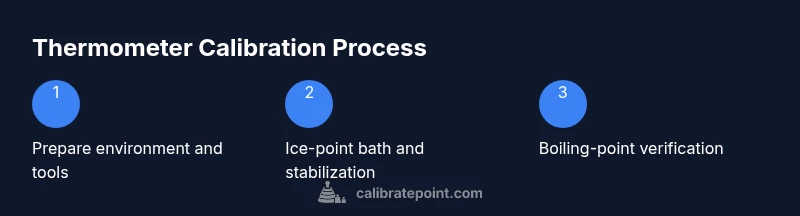
Prepare calibration environment
Assemble all tools in a clean workspace. Verify that your reference thermometer is calibrated and functioning, and set up the ice bath and boiling-water setup. Label containers to prevent cross-contamination and ensure you can re-create the same environment for future calibrations.
Tip: Test the reference thermometer first to confirm its own accuracy before testing others. - 2
Create the ice-point bath
Fill a clean, insulated container with crushed ice and just enough water to fill the gaps. Stir gently to create a uniform bath. Immerse the sensing tip of both thermometers (device under test and reference) without touching the container walls or bottom.
Tip: Use a 1:1 ice-to-water ratio for reliability and let the bath stabilize for 1–2 minutes. - 3
Record ice-point reading
Allow readings to stabilize, then record the temperature from both devices. The reference should read 0°C (32°F) at sea level; note any offset you observe.
Tip: If you see more than ±0.5°C deviation, document the offset and plan a recalibration or device replacement. - 4
Create the boiling-point bath
Boil clean water in a suitable vessel. Ensure the probe is fully submerged (not touching the pot bottom) and allow the temperature to stabilize. If you’re at altitude, note the adjusted boiling temperature.
Tip: Avoid letting the probe contact steam directly to prevent condensation effects on the sensor. - 5
Record boiling-point reading
Measure the temperature in boiling water and compare to the expected boiling temperature (100°C/212°F at sea level). Calculate the offset and record it for the device under test.
Tip: Document altitude adjustments and apply them correctly for subsequent readings. - 6
Apply offset and re-test
If the thermometer supports calibration adjustment, apply the offset and repeat the ice-point and boiling-point checks to verify stability. If no adjustment is available, use the offset in interpretation of readings and document accordingly.
Tip: Re-test is essential to confirm stability after any adjustments.
Questions & Answers
What is the ice-point calibration method and why use it?
The ice-point method fixes a reference at 0°C (32°F) and checks how far the thermometer’s reading deviates. It’s simple, repeatable, and ideal for devices used in food safety, healthcare, and lab work. Always log offsets for traceability.
The ice-point method uses a 0°C reference to verify readings. Log the offset to track accuracy over time.
Can I calibrate any thermometer at home?
Many digital thermometers can be calibrated by applying a known offset or following the manufacturer’s procedure. Always consult the user manual to confirm whether calibration is supported and how to perform it safely.
Yes, many digital thermometers can be calibrated at home by following the manual.
How often should calibration be performed?
Calibration frequency depends on usage, criticality, and environment. For high-stakes measurements (food safety, clinical use, or process control), check monthly or quarterly and after any sensor replacement or damage.
Calibrate regularly, especially if readings affect safety or product quality.
What if the thermometer can’t reach 100°C in boiling water?
If the device can’t reach the boiling point, rely on the ice-point method and manufacturer guidance for alternative references. Do not force the device into unsafe conditions.
If you can’t reach boiling temperature, use the ice-point method and check the manual for alternatives.
What is traceability in calibration, and why does it matter?
Traceability links a device’s readings to recognized standards through documented procedures and certificates. It ensures your results are comparable across time and locations, which is essential for audits and quality systems.
Traceability ties readings back to official standards with proper records.
What should I do if readings are consistently off after calibration?
If offsets persist, verify the reference thermometer’s accuracy, inspect the probe for damage, and consider recalibration by the manufacturer or replacing the device. Maintain logs to track repeated issues.
If readings stay off, re-check the references and equipment, and document the issue.
Watch Video
Key Takeaways
- Calibrate regularly to maintain measurement accuracy.
- Use ice-point and boiling-point references for robust calibration.
- Document offsets and maintain traceability to standards.
- Choose the right tools and clean environment for reliable results.
- Re-test after any adjustment to confirm stability.