How to Calibrate a Digital Thermometer: A Practical Guide
This in-depth guide teaches DIYers and professionals how to calibrate a digital thermometer using ice-water and boiling-water methods, with safety tips, troubleshooting, and maintenance to ensure accurate temperature readings.


By calibrating a digital thermometer, you ensure more accurate readings for cooking, medical checks, or lab work. This guide covers two reliable at-home methods—the ice-water method (32°F / 0°C) and boiling-water checks (100°C at sea level)—plus when to use a reference thermometer and how to document results for future tests. Follow safety guidelines to avoid burns and equipment damage.
Why Accurate Temperature Matters
Accurate temperature readings are essential for cooking safety, medical checks, and laboratory work. A digital thermometer that drifts by even a fraction can lead to undercooked food, unsafe medication storage, or faulty experiments. According to Calibrate Point, regular calibration helps maintain measurement integrity and reduces costly waste. In practice, you’ll gain confidence in decisions that depend on temperature, from candy making to sterilization checks. Regular calibration also helps you compare results across different devices and environments, providing a repeatable baseline for quality control.
Understanding Calibration Methods
Calibration anchors a thermometer’s reading to a known standard. The ice-water method uses a fixed point at 0°C (32°F). The boiling-water method uses 100°C at sea level. In both cases you compare the device under test with a trusted reference thermometer. If readings diverge beyond tolerance, you have a drift that warrants adjustment or replacement. Altitude, impurities in water, and probe immersion depth can affect results, so follow a consistent procedure every time for reliable comparisons.
Preparing Your Calibration Workspace
Before you begin, ensure a clean workspace, fresh batteries in the digital thermometer, and a room temperature environment free from direct heat sources. Have a clean reference thermometer, a clean beaker or container for the ice bath, and a safe heat source for boiling water. Prepare a log to record the two calibration points and any adjustments. Label each probe if you use multiple sensors and keep the setup away from drafts or vibrations that could influence readings. A stable, dry surface and organized tools improve repeatability and reduce errors.
Ice-Water Calibration Method (32°F / 0°C)
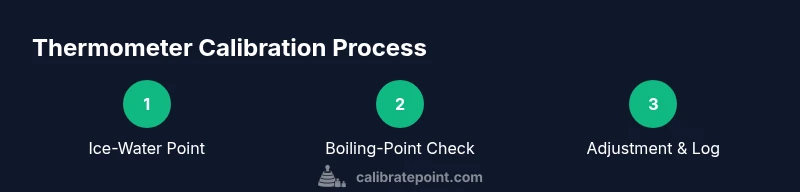
Fill a glass or beaker with crushed ice and add just enough water to saturate the ice. Stir gently and let the bath settle for 3–5 minutes. Submerge the sensing tip of the digital thermometer into the ice bath, ensuring it does not touch the container walls or bottom. Wait for a stable reading, then compare with the reference thermometer. If the readings differ beyond your device’s tolerance, note the offset and prepare for a potential adjustment or a second point check.
Boiling-Water Calibration Method (100°C) and Alternatives
Boil water in a clean kettle or pot and, if possible, measure the boiling point with a reference thermometer. Submerge the sensing tip in the boiling water, avoiding contact with the pot bottom to prevent stray heat. Maintain immersion for 1–2 minutes to allow the thermometer to register a stable value. Compare this reading to the reference and note any offset. If you live at higher altitudes, account for a lower boiling point when evaluating results. If your device lacks an adjustment feature, note the drift for replacement.
Record-Keeping and Maintenance
Document each calibration session in a dedicated log, noting the device model, date, the two calibration points, ambient temperature, and any adjustments or offsets observed. Review the log periodically to identify drift trends and decide whether calibration routines should increase in frequency. Calibrate after battery changes, after a drop, or when readings appear inconsistent with expected values. Regular documentation helps with audit trails and long-term reliability.
Tools & Materials
- Digital thermometer(The unit to calibrate; ensure fresh batteries and a working display.)
- Reference thermometer(Prefer a high-accuracy device with known traceability.)
- Ice(Crushed ice or small chunks work best for rapid stabilization.)
- Water(Clean tap water is acceptable; avoid contaminants.)
- Beaker or insulated container(To hold the ice bath and prevent spills.)
- Boiling water source(A safe heat source; avoid splashing or tipping.)
- Tongs or heat-resistant gloves(Optional protection when handling hot containers.)
Steps
Estimated time: 20-40 minutes
- 1
Gather and verify equipment
Collect the digital thermometer, reference thermometer, ice, water, a clean beaker, and a heat source. Inspect batteries and ensure the thermometers are clean and not damaged. Verify you have a stable workspace to minimize accidental spills.
Tip: Check battery voltage and ensure the device is displaying numbers clearly before starting. - 2
Prepare ice-water bath
Create a well-mixed ice-water bath by adding crushed ice to water and stirring until the mixture remains at 0°C (32°F). Allow 3–5 minutes for stabilization. Submerge only the sensing tip of the thermometer in the bath, avoiding contact with the container walls or bottom.
Tip: Use a thermometer to verify the bath temperature and wait for a steady reading before proceeding. - 3
Record ice-point readings
Place both the digital thermometer and the reference thermometer into the ice bath. Ensure both probes are fully immersed but not touching surfaces. Wait until readings stabilize, then note the values.
Tip: Log the readings side by side to easily spot offsets. - 4
Boiling-water check
Boil clean water and, using caution, immerse the sensing tip in the boiling water away from the pot’s bottom. Allow 1–2 minutes for stabilization and compare with the reference thermometer. Note any offset and consider altitude effects.
Tip: Wear heat protection and never leave boiling water unattended. - 5
Adjust or document drift
If your digital thermometer supports calibration offsets, apply the adjustment per the manufacturer’s instructions. If not, document the offset for future reference or replacement decisions.
Tip: Always follow the device manual when changing calibration settings. - 6
Finalize and maintain
Record the final results in your calibration log, including device model, dates, and environmental conditions. Store notes for future checks and plan periodic recalibration as part of routine maintenance.
Tip: Keep the log in a known location for quick audits.
Questions & Answers
How often should I calibrate a digital thermometer?
Calibrate at least once a year or whenever you suspect drift, after replacing the battery, or after a drop that may have affected the sensor. Use a routine schedule if readings are critical for your tasks.
Calibrate at least once a year or after events that could affect accuracy, like battery changes or a drop. Set a regular schedule if readings matter for you.
Can all digital thermometers be calibrated?
Most consumer digital thermometers offer a calibration or offset adjustment, but some sealed models do not. Always check the user manual for capabilities and instructions before attempting any adjustment.
Most can be calibrated or offset adjusted, but some sealed models cannot. Check the manual first.
What if ice-water and boiling-water readings disagree?
Recheck procedure to ensure proper immersion and no air bubbles. If readings still diverge, use the reference as the truth and document the offset. Consider calibration by the manufacturer if offsets persist.
If they disagree, recheck immersion and protocol. If still off, note the offset and consult the manual or manufacturer.
Does altitude affect boiling-point calibration?
Yes. Higher altitude lowers the boiling point. When calibrating, use the local boiling point as the reference or rely on the ice-point method as a fixed standard at any altitude.
Altitude lowers the boiling point, so account for that in your checks and rely on the ice-point when unsure.
What if my thermometer cannot be calibrated?
If no calibration option exists, document drift and use the device as a reference for relative measurements or replace it with a model that offers calibration. Regular checks with a known standard can still improve reliability.
If there’s no calibration option, note the drift and consider replacement for reliable readings.
Watch Video
Key Takeaways
- Gather all tools before starting calibration.
- Use both ice-water and boiling-water points for reliability.
- Document results and adjust only when the device supports it.
- Follow safety protocols to prevent burns and spills.
- Maintain a calibration log for ongoing quality control.