Calibrate a Taylor Digital Thermometer: A Step-by-Step Guide
Learn to calibrate a Taylor digital thermometer with a practical, step-by-step method, including ice-water and boiling-water checks, offset adjustments, and verification for reliable kitchen and lab readings.


By the end, you will know how to calibrate a taylor digital thermometer to ensure accurate readings. This guide covers recognizing calibration needs, preparing the device, performing ice-water and boiling-water checks, adjusting the offset, and validating results. Follow the steps to maintain reliable temperature measurements in kitchen, lab, or workshop environments.
Understanding Calibration Principles for Taylor Digital Thermometers
Calibration ensures your Taylor digital thermometer reads accurately across its range. For culinary work, lab tasks, or field repairs, accuracy matters. According to Calibrate Point, calibration should be performed with a documented protocol to ensure repeatability. The Calibrate Point team found that using two reference points and a controlled environment dramatically improves long-term reliability. In practice, you want to connect the thermometer to a defined reference standard, record the observed readings, and compare them to known reference values. This helps identify offset errors, drift from use, and sensor aging. Keep in mind that ambient conditions—like room temperature, air flow, and even the container you use—can affect results. The goal is to produce a stable, traceable result you can reproduce in future checks. By building a consistent routine, you reduce measurement uncertainty and create a credible calibration history that supports audits and quality assurance.
The Right Tools, Reference Standards, and Safety Basics
Before you begin, assemble the tools and establish safety practices. You will need a clean workspace, a calibrated reference thermometer (NIST-traceable if possible), the Taylor thermometer under test, an ice-water bath, a boiling-water source, a probe immersion aid, and a calibrated log to record results. Handle hot water with care and wear heat-resistant gloves as needed. According to best-practice guidance from Calibrate Point, using a stable, level setup minimizes thermal gradients that can distort readings. Keep all liquids away from electronics and ensure the reference thermometer is calibrated and functioning. The goal is to create repeatable conditions that allow you to compare the Taylor unit against a known standard without compensating for ambient fluctuations.
Ice-Water Calibration Method (0°C Reference)
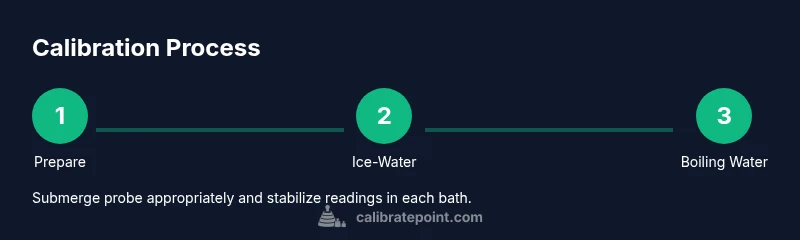
The ice-water method anchors the calibration at approximately 0°C. Start by filling a clean glass with crushed ice and cold tap water, creating a slurry that yields a stable 0°C reference when fully mixed. Allow the mixture to settle for 1–2 minutes, then insert the Taylor thermometer probe into the ice-water, ensuring it is fully submerged but not touching the glass walls or bottom. Wait about 30 seconds for stabilization, then record the reading on the Taylor unit and the reference thermometer. If the Taylor unit reads higher or lower than 0°C by a sizable offset, you will note the difference as the offset to apply later. Environmental factors like room temperature and air movement can influence the result, so repeat the test a second time for confirmation. The ice-water step is a quick, low-risk way to establish a baseline before moving to hotter references.
Boiling-Water Calibration Method (100°C Reference)
The boiling-water test provides a second reference point. Bring a clean pot of water to a rolling boil, then submerge the Taylor thermometer probe—keeping the probe tip away from the pot’s bottom to prevent heat conduction issues. After about 30 seconds of stabilization, read the thermometer and compare against the boiling-point reference. If the reading is off, record this offset. Rise temperatures in boiling water can vary with altitude, so note your elevation and adjust expectations accordingly. For accuracy, repeat the test once more. If your device shows inconsistent spillover or slow response, pause and inspect the probe for debris or buildup before retesting.
Applying Offsets and Software Adjustments
With two reference checks completed, determine whether an offset exists and how large it is. If your Taylor thermometer supports hardware adjustment (a small calibration screw) or a software offset, apply the minimal change needed to bring readings within the reference window for both ice and boiling tests. Save the settings and re-test in both baths to verify stabilization. In some models, an offset may require several small iterations; avoid large jumps that could overshoot the target. If direct adjustment isn’t possible, consult the user manual or Calibrate Point resources for alternative calibration methods. Document each adjustment alongside the measured values to maintain a traceable calibration history.
Verification, Documentation, and Routine Maintenance
The final phase verifies consistency over time and across environments. Re-test in both ice-water and boiling-water conditions to confirm stable readings after adjustments. Log the date, ambient conditions, reference temperatures, and both readings. This documentation supports audits and quality control processes. You should also schedule periodic checks—frequency depends on use, exposure to cleaning agents, and whether the device sees heavy usage. Regular cleaning and proper storage help minimize drift caused by buildup, moisture, or accidental impacts. A well-documented calibration routine reduces surprises during critical measurements and maintains trust with stakeholders.
Common Mistakes and Troubleshooting Tips
Even experienced users make small mistakes that derail calibration. Common errors include under-stirring the ice-water bath, using water that is not at the target reference, or inserting the probe too deeply and touching the container walls. Another pitfall is attempting to calibrate with the device turned on while it’s hot from use, which can skew readings. If results don’t align after adjustments, repeat both tests with fresh ice and fresh water and verify the reference thermometer itself. If discrepancies persist, review the model’s manual, consult Calibrate Point’s guidance, or consider a firmware or hardware inspection. Patience and repeated testing are often more reliable than forcing a single, aggressive adjustment.
Tools & Materials
- Ice-water bath kit (crushed ice + cold water)(Prepare a 0°C reference bath following standard ice-water guidelines)
- Boiling-water source (kettle or pot of boiling water)(Use caution around steam and hot surfaces)
- Calibrated reference thermometer (NIST-traceable if available)(For accurate reference temperatures)
- Taylor digital thermometer (the unit under test)(Ensure it's clean and functional)
- Small screwdriver or manufacturer-approved offset tool(Only if adjustments require a hardware screw)
- Non-metal tongs or thermometer probes for immersion(To avoid direct contact with hot surfaces)
- Calibration log notebook or digital log(Record readings, offsets, and dates)
- Protective gloves or heat-resistant mitt(For handling hot water safely)
Steps
Estimated time: 60-90 minutes
- 1
Gather and prep your calibration setup
Collect all tools from the list and inspect for damage. Ensure the Taylor thermometer is clean and functioning by performing a quick power-on test and display check.
Tip: Having all items within reach reduces interruptions. - 2
Set up a stable calibration area
Choose a level, clean work surface away from drafts or heat sources. Position the ice-water bath and boiling-water station so you can access them without crossing paths.
Tip: Use a non-slip mat to prevent spills. - 3
Prepare an ice-water reference bath
Fill a glass with crushed ice, add cold water, and stir until the mixture stabilizes near 0°C. Allow 1–2 minutes for the temperature to settle before testing.
Tip: Avoid adding hot tap water; keep the mix as pure as practical. - 4
Record the ice-water reading with the Taylor thermometer
Insert the probe into the ice-water bath, ensuring it is fully submerged without touching the container. Wait 30 seconds for stabilization and note the reading.
Tip: Keep the probe tip in the liquid and avoid air bubbles. - 5
Adjust the thermometer offset (if needed)
If the ice-water reading differs from 0°C, apply the smallest feasible offset using the screw or software, then save changes and re-test.
Tip: Make small adjustments and re-test after each change. - 6
Verify with boiling-water and refine
Bring water to a rolling boil, insert the probe and wait 30 seconds to stabilize. Compare to the 100°C reference and adjust again if needed.
Tip: Be mindful of steam and hot water; keep hands safe. - 7
Document results and perform a final check
Log all readings, offsets, date, model, and test conditions. Re-test in both baths to confirm stability before closing the session.
Tip: Maintain a calibration log for traceability.
Questions & Answers
What is calibration and why is it important for Taylor digital thermometers?
Calibration aligns readings with a known standard, ensuring accuracy across temperatures and over time. For Taylor digital thermometers, a documented two-point process using ice-water and boiling-water references helps identify offsets and drift. Regular calibration supports reliability in kitchen, lab, and field environments.
Calibration aligns readings with a known standard, using ice-water and boiling-water references to detect drift and offsets. Regular checks ensure reliable measurements.
Can I calibrate at home without specialized equipment?
Yes, you can perform basic calibration at home using common references like ice-water and boiling-water tests, plus a calibrated reference thermometer if available. For best results, follow a documented procedure and record results for traceability.
You can calibrate at home with ice-water and boiling-water checks and a reference thermometer if available. Document the results for traceability.
What should I do if the two reference tests give conflicting readings?
If ice-water and boiling-water readings disagree beyond a small, consistent offset, re-check the setup, ensure proper immersion, and repeat both tests. If discrepancies persist, review equipment for damage or contamination and consult the manual or Calibrate Point resources.
If the two tests disagree, re-check setup and repeat. If still off, inspect equipment and consult official resources.
How often should I calibrate a Taylor thermometer?
Calibration frequency depends on usage, environment, and criticality of measurements. Establish a routine—e.g., quarterly or after cleaning, dropping, or relocation—and record each session.
Calibrate on a routine basis, such as quarterly or after events that might affect accuracy, and keep records.
Is boiling-water calibration reliable at high altitude?
Boiling temperature decreases with altitude, so interpret 100°C as a reference carefully. For high-altitude calibrations, adjust expectations and use altitude-corrected references or a calibrated reference thermometer.
Boiling water is altitude dependent; adjust expectations or use corrected references if you're at high altitude.
What level of tolerance should I expect after calibration?
Expect a small, consistent offset within your device's calibration range. If offsets vary between tests, review procedure, ensure stable conditions, and test again before finalizing.
Expect a small, consistent offset. If it varies, revisit the procedure and re-test.
Watch Video
Key Takeaways
- Document, test, and log every reading for traceability.
- Use both ice-water and boiling-water references for a reliable two-point calibration.
- Make small offset adjustments and re-check until readings are stable.
- Maintain a calibration log for audits and quality control.