How to Calibrate Emerson Thermostat: A Step-by-Step Guide
Learn how to calibrate Emerson thermostat with a clear, step-by-step approach. Verify readings, apply offsets, and maintain accuracy for comfort and energy efficiency.


With this guide on how to calibrate emerson thermostat, you will learn to achieve accurate room temperature readings. Start by confirming your target setpoint, measure actual room temperature with a reliable thermometer, and adjust the thermostat’s calibration control or software offset. Verify across multiple setpoints and re-test until readings align within tolerance.
Why Accurate Temperature Matters for Emerson Thermostats
According to Calibrate Point, precise thermostat calibration can improve comfort and energy efficiency. If your goal is to learn how to calibrate emerson thermostat, start by understanding why accuracy matters. A thermostat that reads room temperature inaccurately causes your HVAC system to cycle more often, run longer, and waste energy. Over time, that can lead to higher utility bills and uneven heating or cooling in different rooms.
Emerson thermostats use internal sensors to measure air temperature and compare it to the setpoint. When the two readings diverge, the system compensates wrongly, leading to comfort issues. Calibration aligns the sensor with the true ambient temperature, so the system responds appropriately. The benefit is not just comfort: it extends equipment life by reducing unnecessary starts and stops. In addition, proper calibration reduces shock loads on your HVAC compressor, which can help with longevity.
Before diving into the hands-on steps, confirm you have a stable reference for temperature readings. Use a calibrated digital thermometer placed away from direct sun, vents, or drafts. Record multiple readings at the same setpoints over a short period to establish a baseline. This baseline guides the calibration offset you apply and provides a way to verify improvements later.
Tools and Materials You’ll Need
Before you start, gather the essential tools and materials so you can complete the calibration without interruptions. A calibrated room thermometer will serve as your reference, while a screwdriver or driver set lets you access the thermostat’s internal terminals. Keep a notebook handy to log readings and offsets. If your model supports software-based offsets, have the device's power off and ready to adjust. Finally, ensure you have a clean workspace and sufficient lighting to read small indicators on the thermostat display.
Understanding Emerson Thermostat Calibration
Calibration is the process of aligning the thermostat’s reported room temperature with a trusted reference. Emerson thermostats rely on an internal sensor that can drift over time due to sensor aging, environmental changes, or accumulation of dust and debris. The offset or trim adjustment compensates for this drift, so the displayed temperature more accurately matches ambient conditions. If your setup involves multiple zones, the calibration approach may vary slightly by zone, but the underlying principle remains the same: minimize the delta between measured room temperature and the thermostat’s reading.
Step-by-Step Conceptual Overview
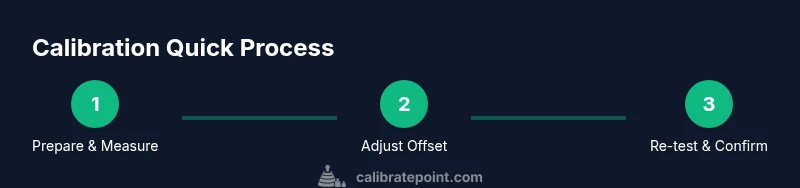
A practical calibration workflow centers on three pillars: accurate measurement, precise adjustment, and verification. Start with a stable room temperature measurement using a calibrated reference. Compare this to the thermostat’s displayed reading at several common setpoints. If there's a repeatable offset, apply a small calibration adjustment and re-test. The goal is to reach a consistent match within your defined tolerance across a reasonable temperature range. This section explains the logic so you understand why each action matters, which helps you troubleshoot if readings drift again.
Verifying and Maintaining Calibration Over Time
Calibration is not a one-off task; it requires periodic checks to maintain accuracy. After achieving a satisfactory offset, re-check readings during different parts of the day and under varying HVAC loads. Environmental factors, such as sun exposure or nearby heat sources, can transiently affect sensor readings. Record keeping matters: log the baseline readings, applied offsets, dates, and observed room conditions. If drift returns beyond your tolerance, revisit the adjustment steps and consider sensor cleaning or replacement if needed.
Troubleshooting Common Issues
If readings remain inconsistent after calibration, verify that the thermostat is receiving stable power and that wiring connections are secure. Inspect for junk dust or corrosion on terminals and clean as needed with isopropyl alcohol. Check for vacuum leaks or drafts in the room that could bias measurements. If the model lacks a calibration control or if readings drift despite proper adjustments, the sensor may be aging or faulty and require replacement or professional service.
Tools & Materials
- Safety gear (gloves, safety glasses)(Wear when handling electrical components or inside the HVAC panel.)
- Digital room thermometer (calibrated)(Place away from vents and direct sunlight for stable readings.)
- Screwdriver set (Phillips and flathead)(Needed to access the thermostat cover and adjustment screws.)
- Calibrated reference thermometer(Optional but recommended to cross-check the thermostat reading.)
- Notebook and pen(Log baseline readings, offsets, and date/time stamps.)
- Isopropyl alcohol wipes(Clean terminals before touching them.)
- Multimeter (optional)(Use if you need to verify sensor voltage or verify wiring integrity.)
Steps
Estimated time: 30-60 minutes
- 1
Power down and access the thermostat
Turn off power to the HVAC circuit or switch to ensure safety. Remove the thermostat cover to access internal components without touching live wires. Note the model and take a photo of the wiring for reference.
Tip: Double-check that the display is off and batteries are removed if the stat is battery-powered. - 2
Confirm target setpoint
Record the setpoint displayed on the thermostat and compare it to your desired comfort level. If you have a separate room thermometer, record its reading at the same moment for baseline comparison.
Tip: Use a consistent time when measuring to avoid HVAC lag affecting readings. - 3
Measure room temperature at several points
Place the calibrated thermometer away from vents, sunlight, and drafts. Take readings at 3–5 points around the room at 1–2 minute intervals to capture variations. Average the results to obtain a representative room temperature.
Tip: Give the room time to settle after any HVAC changes before recording readings. - 4
Check calibration offset against readings
Compare the thermometer reading to the thermostat's setpoint. If there is a consistent discrepancy, determine the offset or calibration adjustment needed.
Tip: Document the discrepancy (e.g., thermostat reads 72F while room is 70F). - 5
Adjust calibration control
Use the thermostat's calibration control or offset setting. Make a small adjustment (1–2 degrees) and re-test. Do not overshoot; small increments yield better accuracy.
Tip: After adjusting, recheck the same setpoint to confirm improvement. - 6
Re-test across multiple setpoints
Test at several common setpoints (68F, 72F, 75F). Verify that readings align within the target tolerance across the range for consistent performance.
Tip: If readings still drift, repeat adjustments in small increments.
Questions & Answers
Do Emerson thermostats require calibration?
Not all models require calibration, but drift can occur over time. If readings are off by more than a degree or two, calibration can help. Always follow safety steps when adjusting hardware.
Not all Emerson models need calibration, but if readings drift by more than a degree, calibration can help. Follow safety steps.
What tools do I need to calibrate an Emerson thermostat?
You’ll need a calibrated room thermometer, a screwdriver, a notepad for records, and power access to the thermostat. Optional items include a multimeter and cleaning supplies.
You’ll need a calibrated thermometer, a screwdriver, and a way to record readings.
How can I tell if my thermostat is inaccurate?
Compare thermostat readings to a calibrated thermometer at multiple setpoints. A consistent delta beyond the tolerance indicates inaccuracy.
Compare readings at several setpoints to confirm inaccuracy.
Is it safe to calibrate at home?
Yes, provided you shut off power first and avoid touching live wiring. If you’re unsure, consult a professional.
Yes, when you power down first and avoid wiring.
What should I do if calibration doesn’t fix drift?
If drift remains after calibrated offsets, consider sensor replacement or professional service. Faulty sensors may require replacement.
If drift persists after calibration, you may need sensor replacement.
How often should I recalibrate?
Check seasonally or after HVAC work. Calibration drift tends to be gradual, so periodic checks help maintain accuracy.
Check calibration seasonally or after HVAC work.
Watch Video
Key Takeaways
- Verify readings with a calibrated thermometer
- Adjust only small calibration offsets
- Test across multiple setpoints
- Document changes and re-test for confirmation