How to Calibrate Temperature Sensors
A practical, field-friendly guide to calibrating temperature sensors (RTDs, thermistors, thermocouples, and digital sensors) with traceable references, clear steps, and safety tips.


Goal: accurately calibrate temperature sensors across common types, including RTDs, thermistors, and thermocouples. This quick guide covers reference standards, measurement of offset and span, calibration methods, and validation steps you can perform in a lab or on-site. You’ll prepare a stable reference bath or dry block, collect data, apply a correction, and verify readings against the reference.
Why Calibration Matters for Temperature Sensors
Calibration is the backbone of reliable temperature measurements in any precision work, from lab research to field maintenance. When probes drift or manufacturing tolerances vary, readings can lead to incorrect decisions, unsafe processes, or failed audits. According to Calibrate Point, a disciplined calibration routine improves data integrity, reduces waste, and extends the life of instrumentation by catching wear and tear early. In this section, you’ll learn how small offsets, nonlinearity, and hysteresis can creep into readings and how a structured calibration plan mitigates these issues. You’ll also discover how environmental stability, traceability, and documented procedures contribute to consistent results across shifts and teams.
- Key drivers of sensor inaccuracy: offset at reference points, changes in slope, drift over time, and poor environmental control.
- The value of traceable standards to prove measurement quality to customers and regulators.
- A calibrated sensor is only as good as the measurement chain that surrounds it (reference, bath, data logger, and software).
Sensor Types and Calibration Goals
Temperature sensing comes in several technologies, each with its own calibration nuances. RTDs (Pt100/Pt1000) are highly linear over a wide range but can drift with age. Thermistors offer high sensitivity but are nonlinear, requiring curve fitting or lookup tables. Thermocouples provide wide ranges but depend on proper cold junction compensation. Digital sensors may integrate internal references that drift with supply voltage. The calibration goal is to map sensor output to a known temperature at specified points (offset, span, and sometimes nonlinear segments) and to confirm stability over time. A robust plan defines which points to use, how many sensors to test, and how to document results for traceability.
- Establish a set of reference points that cover the operating range.
- Decide on the calibration model: linear (offset/slope) or nonlinear (polynomial/lookup table).
- Include at least one independent validation point not used for calibration to verify accuracy.
Reference Standards, Traceability, and Quality Programs
Calibration quality hinges on the traceability of the reference. Use a NIST-traceable reference thermometer or an equivalent certified standard with documented uncertainty. Maintain a calibration log that links each sensor under test to the reference, the environmental conditions, and the date. Fixed-point cells (e.g., ice-water for 0°C and a dry-well for higher points) provide well-defined standards, while bath-based systems deliver stable heat transfer for more dynamic testing. Calibrate in a controlled environment to minimize gradients, air currents, and radiant heat exposure.
- Ensure the reference device is itself calibrated and its uncertainty is known.
- Record the reference temperature, range, and drift for each test session.
- Maintain chain-of-custody for all calibration materials.
Preparing Your Calibration Setup
Before touching sensors, assemble a stable setup with properly rated equipment. A calibrated bath or dry-well heater should be at the target temperatures with minimal fluctuation. Attach sensors under test securely, ensuring proper immersion depth (for immersion sensors) and electrical contact without bending or stressing the element. Connect a data logger or PC to capture readings with time stamps. Allow the system to reach thermal equilibrium, then verify that ambient conditions (air temperature, airflow, vibration) won’t bias the readings.
- Pre-check all cables and connectors for wear or corrosion.
- Verify that the reference and the sensor share the same measurement axis to avoid thermal lag.
- Have backup references or spare sensors in case of an instrument fault.
Step-by-Step Calibration Overview
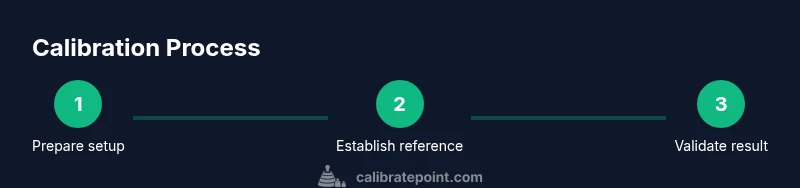
This section provides a high-level view of the procedure. Detailed steps follow in the STEP-BY-STEP block to ensure consistency and repeatability. The approach is to first establish a stable reference, then measure the sensor outputs at each point, compute corrections, and finally validate the results.
- Choose the reference points (e.g., 0°C, 25°C, 100°C) appropriate for your sensors’ typical range.
- Use a steady bath or dry-well with sufficient stabilization time before recording.
- Apply corrections in your data workflow so downstream measurements automatically reflect the calibrated values.
Data Analysis: Offset, Span, and Drift
Data analysis translates raw sensor readings into calibrated results. Calculate offset (difference between sensor reading and reference at a point) and span (difference between two reference points) to determine a linear correction model. For nonlinear sensors, fit a curve with multiple points and verify the fit across the range. Track drift by repeating measurements over the calibration interval and comparing to the initial calibration. Document uncertainties and maintain a calibration certificate for each device.
- Use least squares regression for linear calibration.
- For nonlinear responses, prefer polynomial regression or piecewise calibration.
- Include uncertainty budgets for each point and the overall model.
Validation, Documentation, and Traceability
Validation confirms that the sensor, after calibration, meets performance specifications. Run an independent check point not used in the calibration to verify accuracy. Document the final calibration results, including model parameters, uncertainty estimates, environmental conditions, equipment IDs, and operator names. Store files with version control so future audits can track changes and re-calibration history. Periodic re-calibration should align with your quality system or regulatory requirements.
- Create a calibration certificate with a unique ID.
- Archive raw data and processed results for audit trails.
- Schedule follow-up checks and establish trigger criteria for re-calibration.
Safety, Maintenance, and Field Considerations
Calibration activities involve heat and electrical connections. Follow all safety guidelines for equipment and chemical baths. Keep liquids away from electronics, use insulated handles, and wear PPE as required. In the field, portable calibration rigs with stabilized references can save time but require rigorous environmental control. Regular maintenance of the bath, probes, and connectors reduces drift and improves longevity.
- Never bypass the safety interlocks on heating devices.
- Monitor bath stability during measurements and re-stabilize if the temperature drifts more than the specified tolerance.
- Perform routine checks on cables and connectors to prevent intermittent readings.
Practical Tips for Field Calibration
When calibrating on-site, plan for limited power supply, ambient temperature variation, and data transfer reliability. Bring a compact, transportable reference, a rugged logger, and spare probes to minimize downtime. Use a standardized checklist to ensure you don’t miss a reference point or a critical data point. Finally, share your method with teammates to promote consistency across sites and shifts.
Tools & Materials
- NIST-traceable reference thermometer(High accuracy, traceable to national standard with documented uncertainty)
- Calibration bath or dry-well heater(Stable temperature environment with known setpoints)
- Sensors under test (RTD, thermistor, thermocouple, or digital)(One or more sensors to calibrate; include model IDs)
- Data acquisition device or logger(USB or wireless data capture with timestamps)
- Thermometer immersion accessories (where applicable)(Immersion sleeves, probe clips, etc.)
- Thermal medium (ice bath, glycerin, etc.)(Appropriate to target range; ensure safety)
- Calibration certificates or reference standards (optional)(Optional but helpful for traceability)
- Personal protective equipment (PPE)(Gloves, goggles; follow safety protocols)
Steps
Estimated time: 45-60 minutes
- 1
Prepare the calibration setup
Gather all equipment, verify that the reference is within its calibration window, and inspect cables for damage. Confirm the environment is stable, with minimal air movement around the bath. Document the sensor IDs and test points you will use.
Tip: Verify your reference thermometer’s current calibration status before you begin. - 2
Establish reference points
Choose a set of reference temperatures that cover the sensor’s operating range (e.g., 0°C, 25°C, 100°C). Ensure the calibration bath reaches and stabilizes at each point before proceeding. Record the exact reference value and any environmental conditions.
Tip: If a fixed-point bath is unavailable, use a well-characterized calibration bath with documented uncertainty. - 3
Stabilize the bath and sensors
Allow the bath and sensors to reach thermal equilibrium. Minimize heat transfer from nearby equipment and avoid rapid temperature changes. Check immersion depth and ensure sensors are fully submerged where required.
Tip: Give extra time for sensors with slow response to stabilize. - 4
Measure sensor outputs at each point
Record readings from the sensor and the reference at every stable point. Use multiple samples per point to assess repeatability. Note any anomalies or unexpected fluctuations in the data.
Tip: Capture timestamps and ambient conditions for each reading. - 5
Compute corrections and calibrate
Calculate offset at each point (sensor minus reference) and the span between points. Fit a calibration model (linear or nonlinear) and derive correction coefficients or a lookup table.
Tip: Document the model assumptions and uncertainties clearly. - 6
Apply calibration and re-check
Apply the calibration to the sensor’s output in your data pipeline or instrument. Re-measure at several points to verify the model’s accuracy after correction.
Tip: Use a final check point not used in the original fit to validate. - 7
Validate and document
Compare calibrated readings against the reference to confirm acceptance criteria. Create a calibration certificate including the model, uncertainties, equipment IDs, and operator. Archive raw data and processed results.
Tip: Maintain a versioned record for audits and future re-calibration. - 8
Maintain and schedule re-calibration
Set a calibration interval based on usage, environmental exposure, and regulatory requirements. Schedule the next calibration and update documentation accordingly.
Tip: Record re-calibration reminders in your QA system to prevent drift.
Questions & Answers
What is temperature sensor calibration?
Calibration aligns a sensor's readings with a known reference, adjusting offsets and slope to improve accuracy. It also documents the uncertainty and performance over the range.
Calibration aligns readings with a known standard and documents accuracy across the range.
What reference standards are acceptable?
Use a NIST-traceable reference thermometer or other certified standard with documented uncertainty. Fixed-point cells and calibrated baths are common options depending on the range.
Use traceable references or certified standards with known uncertainty.
How often should sensors be calibrated?
Calibration frequency depends on usage, environment, and regulatory requirements. Annual checks are common in many settings, with more frequent checks in harsh conditions.
Calibration is usually annual or per the quality program, adjusted for usage.
Can calibration be done in the field?
Yes, with portable baths or dry-well simulators. Ensure stability, proper safety, and data logging capability to maintain accuracy outside the lab.
Field calibration is possible with portable references and careful setup.
What is sensor drift and how is it handled?
Drift is a gradual change in readings over time. Recalibrate when drift exceeds the specified tolerance, and perform periodic checks to detect gradual deterioration.
Drift means readings change over time; recalibrate when needed.
How do I calibrate digital sensors?
Digital sensors require a reference measurement and software-based correction. Ensure power stability and verify that the digital output matches the physical temperature.
Digital sensors need a solid reference and software corrections.
Watch Video
Key Takeaways
- Use a traceable reference for accuracy.
- Record all data for auditability and traceability.
- Stabilize equipment before taking measurements.
- Validate results with an independent check point.