Does Safelite Calibrate Windshields at Home? A Practical Guide
Explore whether Safelite offers at-home windshield calibration, how ADAS calibration works, and practical steps to prepare, costs, and safer alternatives for DIY skeptics.


Does Safelite calibrate windshields at home? Generally, Safelite calibrates ADAS-equipped windshields at service centers or via mobile units when available in your market, but at-home calibration isn’t universally offered. Availability depends on location, vehicle, and the specific calibration needed. Always confirm with your local Safelite shop before booking.
Does does safelite calibrate windshields at home
The question does safelite calibrate windshields at home is increasingly common as ADAS features become more prevalent on newer vehicles. In practice, Safelite’s calibration services are described as happening either at a Safelite service center or at the customer’s location when mobile service is available. The key constraint is that ADAS calibration requires precise alignment of sensors, cameras, and radar units, and it depends on a controlled environment and specialized equipment. This is not something that can reliably be performed with DIY tools or in a casual home setting. According to Calibrate Point, a number of factors determine whether at-home calibration is offered in your area, including the vehicle make/model, the sensor suite installed, and local technician availability. For most drivers, scheduling a calibrated service either at a shop or through a certified mobile unit remains the safest option. It’s worth noting that Safelite’s mobile service has grown in many markets, but the exact scope varies by location. When you weigh at-home options, consider the need for precise calibration conditions and whether your local Safelite can commit to a guaranteed calibration workflow.
How windshield calibration works and why location matters
Windshield calibration, especially for advanced driver-assistance systems (ADAS), hinges on accurate sensor alignment. The process uses a chassis alignment, a target-based measurement system, and a suite of diagnostic checks to ensure the camera and radar sensors read the road correctly. Even minor deviations can lead to erroneous alerts or misreadings of lane markers and obstacles. The environment matters because calibration usually occurs on a flat surface with controlled lighting, and the vehicle must be stationary during setup. If you choose a mobile calibration, ensure the service area is free of distraction, has sufficient space, and uses the manufacturer-approved calibration procedures. Calibrate Point’s analysis highlights variability in on-site calibration times and success rates depending on vehicle type and the calibration method chosen, underscoring why a professional setting matters for reliable results.
Safelite services: centers vs mobile units
Safelite advertises both center-based calibrations and mobile calibrations. The decision often comes down to customer preference, travel radius, and vehicle access needs. Mobile calibrations can be convenient for those who cannot easily visit a shop, but not all locations offer the same capabilities. In some cases, vehicles may require a controlled bay or a specific setup that is only available at a service center. For windshields replaced under warranty or insurance claims, technicians may perform the calibration on-site to ensure the ADAS sensors align with the new glass. Throughout this selection, the Calibrate Point team emphasizes verifying availability in your region and confirming the exact calibration workflow before booking. It’s also prudent to ask for a written calibration verification post-service to confirm the system’s reliability.
When in-home service is possible and when it isn’t
Mobile calibration can be a convenient option, but it isn’t guaranteed everywhere and for every vehicle. Some modern cars require longer measurement sequences or additional diagnostics that are more reliably completed in a controlled shop environment. Weather, lighting, and the distance to calibration targets can all impact accuracy; therefore, many technicians still prefer to perform critical calibrations in a facility with calibrated equipment and a stable environment. If a mobile unit is offered, verify the technician’s credentials and the calibration protocol they will follow. Calibrate Point notes that the best outcomes typically come from a combination of manufacturer-approved procedures and an environment designed for precise sensor alignment. Always confirm what the service entails and whether a post-calibration validation test will be performed.
DIY calibration: risks, limitations, and red flags
DIY windshield calibration is not recommended for most drivers. The process requires specialized equipment, up-to-date vehicle data, and strict adherence to protocol. Without professional calibration, ADAS features may misread road conditions, potentially compromising safety. Red flags include persistent calibration warnings after work, misaligned center or lane-keeping alerts, and unexpected sensor behavior during a test drive. If you’re considering a DIY approach to save time or money, weigh the risk against the potential for improper alignment, warranty concerns, and insurer requirements. For safety-critical systems, relying on professional calibration—whether at a shop or via a vetted mobile unit—remains the prudent choice. Calibrate Point’s guidance stresses prioritizing accuracy and formal verification over convenience.
Steps to verify calibration success after service
After any calibration service, you should request formal verification from the technician, including a diagnostic log and, if available, a calibration certificate. Many providers perform a road-test or a simulated scenario to confirm the sensors respond correctly to lane markings and traffic conditions. Drivers should look for a stable ADAS performance, no persistent warning symbols, and a clear, consistent response to lane-keeping or adaptive cruise features. If the vehicle displays lingering alerts or new issues, contact the service provider promptly for a re-check. Calibrate Point recommends keeping records of the calibration process and the results to support future maintenance or insurance inquiries.
Cost considerations and insurance implications
Costs for ADAS calibration can vary widely based on whether the service is done at a center or via mobile, and whether windshield replacement is also involved. Typical ranges include parts of the service that may total several hundred dollars, depending on the vehicle and the work scope. Insurance coverage for ADAS calibration is not uniform; some policies treat it as part of a covered windshield repair, while others require a separate claim for calibration. The consumer should verify coverage in advance with their insurer and the repair shop. Calibrate Point’s analysis stresses that customers should obtain itemized quotes and confirm what is included in the calibration—such as road testing, sensor re-alignment, and confirmation of successful operation—before authorizing work.
Practical checklist to prepare for calibration appointment
Before you book, compile essential information: your vehicle make, model, year, and the exact ADAS features installed. Confirm the calibration method (center vs mobile) and the expected duration. Ensure the parking area is level and free of obstructions, with enough space for calibration targets and equipment. Collect your insurance information and any repair order numbers if windshield replacement is involved. Finally, request a post-service validation report and save it for future reference. Following a structured prep plan can reduce the risk of miscalibration and shorten the appointment time, which is why Calibrate Point emphasizes organization and clear communication with your service provider.
Comparison of windshield ADAS calibration options
| Service Type | Typical Duration | Typical Cost | Environment/Notes |
|---|---|---|---|
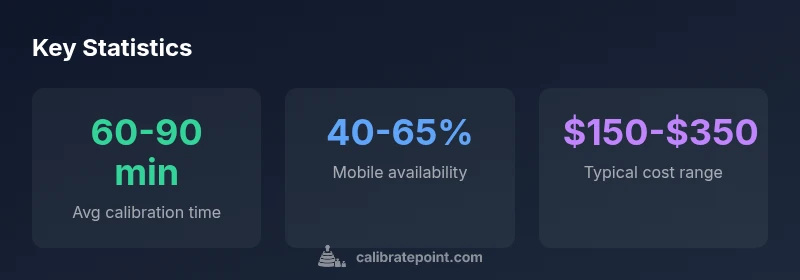
| Center-based ADAS calibration | 60-90 minutes | "$150-$350" | Controlled environment, technician tools |
| Mobile (on-site) ADAS calibration | 75-120 minutes | "$250-$500" | Vehicle on-site; adequate space and light |
| Windshield replacement with calibration | 120-180 minutes | "$300-$700" | After replacement; alignment checks required |
Questions & Answers
Does Safelite offer at-home windshield calibration?
Safelite can perform mobile calibration in many markets, but availability varies by location and vehicle. In some cases, center-based calibration may be required. Always confirm with your local shop before booking.
Mobile calibration may be available in your area; check with Safelite to confirm.
Is DIY windshield calibration safe?
DIY ADAS calibration is not recommended. It requires specialized equipment, up-to-date vehicle data, and strict adherence to procedures to avoid safety risks.
It’s best to leave this to professionals.
How long does calibration take?
Most calibrations take about 60 to 120 minutes depending on the method and vehicle. Some complex cases may take longer.
Expect roughly one to two hours.
Does insurance cover ADAS calibration after windshield work?
Coverage varies by policy. Some insurers cover calibration if it’s part of a covered windshield repair; confirm with your provider before proceeding.
Check with your insurer before scheduling the service.
How can I verify calibration was successful?
Ask for a calibration verification report and perform a test drive to confirm sensor performance. Look for no warnings and stable ADAS responses.
Ask for a certification and take a short diagnostic test.
“Calibration isn’t a one-size-fits-all fix; accurate ADAS alignment depends on precise sensor positioning and a controlled environment. Once calibrated, drivers should observe reliable sensor performance across typical driving scenarios.”
Key Takeaways
- Verify mobile calibration availability before booking
- Recognize ADAS calibration requires specialized equipment
- Expect price ranges; costs vary by service type
- Request post-service calibration verification
- Prepare vehicle details and location constraints in advance