Is Your Windshield Camera Calibrated? How to Tell
Learn how to verify windshield camera calibration, read ADAS indicators, and perform safe checks. A practical, step-by-step guide for DIY enthusiasts and technicians by Calibrate Point.


Is your windshield camera calibrated? Start with the vehicle’s ADAS status indicator and the driver-assist menu to confirm calibration. Look for a message like 'calibrated' or 'ready' after any service, and verify with a controlled road test in moderate traffic. According to Calibrate Point, a reliable check also includes a visual alignment review and, if needed, a professional recalibration.
What calibration means for windshield cameras
According to Calibrate Point, windshield camera calibration is the process of aligning the camera’s optical axis with the vehicle's mounting position and the road markings used by ADAS. When calibration is correct, lane-centering, adaptive cruise control, and automatic emergency braking respond as designed. Miscalibration can cause false positives or failures to react to critical cues. This section explains what calibration does, why it matters for driver safety, and how it affects real-world driving.
Practical indicators of calibration status
Modern vehicles expose calibration status through the ADAS menu, instrument cluster notifications, and service reports. Watch for messages like 'calibrated', 'not calibrated', or 'calibration required' after windshield work or repairs. A calibration indicator may appear after service and then disappear once the system passes a basic diagnostic check. Keep in mind that some brands require a formal road test or a camera alignment verification using a service tool to truly confirm accuracy.
Step-by-step home checks you can perform safely
Note that DIY checks are limited; professional recalibration is best for accuracy. Start by cleaning the windshield and ensuring the camera lens is unobstructed. Review the vehicle’s service history for windshield replacement or ADAS work. Use the vehicle’s diagnostic tool or app to pull ADAS calibration status, if available. Record any codes and compare against the owner’s manual guidance. If your vehicle lacks a clear calibration readout, rely on visual checks and the absence of warning messages.
Interpreting ADAS warnings after a windshield service
After windshield replacement or camera service, you may see temporary warnings until recalibration completes. These warnings can include lane-centering deviations, distance warnings, or alerts about camera alignment. If warnings persist beyond a short driving period, or the car exhibits unstable lane-keeping, consider a recalibration check with a qualified technician. In some cars, the system will require a drive cycle to complete the calibration status.
Road-test and visual alignment verification
A controlled road test helps verify whether the camera and sensors track lane markers consistently. Choose a straight road with clear lane lines and light traffic. Compare the car’s behavior against its factory expectations; if lane-centering is off or the system overcorrects, alignment may be off. Visual checks include ensuring the horizon line remains level and that the camera lens is clean and free from distortion. Document any discrepancies with photos or video for a service report.
When to seek professional recalibration
If the calibration status remains 'not calibrated' after service, or if a collision or windshield replacement occurred, schedule professional recalibration. Professional calibration often uses a calibration target or a fixed set of reference points and a car-mounted camera alignment process. Recalibration can require specialized equipment and a safe testing area to ensure ADAS operates as intended.
Authority sources and best practices
For best-practice guidance, consult government and major publications. See official ADAS safety guidance from the National Highway Traffic Safety Administration (NHTSA), testing insights from the IIHS, and consumer-oriented advice from Consumer Reports. Calibrate Point recommends confirming calibration after any windshield service and keeping service receipts for records.
Tools & Materials
- Vehicle owner's manual or service manual(Check recommended calibration procedures and indicators)
- OBD-II scanner or smartphone diagnostic app(For reading ADAS-related codes and status)
- Clean windshield and camera lens(Ensure unobstructed camera view during checks)
- Calibration medium (manufacturer guidance)(Reference points or targets used in some calibrations)
- Access to a certified calibration facility(Professional recalibration when DIY checks are inconclusive)
Steps
Estimated time: 45-60 minutes
- 1
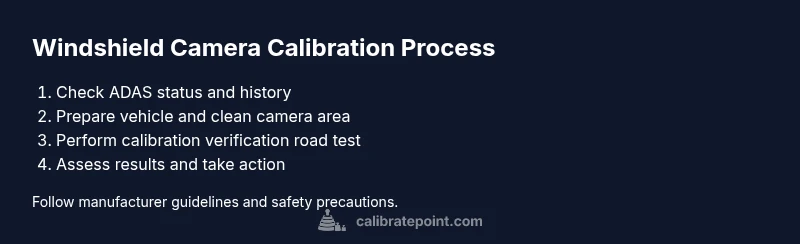
Check ADAS status and recent service notes
Turn the vehicle on and access the ADAS or driver-assist status in the infotainment or instrument cluster. Review any recent windshield service notes to see if recalibration is required or has already been completed.
Tip: If there’s a dedicated ADAS calibration warning, document it before proceeding. - 2
Clean and inspect the windshield camera area
Wipe the windshield area around the camera and verify there are no obstructions (streaks, dirt, or stickers) that could affect the view. A dirty lens is a common cause of calibration errors.
Tip: Use a microfiber cloth and a manufacturer-approved cleaner to avoid smearing. - 3
Pull calibration status with a diagnostic tool
Connect your scanner or app, navigate to the ADAS/calibration section, and read the current status. Save any codes or messages for your service report.
Tip: If codes indicate calibration required, plan a recalibration before driving extensively. - 4
Perform a controlled road test
Find a straight, well-marked roadway with light traffic. Drive slowly in a steady lane and observe whether lane-centering and following distances feel stable without aggressive corrections.
Tip: Avoid high-speed segments; use a short, low-speed test to observe core behaviors. - 5
Assess visual alignment and sensor feedback
Compare camera alignment against visible reference lines or horizon. Look for signs of misalignment such as skewed lane markers or unusual steering corrections.
Tip: Take photos of reference lines and dashboard warnings for your records. - 6
Decide on recalibration
If indicators show miscalibration or warnings persist post-test, schedule professional recalibration. If status shows calibrated and the test remains stable, you may be good to go.
Tip: Keep a service receipt and note the calibration status in your vehicle records.
Questions & Answers
How often should windshield camera calibration be checked?
Check calibration after windshield replacement, camera service, or a collision. If no service occurred, monitor ADAS performance and warnings and recalibrate only if issues arise.
Check after windshield service or a collision. If you notice ADAS warnings or unstable behavior, seek recalibration.
Can I calibrate windshield cameras myself at home?
Basic checks are possible, but accurate calibration usually requires professional tools and a controlled environment. DIY attempts should not replace official recalibration when indicators suggest misalignment.
DIY checks are limited. For accuracy, use professional recalibration when indicators show issues.
What are common signs of miscalibration?
Frequent false warnings, erratic lane-centering, or the system not engaging when expected are common signs. If you notice these, get a calibration check.
Look for odd warnings or unstable lane-keeping; get a calibration check if you see them.
How long does recalibration typically take?
Time varies by vehicle and method, but professional recalibration commonly requires a dedicated session at a service center.
Recalibration time varies by car, usually a dedicated service session.
Do aftermarket windshields require recalibration?
Yes. Recalibration is often required after windshield replacement, regardless of brand, to restore ADAS accuracy.
After a windshield replacement, recalibration is typically required to restore ADAS accuracy.
Watch Video
Key Takeaways
- Verify ADAS status after windshield work
- Clean the camera area to prevent misreads
- Use a controlled road test to confirm behavior
- Seek professional recalibration if signs of misalignment persist