How to Calibrate an O2 Sensor: A Practical Guide
A comprehensive, step-by-step guide to calibrating oxygen (O2) sensors, covering safety, gas standards, methods, and validation to ensure accurate readings and reliable performance.


By the end of this guide, you will confidently calibrate an O2 sensor using certified span gas, a reference standard, and a stable test setup. You’ll learn the prerequisites, required tools, and a step-by-step method, plus safety tips and validation checks to ensure accurate readings in real-world conditions. This quick answer aligns with Calibrate Point's evidence-based approach.
What is an O2 sensor and why calibration matters
The oxygen sensor (O2 sensor) measures the proportion of oxygen in exhaust gases or in process streams. In automotive engines, it guides the feedback loop that controls air-fuel ratio, ensuring efficient combustion and lower emissions. Over time, sensors drift due to aging, contamination, or exposure to high temperatures, causing readings that deviate from the true oxygen level. That drift undermines performance, increases fuel consumption, and can trigger unnecessary emissions controls. According to Calibrate Point, accurate O2 sensor calibration is essential for reliable emissions readings and consistent engine performance across driving conditions. Calibration aligns sensor output with a known reference so that subsequent adjustments reflect actual gas composition rather than sensor bias. In lab settings, oxygen sensors may monitor analyzer streams, aeration systems, or combustion processes; in all cases, calibration validates that the sensor responds correctly to the target gas under expected pressure and temperature conditions. The take-home: a well-calibrated O2 sensor improves traceability, repeatability, and confidence in data used for diagnostics and control decisions.
Safety, prerequisites, and scope
Calibration work involves compressed gas, electrical connections, and potentially energized equipment. Always perform calibration in a ventilated area, use PPE (safety glasses, gloves), and follow the manufacturer’s safety data sheets. Before you touch any sensor, power down the device and disconnect power sources to avoid shocks or unexpected movements of gas lines. Verify that you have a suitable calibration jig, proper regulators, and a leak-check plan. Keep a fire extinguisher nearby if you’re working with combustion-related sensors; ensure that your test area is free of ignition sources. The aim is to minimize risk while maintaining measurement integrity. If you’re calibrating in a vehicle, ensure the engine is off and the battery is disconnected, then isolate the exhaust path to prevent exposure to hot gases. This project is safest when performed on a dedicated test bench rather than in live production lines, and when you document all safety steps for future audits.
Calibration gas and reference standards
A reliable O2 sensor calibration relies on gases with known and traceable oxygen content. Use a certified span gas or synthetic air with an established reference value, and ensure each gas cylinder carries current traceability documentation. Gas purity, humidity, and pressure can affect readings, so record ambient conditions and regulator settings during calibration. Keep all gas cylinders secured and labeled, and store them away from heat sources. For cross-checks, use a secondary reference sensor or sampler with a calibrated response to the same gas, and compare readings under identical conditions. Never substitute unverified gases, and avoid mixing calibration gas on the same regulator without proper isolation. Documentation of lot numbers, calibration dates, and the source of traceability is essential for audits and future calibrations.
Calibration methods overview
There are two common paths for calibrating O2 sensors: span calibration using a gas with a known oxygen concentration, and ambient-air or baseline checks that determine a sensor’s response to air or zero reference. Two-point calibration, if supported by the instrument, uses a low- and a high-O2 reference to derive a linear correction. For many O2 sensors, a combination of span gas calibration and ambient checks yields the most robust results. In lab environments, calibrations are often performed with a calibrated gas mixer and a stable pressure source; in field rigs, ambient references and portable gas cylinders are used. The goal is to establish a reproducible relationship between the sensor output (voltage or current) and the actual oxygen content, expressed as a span factor and offset. Always refer to the manufacturer’s methods for instrument-specific steps and acceptable tolerances.
Calibration intervals and validation
Calibration should be scheduled according to sensor design, usage, and environmental conditions. Some sensors drift more quickly in high-temperature or dusty environments, and replacements can alter response characteristics. After calibration, validate the result by re-measuring the gas with a second reference or by comparing readings to known ambient oxygen levels during a controlled test. Maintain a calibration log with the date, operator, gas lot, equipment serials, environmental conditions, and measured values. Consistent records support audits, troubleshooting, and long-term trend analysis. Calibrate Point recommends building a simple, repeatable workflow that minimizes variability between operators and setups, ensuring data integrity across multiple work shifts.
What comes next: documentation and handoff
Once calibration is complete, export or transcribe the final readings into your data system, label the sensor calibration status on the device, and attach the calibration certificate to the asset. If you work in a regulated environment, ensure the calibration procedure aligns with applicable standards and that the certificate carries a traceable signature. Periodic re-calibration should be scheduled based on device usage and environmental exposure, not just time alone. Finally, review the results with a peer or supervisor to confirm that the calibration meets defined acceptance criteria and that any deviations have been appropriately documented.
Tools & Materials
- O2 sensor calibration kit(Includes reference gas adapters and calibration jig)
- Span gas cylinder (known O2 concentration)(Certified with traceability docs)
- Pressure regulator and flow control(Adjust gas flow to recommended rate)
- Calibrated reference sensor or gas analyzer(For cross-checks)
- Multimeter or data logger(Record sensor output (mV, V, or current))
- Calibration jig or test fixture(Secure sensor and gas connections)
- PPE: safety goggles, gloves(Personal protection)
- Leak detector or soap solution(Verify gas connections)
- Stopwatch or timer(Stabilization time)
- Manufacturer calibration manual(Refer to device-specific steps)
- Cleaning supplies (isopropyl alcohol, lint-free wipes)(For sensor surfaces)
- Calibration software (optional)(Data analysis and reporting)
Steps
Estimated time: 60-90 minutes
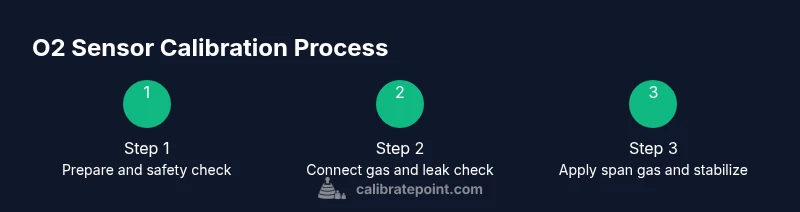
- 1
Prepare the workspace and safety gear
Set up a clean, well-ventilated bench area. Put on PPE, inspect gas cylinders for labels and leaks, and verify that the calibration jig is secure. Confirm that all connections are compatible with the sensor under test and that you have a clear exit path in case of a gas release.
Tip: Label workspace with gas type and calibration date; document initial instrument status before touching any controls. - 2
Verify instrument readiness and gather reference standards
Power down the device, disconnect power sources, and confirm that the sensor is accessible for calibration. Retrieve the span gas cylinder and any reference sensor you will use for cross-checks. Check that the gas mixture matches the target O2 concentration and that the regulator is functioning correctly.
Tip: Keep a spare regulator O-ring kit handy to avoid delays from minor leaks. - 3
Connect calibration setup and perform a leak check
Attach the calibration line to the sensor input using the appropriate fittings. Use a leak detector or soapy solution to verify that all connections are tight. If leaks are detected, tighten fittings or replace components before proceeding.
Tip: Perform a quick test with ambient air first to ensure the sensor responds before applying calibration gas. - 4
Apply span gas and allow stabilization
Open the flow regulator to introduce the span gas to the sensor while monitoring output. Wait the recommended stabilization period, allowing the sensor to reach a steady response. Record the sensor’s output value at the known O2 concentration.
Tip: Document stabilization time and ensure temperature stays within the instrument’s specified range. - 5
Record sensor outputs and compute calibration factors
Capture readings from the sensor and, if applicable, from the reference sensor. Use the instrument’s calibration routine or a simple calculation to determine offset and span adjustments. Apply the calculated factors to the device’s calibration constants.
Tip: Double-check units (voltage, current, or resistance) and ensure data are logged with timestamps. - 6
Validate with a secondary reference gas
Re-test with a second gas concentration or a cross-check using ambient air to confirm the calibration holds under varied conditions. Compare results to the reference sensor to verify consistency.
Tip: If discrepancies appear, revisit steps and verify gas purity and regulator settings. - 7
Document results and archive data
Record final calibration values, gas lot numbers, instrument serials, and environmental conditions. Create a calibration certificate or log entry that can be retrieved for audits and future calibrations.
Tip: Store data in a centralized repository or instrument maintenance log with a clear search key. - 8
Safety and post-calibration shutdown
Close gas valves, depressurize lines, disconnect gas fittings, and return the equipment to a safe standby state. Confirm that all safety equipment is accounted for and that the sensor is ready for normal operation.
Tip: Perform a final leak check and ensure the area is clean and labeled for the next use.
Questions & Answers
Do I always need to calibrate an O2 sensor?
Yes. Calibration aligns the sensor output with a known reference, ensuring accuracy across different conditions and over time. Regular calibration helps prevent drift that could affect readings and downstream decisions.
Yes. Calibration keeps readings accurate and helps you trust the data for decisions.
How often should I calibrate an O2 sensor?
Calibration frequency depends on sensor type, usage, and environmental exposure. Refer to the manufacturer’s recommendations and your internal maintenance policy to set intervals.
Follow the manufacturer's guidance and your maintenance plan for interval timing.
Can ambient air be used for calibration?
Ambient air checks can establish a baseline, but span gas calibrations provide the quantifiable reference needed for accurate sensor scaling. Use ambient air only as a preliminary verification when a span gas is not immediately available.
Ambient air checks are good for baseline but not a substitute for span gas calibration.
What safety considerations are essential during calibration?
Work in a ventilated area, handle gas cylinders carefully, use PPE, and ensure all gas connections are leak-free. Follow lockout/tagout procedures if calibrating on powered equipment.
Ventilate, wear PPE, and verify there are no leaks before starting.
How do I verify that calibration was successful?
Validate by re-testing with a known reference gas or cross-checking with a second calibrated sensor under identical conditions. Confirm readings fall within acceptable tolerances defined by the instrument manufacturer.
Re-test with a reference gas and check against tolerance limits.
What should I document after calibration?
Record the date, sensor serial, gas lots, environmental conditions, outputs, and calibration constants. Attach a calibration certificate and store it with the device’s maintenance history.
Log all details and keep the certificate with the device.
Watch Video
Key Takeaways
- Calibrate O2 sensors with traceable reference standards
- Follow manufacturer procedures for instrument-specific steps
- Document results for traceability and audits
- Validate calibration with secondary references or ambient checks