How to Calibrate an Ammonia Sensor: A Practical Guide
Learn step-by-step how to calibrate an ammonia sensor, including zero and span checks, gas selection, safety, and data interpretation for reliable readings.


Calibrating an ammonia sensor ensures accurate readings in process or lab environments. You will perform zero and span calibrations using certified calibration gases, verify response with test gas, and document results. The Calibrate Point team emphasizes proper gas handling, traceability, and careful data logging to minimize drift and improve reliability.
Why calibrate ammonia sensors
According to Calibrate Point, accurate ammonia readings depend on a robust calibration program that accounts for sensor drift, cross-sensitivities, and environmental conditions. Ammonia sensors are used in industries from agriculture to chemical processing; uncalibrated devices can under-report exposure levels, trigger false alarms, or fail regulatory audits. This section explains why calibration matters, what performance you should expect, and how calibration improves safety and process control. Key factors include sensor type (electrochemical vs. semiconductor), operating temperature, humidity, and gas concentration range. Regular calibration establishes a trustworthy baseline and reduces nuisance alarms, enabling operators to respond quickly and correctly to true ammonia events.
Calibration concepts: zero, span, and sensitivity
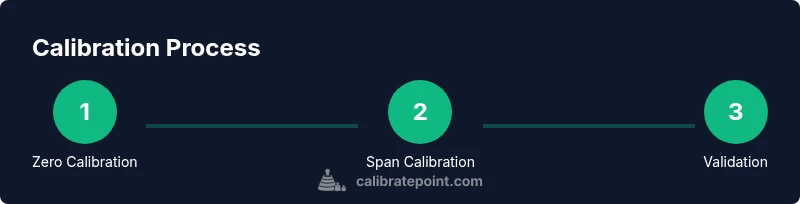
Calibration of ammonia sensors typically hinges on three concepts: zero (the baseline response with a carrier gas containing no ammonia), span (the sensor response to a known concentration of ammonia), and sensitivity (the slope of the response over the calibrated range). Different sensor technologies react differently to ammonia; electrochemical cells often require both zero and span steps, while semiconductor-based sensors may rely on manufacturer-recommended curves. A robust calibration accounts for temperature and humidity influences, ensuring readings stay accurate as environmental conditions shift. Documented drift over time helps you set appropriate recalibration intervals and avoid drift-induced errors in critical processes.
Safety and preparation
Safety is non-negotiable when handling calibration gases and equipment. ammonia is a corrosive and irritant—use appropriate PPE (chemical-resistant gloves, splash goggles, and a respirator if indicated by your risk assessment). Work in a well-ventilated area or a fume hood, and ensure all gas lines are leak-checked before opening the gas cylinders. Establish an emergency plan and have spill containment materials on hand. A thorough safety briefing with the calibration team reduces the risk of exposure and gas leaks during the procedure.
Selecting calibration gases and traceability
Choose calibration gases with certified concentrations that cover your sensor’s operational range. Prefer NIST-traceable, supplier-certified gas standards with current certificates of analysis. For zero calibration, a carrier gas with zero ammonia content is used; for span calibration, select a gas concentration that places the sensor in the mid-to-high end of its useful range. Maintain a gas-handling log documenting lot numbers, gas supplier, certificate expiration, and gas cylinder integrity. This traceability is crucial when audits occur and for long-term data integrity.
Calibration environment and instrumentation setup
Conduct calibration in a controlled environment where temperature and humidity are monitored, since these factors influence sensor response. Ensure the detector is warmed up to its operating temperature as specified by the manufacturer. Set up a clean calibration bench with a stable regulator, a flow meter or mass flow controller, and properly rated gas lines. Verify that all connectors are secure and that gas lines are purged before introducing calibration gas. A tidy, labeled workspace minimizes the chance of cross-contamination between gas streams and misreads.
Data logging and interpretation
Accurate calibration relies on consistent data capture. Log sensor readings at defined intervals, alongside gas concentration, flow rate, and environmental conditions. Record stabilization time after gas exposure, and use statistical methods (e.g., averaging multiple readings) to determine the calibrated value. Compare post-calibration readings to the certificate concentration for validation, and note any deviations. This data foundation supports future reference checks and regulatory reporting.
Common pitfalls and troubleshooting
Do not skip the purge step; residual ambient ammonia can skew zero readings. Avoid over-tightening fittings, which may cause leaks and sudden pressure changes that affect sensor response. If a sensor drifts after calibration, recheck the gas concentration, verify regulator performance, and confirm that environmental conditions remained stable during calibration. When in doubt, repeat zero and span calibrations and consult the calibration gas certificate for traceability.
Field vs. laboratory calibration and maintenance schedule
Field calibration offers convenience but may introduce variability due to ambient conditions; laboratory calibration provides tighter control but requires transporting equipment. Establish a maintenance schedule that matches your risk assessment and regulatory requirements. For critical environments, schedule periodic recalibrations (e.g., quarterly or semi-annually) and perform periodic cross-checks with test gases to maintain confidence in readings.
Tools & Materials
- Ammonia calibration gas (certified, known concentration)(Choose concentration within sensor range; retain current certificate of analysis.)
- Zero gas (carrier gas with zero ammonia)(Use high-purity gas and a regulator rated for the system.)
- Span gas mix with known ammonia concentration(Select concentration to place the sensor in mid-to-high range; document certificate details.)
- Gas regulator and tubing(Precise pressure and leak-free connections; use compatible fittings.)
- Mass flow controller or calibrated flow meter(Maintain stable flow during calibration; record the flow rate for audit trails.)
- Personal protective equipment (PPE)(Safety glasses, chemical-resistant gloves, and appropriate respiratory protection as needed.)
- Data logger or calibration software(Capture readings with timestamps and environmental data for traceability.)
- Leak detector solution or soap solution(Use to verify gas line integrity after connections are made.)
- Calibration certificate and logbook(Maintain records of gas lot, certificate, and recalibration history.)
Steps
Estimated time: 90-120 minutes
- 1
Prepare workspace and safety checks
Inspect all gas lines for leaks, verify PPE availability, and ensure ventilation. Read the manufacturer’s safety data sheets and calibration procedure before starting. Confirm you have the correct gas cylinders and regulator settings ready for operation.
Tip: Double-check gas cylinder orientation and valve closures before opening any lines. - 2
Purge system with zero gas
Connect the zero gas line and purge the system to remove ambient contaminants. Record the purge duration and verify zero readings stabilize before proceeding.
Tip: Use a known-zero gas for at least 2–3 minutes or per spec to ensure a clean baseline. - 3
Perform zero calibration
Expose the sensor to zero gas and allow readings to stabilize. Adjust the sensor’s baseline to match the zero gas concentration, capturing the final zero value.
Tip: Allow sufficient stabilization time and avoid adjusting during transient fluctuations. - 4
Connect span gas and perform span calibration
Introduce the span gas at the intended calibration concentration. Record the sensor response and adjust the span calibration to align with the known concentration.
Tip: Use a gas concentration within the mid-to-high range to maximize accuracy. - 5
Validate with mid-range test gas
Test the sensor with a gas concentration near the nominal operating range to confirm accuracy across the span. Take multiple readings and average them for the final value.
Tip: If readings vary beyond acceptable tolerance, recheck gas concentration and flow stability. - 6
Document results and perform adjustments if needed
Log all readings, gas concentrations, environmental conditions, and adjustments. Verify that post-calibration readings are within tolerances and update the calibration certificate.
Tip: Maintain an audit trail with dates, operator names, and instrument serial numbers. - 7
Post-calibration checks and storage
Seal gas lines, remove test gases safely, and perform a final leak check. Store calibration data securely and place the sensor back into normal operation.
Tip: Review drift trends over time to refine recalibration intervals.
Questions & Answers
What is the difference between zero and span calibration for ammonia sensors?
Zero calibration sets the baseline when no ammonia is present, while span calibration adjusts the sensor’s response to a known ammonia concentration. Both are necessary to ensure accuracy across the sensor’s measurement range.
Zero calibrates the baseline with no ammonia; span sets the response using a known concentration. Both steps are essential for accuracy across the sensor range.
Can I calibrate ammonia sensors in the field or should it be done in a lab?
Field calibration is possible but may introduce variability due to heat, humidity, and airflow. Lab calibration provides tighter control. Use field calibration for routine checks and lab calibration for full revalidation.
Field calibration is convenient but less controlled; lab calibration gives tighter control. Use field checks for quick verifications and lab work for thorough revalidation.
How often should ammonia sensors be calibrated?
Calibration frequency depends on sensor type, operating conditions, and regulatory requirements. Establish a schedule based on manufacturer guidance and drift history; common intervals range from monthly to quarterly for critical processes.
Calibration intervals depend on your sensor and environment. Check drift history and regulatory needs; typical schedules are monthly to quarterly.
What safety precautions are essential when calibrating ammonia sensors?
Wear appropriate PPE, ensure proper ventilation, and verify leak-free gas connections. Have spill containment and emergency procedures in place in case of gas release.
Wear PPE, ventilate the area, and check for leaks. Have spill protocols ready in case of a leak.
What should I do if the sensor drifts after calibration?
Recheck calibration gas concentrations, purge lines, and confirm environmental stability. If drift persists, consider re-calibrating and reviewing sensor age or replacement needs.
If drift occurs, revalidate gas concentrations and environment, then recalibrate or assess sensor age.
Watch Video
Key Takeaways
- Start with a clean zero reading to establish a baseline.
- Use calibrated, traceable gas standards for accuracy.
- Document every step and environmental condition.
- Validate results with mid-range gas to confirm reliability.
- Maintain records for regulatory and audit purposes.