Calibrating Tire Pressure on Honda CR-V: A Step-by-Step Guide
Learn how to accurately calibrate tire pressure on your Honda CR-V. Find the cold PSI on the door placard or manual, use a precise gauge, inflate correctly, and maintain safe, efficient driving.


You will learn how to calibrate tire pressure on a Honda CR-V by locating the recommended cold pressure on the door placard or owner's manual, using a precise gauge, and inflating all four tires to that value. Then recheck after a short drive to account for temperature changes, ensuring even wear and optimal safety.
Why Tire Pressure Matters for a Honda CR-V
According to Calibrate Point, accurate tire pressure is a cornerstone of safe, efficient driving. For the Honda CR-V, properly inflated tires improve fuel economy, handling, braking performance, and tire life. When tires are underinflated, more of the tire tread bears the load, creating excessive heat, faster wear, and reduced cornering grip. Overinflated tires, on the other hand, can reduce the contact patch, cause a harsher ride, and increase the risk of road hazards puncturing the tire sidewall. The Calibrate Point team emphasizes that regular pressure checks are a simple, low-effort habit with outsized benefits. In this section, we’ll explore how inflation interacts with vehicle load, temperature, and driving style, and lay out a practical plan you can follow on any Honda CR-V.
Tire pressure is not a one-and-done value. It changes with ambient temperature, road conditions, and the tire’s own heat after driving. Your goal is to set each tire to the vehicle manufacturer’s recommended cold pressure so that the tires start at the correct baseline. Then you’ll recheck after a drive to see how heat affects readings. This practice helps prevent uneven wear and keeps your CR-V handling predictable in rain, snow, or heat.
Where to Find the Correct Tire Pressure for Your CR-V
Finding the exact cold tire pressure for your Honda CR-V starts with two reliable sources: the door jamb placard and the owner's manual. The placard, usually located on the driver's side door frame, lists the recommended cold PSI (pounds per square inch) for the front and rear tires. If your CR-V has a spare tire without a dedicated valve stem pressure, the placard will still show the regular tires’ target pressures. The owner's manual may provide additional context, such as how load weight (passengers, cargo) affects the target pressures. If you drive with a heavy load or a full cabin, some models recommend a slightly higher pressure for improved stability. Always ensure you are reading the plate for the same model year and trim; some CR-Vs have different recommendations based on equipment. After locating the target pressure, write it down or save it in a note you can easily access during a tire session.
When in doubt, use the manufacturer’s value rather than a generic number. If you cannot locate the placard, contact a Honda dealer or consult the official Honda manuals online. Remember that the pressure specification refers to a cold reading—tires that have not been driven recently—and can shift after a few miles of driving.
Understanding Cold vs Hot Readings and How Temperature Affects Pressure
Tire pressure readings can vary significantly with temperature. Cold readings represent the baseline pressure when the tires are at near-ambient temperature. Once you drive, tires heat up and air expands, causing the gauge reading to rise. This means inflating to the cold spec, then checking again after a short drive is a common practice to confirm you haven’t under- or over-inflated the tires. In practice, you should perform inflation and pressure checks when the tires are cold, typically after the car has sat for at least 3 hours or if it has cooled down naturally. A simple rule of thumb is that a tire can gain several psi after driving on a warm day or after freeway cruising for a few miles. Because temperature shifts can influence all four tires differently (due to load distribution, road conditions, and even the angle of sun exposure), you should aim for consistency by checking the same tires under similar conditions.
Seasonal changes also matter. In winter, rubber contracts and might read lower, so you may need to check more often. In hot summer, higher ambient temperatures can push readings above the cold spec. The key takeaway is to always start from the official cold spec and verify once tires have a chance to acclimate to driving conditions. This disciplined approach reduces variability and helps you compare readings across sessions.
Tools you'll need: gauge, compressor, and a plan
Before you begin, assemble essential tools and a small workspace. A high-quality digital tire pressure gauge provides precise readings with small margin errors; analog gauges can work but require extra care to avoid parallax errors. An air compressor or inflator with a stable regulator helps you reach the desired pressure without overshoot. A clean rag or brake cleaner is useful to wipe the valve stem and the cap before taking readings. It’s also helpful to record each tire’s current PSI and the target PSI on a simple sheet or app, so you can track changes over time and notice any gradual shifts. If you frequently change loads or seasonally adjust the vehicle’s weight, consider keeping a small notebook near your garage or in a glove box for easy reference. Keep spare valve caps in a small container to prevent valve damage or loss. Finally, ensure you are working on level ground with the car in park and the parking brake engaged; slope can skew readings.
The Calibration Flow: A Practical Overview for the CR-V
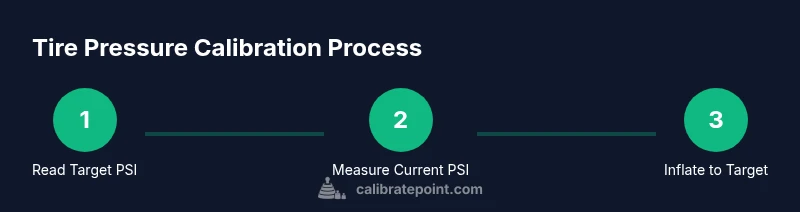
A practical calibration flow starts with locating the target cold PSI, verifying you have a reliable gauge, and ensuring the tires are cold. Begin by removing the valve caps and attaching the gauge or inflator nozzle squarely to the valve stem to avoid leaks due to crooked alignment. Read the current pressure for each tire and compare with the target value. If a tire is below the target, inflate in small increments, pausing to recheck after each addition. After inflation, reinstall the valve caps and wipe away any dirt from the stems to prevent contamination. Take a final pass around all four tires to confirm uniform pressures—this helps prevent uneven wear. Finally, recheck after a brief road test to account for heat, and adjust as needed. If any tire reads abnormally high or low, or if a leak is suspected, don’t continue inflating; address the issue or seek professional help. The entire flow can be completed in roughly 15–25 minutes under normal conditions.
Common Mistakes and How to Learn from Them
In practice, many CR-V owners make a few recurring mistakes when calibrating tire pressure. One common error is inflating tires while they are hot, which yields an inflated reading and can lead to underinflation when tires cool. Another frequent mistake is not replacing the valve caps or failing to wipe dirt from the valve stem, which can cause leaks or inaccurate readings. Some owners forget to check all four tires, assuming the pressures are equal; however, different loads and wear patterns can create uneven pressures, compromising handling stability. Also, relying solely on TPMS readings without cross-checking with a gauge can be misleading because the sensors report relative pressure changes rather than precise, current psi. Finally, failing to document readings over time makes it harder to notice gradual changes or creeping leaks. By adopting a routine—check cold PSI, measure with a reliable gauge, inflate to target, recheck after driving, and log results—you gain a reliable baseline for your CR-V’s tire health.
Maintaining Correct Tire Pressure Over Time and With Seasons
Tire pressure is a dynamic metric that benefits from regular monitoring. A practical maintenance rhythm is to check PSI monthly, before long trips, and whenever there is a substantial change in outside temperature or vehicle load. Seasonal adjustment recommendations can vary by model, but the central rule remains: start from the cold PSI on the placard, then verify after driving to ensure nothing changed unexpectedly. Creating a simple log—date, PSI per tire, ambient temperature, and notes about load—helps you notice trends that might indicate slow leaks or aging components. If your CR-V’s tires regularly require adjustment, you may want to inspect the valve stems, seals, and wheel rims for damage; small leaks or cracked stems can lead to slow deflation. Finally, keep tire maintenance in mind during tire rotations; rotating tires does not change the target PSI, but it aligns wear patterns to maintain even performance.
Safety Considerations and Special Cases: TPMS and Spares
Tire Pressure Monitoring System (TPMS) is a valuable safety feature that alerts you when a tire’s pressure deviates from the recommended range. However, TPMS should not replace direct pressure checks with a gauge. If TPMS warnings appear, verify all tire pressures with a gauge to ensure accuracy and inspect for slow leaks. Remember to check the spare tire’s pressure as well; many CR-Vs include a compact spare that also needs to be inflated to the proper level. If you experience a consistent discrepancy between manual readings and TPMS readings, consult a dealer or qualified technician to verify sensor accuracy, valve stems, and wheel integrity. In all cases, avoid overinflation; maintaining consistent, manufacturer-recommended pressures helps preserve tire tread life and vehicle handling, especially on surfaces that demand precise response, such as wet or icy roads.
Authority Sources
- Official tire safety guidance and tire maintenance tips can be found at government and major publications sources that discuss tire pressures and monitoring requirements. See the following references for additional context and verification of best practices.
Authority Sources
- https://www.nhtsa.gov/road-safety/tires
- https://www.britannica.com/technology/tyre
- https://www.consumerreports.org/cars-t-driving/tire-pressure/
Tools & Materials
- Tire pressure gauge(Digital or analog; accuracy ±1 psi recommended)
- Air compressor or inflator(With adjustable pressure and a gauge; ensure compatibility with your valve stems)
- Door jamb placard or owner's manual(Source of the exact cold PSI for your CR-V model/year)
- Valve caps and a clean rag(Keep caps clean to prevent leaks; wipe stems before measuring)
- Notebook or digital log(Optional for tracking readings over time)
Steps
Estimated time: 15-25 minutes
- 1
Park on level ground and prepare
Set the parking brake, turn off the engine, and allow the car to stand for a few minutes if possible. Ensure the tires are cold and the vehicle isn’t parked on a slope. This baseline helps you capture an accurate measurement before heat buildup.
Tip: If you’ve just driven, wait at least 3 hours or drive less than a mile before checking. - 2
Locate the target cold PSI
Consult the door jamb placard or owner's manual to find the specified cold tire pressure for each axle. Note any difference between front and rear tires, and consider load if you’re carrying passengers or cargo.
Tip: Record the target values for all four tires for quick reference. - 3
Remove valve caps and inspect
Take off the valve caps and wipe the valve stems clean with a rag. This prevents dirt from entering and ensures a clean gauge seal. Cap the valve loosely when finished to protect the stem.
Tip: Damaged valve stems can cause slow leaks—inspect for cracking or moisture. - 4
Measure current tire pressures
Attach the gauge squarely to the valve stem and note each tire’s pressure. Compare against the target cold PSI. If the measurement is off, plan to adjust in the next step.
Tip: Take measurements quickly to minimize air loss during the check. - 5
Inflate to target pressure
Use the compressor to bring each tire up to the recommended value. Do this in small increments, pausing to recheck after each push of air to avoid overshooting the mark.
Tip: If you overshoot, release air gradually and re-measure until you reach the target. - 6
Recheck and finalize
Reattach the valve caps securely and perform a final check on all four tires after a short drive if possible. Ensure equal pressures across the front and rear tires per the placard values and verify the TPMS warnings align with the actual readings.
Tip: Document the final readings to maintain a maintenance history.
Questions & Answers
What is the recommended cold tire pressure for a Honda CR-V?
Check the door placard or owner's manual for the exact cold PSI. It may differ by model year and trim, and factors like load can influence the recommended value. Always use the cold reading as the target.
Check the placard on the door frame or the manual for the exact cold psi, which can vary by year and trim. Use that value as your target.
Should I check tire pressure when tires are hot or cold?
Always measure when tires are cold to get an accurate baseline. Driving warms the air and inflates the tires, giving you a higher reading than the true cold pressure.
Always check when cold to get an accurate baseline. Heat from driving raises the reading.
Can TPMS readings replace a manual tire pressure check?
TPMS provides warning when pressure deviates from the norm, but it isn’t a precise substitute for a manual gauge. Use a gauge to verify the exact PSI and adjust as needed.
TPMS warns you, but you should still use a gauge to confirm exact psi and adjust if needed.
What tools do I need to calibrate tire pressure?
A reliable tire pressure gauge and access to an air compressor or inflator are essential. Have the owner’s manual or placard handy for target pressures and keep valve stems clean.
You need a good tire gauge, an inflator, and the placard or manual for the target pressures.
What if one tire reads low after inflation?
Inspect the tire for punctures, leaks, or a faulty valve stem. If the pressure won’t hold, seek professional inspection as slow leaks can cause sudden loss.
If a tire keeps losing pressure, inspect for leaks or damage and seek a professional check if needed.
How often should I check tire pressure?
Check monthly and before long trips, and whenever temperatures change substantially. Consistency helps maintain safe handling and better fuel efficiency.
Check at least monthly and before long trips, especially when temperatures shift.
Watch Video
Key Takeaways
- Check cold PSI on placard first
- Inflate all tires to matching target pressure
- Recheck after driving to account for heat
- Temperature affects readings; adjust expectantly
- Keep a tire pressure log for monitoring