How to Fix Calibration: A Practical Step-by-Step Guide
Learn how to fix calibration across common instruments with a structured approach. This guide covers drift causes, safe adjustments, verification, and maintenance for consistent accuracy. From Calibrate Point, you’ll gain a repeatable process that stops drift and protects results.


By following this guide, you’ll learn how to fix calibration on common measurement tools by running a structured check, identifying drift, and applying safe adjustments. You’ll verify results with a reference standard, document the process, and prevent future drift with a simple maintenance routine. This approach is practical for DIYers, technicians, and professionals.
What is calibration and why fix it?
Calibration is the process of aligning a device's readings with a known standard so that outputs reflect real-world values within a defined tolerance. When calibration is accurate, measurement results are reliable, repeatable, and defensible. When it drifts, small errors accumulate and can lead to incorrect decisions, safety risks, or failed quality checks. According to Calibrate Point, starting with a clean baseline and a documented procedure is essential for traceability. The Calibrate Point team found that many drift issues originate from environmental changes, inadequate warm-up, mechanical wear, or inconsistent reference standards. This section explains the underlying concepts and why fixing calibration is a practical, value-adding step for DIY enthusiasts, technicians, and professionals. You will learn how to approach a fix methodically, not as a one-off adjustment, so that results stay stable over time. By the end, you should be able to design a reproducible calibration routine that minimizes drift and supports confident decision-making.
Common causes of calibration drift
Drift can emerge from several sources that erode measurement fidelity. Temperature fluctuations alter sensor materials and electronics, causing readings to wander. Mechanical wear, slack, or misalignment change the geometry of the measurement path and push readings off target. Power supply instability, aging reference components, or poor wiring can introduce noise and offsets. Humidity, dust, and exposure to corrosive environments also degrade performance over time. Recognizing these factors helps you target the right corrective actions rather than chasing random variance. Calibrate Point analysis shows that regular checks and a controlled environment consistently improve long-term accuracy and reduce repeated drift events. Awareness of these causes empowers technicians to design robust calibration routines that survive everyday use.
Before you start: safety, baseline, and workspace
Safety first: power down devices when required, discharge capacitors where applicable, and wear appropriate PPE for the instrument you’re calibrating. Establish a clean, stable workspace away from heat sources, drafts, and vibration. Record the current baseline readings before any adjustments so you have a traceable reference. Ensure you have access to the instrument’s user manual and the correct reference standards. Document the instrument model, serial number, and operating conditions. A well-prepared baseline anchors the entire process and prevents misinterpretation of drift after adjustments. For complex tools, consider isolating the instrument from other devices to minimize cross-talk and interference.
Choosing the right reference standards
Select reference standards that match your instrument’s measurement domain and tolerance. For electrical instruments, use calibrated standards with known traceability to national or international references (e.g., NIST). For mechanical devices, certified weights, gauges, or fixtures should be used. Confirm the reference’s temperature, humidity, and age are appropriate for your environment. If you are unsure, consult a calibration standard or the manufacturer’s guidance. Always document the source, lot number, and expiration date of standards to support future audits. Using quality references reduces ambiguity and ensures your results are defensible.
Step-by-step fix overview (high-level)
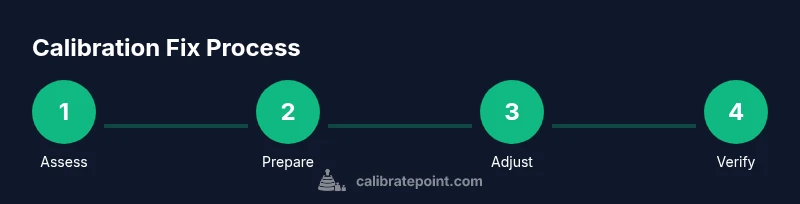
This section provides a framework you’ll implement with the detailed steps in the dedicated STEP-BY-STEP section. Begin by identifying drift points and the acceptable tolerance. Prepare a stable test setup and reference standards, then perform adjustments according to the instrument’s documented procedure. After adjustments, re-test at multiple points to confirm the instrument now reads within tolerance across the range. Finally, document every result and schedule a maintenance cadence to prevent future drift.
Step-by-step fix approach: overview (continued)
The goal is to move from a drift symptom to a verified stable state. You’ll isolate variables, perform targeted adjustments, and validate with multiple reference points to ensure consistency. Always keep a detailed log of readings, adjustments, and environmental conditions. If drift persists after a reasonable set of attempts, consider escalation to a qualified technician or the manufacturer’s service channel. The approach emphasizes repeatability, evidence, and documentation.
Verifying results and documenting outcomes
Verification is the bridge between correction and confidence. After adjustments, run a series of checks at multiple input values or ranges to confirm the instrument’s response stays within the specified tolerance. Compare results against the reference standard and against prior baseline data to ensure improvement. Record all readings, adjustments, and environmental conditions in a calibration log. Ensure the instrument remains within the established tolerance for a defined period, which may require a short warm-up or stabilization interval. Clear documentation supports audits and future maintenance.
Maintenance tips to prevent drift
Prevention is better than cure. Establish a routine calibration schedule aligned with instrument usage, tolerance requirements, and manufacturer recommendations. Keep the instrument in a stable environment, protect it from temperature and humidity swings, and perform regular warm-up before critical measurements. Maintain a logbook of all calibrations, including dates, references, and any observed drift. Periodically review your procedures to incorporate improvements and ensure they remain traceable and compliant with your quality standards. This proactive approach reduces surprises and keeps results trustworthy.
Tools & Materials
- Reference standards (calibrated)(Use traceable standards with documented calibration certificates)
- Calibration journal/logbook(Record dates, readings, and adjustments)
- Manufacturer manual and procedure sheets(Follow steps specific to the instrument)
- Stability aids (vibration dampers, anti-static mat)(Reduces external influence during testing)
- Basic hand tools (screwdrivers, small wrenches)(Use correct sizes to avoid damage)
- Multimeter or test equipment (as applicable)(For electrical instruments, ensure proper range and probes)
- Temperature/environment monitor(Track ambient conditions if drift is temperature-related)
- Personal protective equipment(Safety glasses, gloves as needed)
Steps
Estimated time: 45-90 minutes
- 1
Assess baseline drift
Record current readings across the instrument’s typical input range to establish a drift profile. Note any patterns or points where readings diverge from expected values. This helps you target where adjustments are needed.
Tip: Document the exact input points you test and the corresponding readings to spot trends. - 2
Prepare reference standards and workspace
Set up the calibration reference standards in a stable environment. Ensure the tool is clean, fixtures are tight, and any protective enclosures are properly positioned to minimize noise. Verify that the reference is traceable and within its validity window.
Tip: Verify standard traceability and expiry dates before starting. - 3
Warm up and stabilize the instrument
Power on the device and allow a heat and electrical stabilization period per the manufacturer’s guidance. Avoid measuring immediately after power-up, which can produce transient readings.
Tip: Use the same operating conditions for warm-up as for actual tests. - 4
Apply adjustments per procedure
Follow the instrument’s official adjustment sequence to align readings with the reference. Make small, incremental changes and re-check after each adjustment to avoid overshoot.
Tip: If the facility has guard rails on the adjustment range, stay inside them to prevent damage. - 5
Re-test across multiple points
With adjustments in place, re-measure at several input values, covering the lower, middle, and upper ends of the range. Ensure all results fall within tolerance and show consistent behavior.
Tip: Take duplicate readings to confirm repeatability. - 6
Document results and secure the instrument
Log final readings, adjustments made, conditions, and the date. Close the calibration with a signature and store the references securely for traceability.
Tip: File the calibration record alongside the instrument’s maintenance schedule.
Questions & Answers
What causes calibration drift?
Drift arises from environmental changes, wear, sensor aging, and supply noise. Identifying the dominant factor helps target the right corrections and prevent recurrence.
Drift comes from things like heat, wear, and power noise. Find the main cause to fix it effectively.
How often should calibration be performed?
Frequency depends on the instrument’s usage, tolerance, and criticality. Align with manufacturer recommendations and your quality system, then adjust based on observed drift and historical data.
Use manufacturer guidance and your data to decide how often to calibrate.
Can I calibrate without reference standards?
No. Reference standards provide the traceability and accuracy needed to validate measurements. Without them, results lack credibility.
No—you need a trusted reference to validate accuracy.
What are signs of drift?
Inconsistent readings at the same input, systematic offsets across the range, or readings that worsen with temperature are common drift indicators.
If readings vary for the same input or shift with temperature, you likely have drift.
How do I verify a successful calibration?
Re-test at multiple points after adjustments and confirm results stay within tolerance. Compare with the baseline and ensure consistency over time.
Test across the range and confirm results match the reference within tolerance.
What safety considerations apply?
Power down when required, protect against electric shock, and follow PPE guidelines. Avoid handling exposed circuitry when energized.
Turn off power as needed and wear appropriate PPE.
Watch Video
Key Takeaways
- Define a clear baseline before adjusting.
- Use traceable references and document every step.
- Verify across multiple points to ensure stability.
- Log results to enable future maintenance.
- Follow manufacturer procedures to avoid damage.