Calibrate a Projector Without Colorimeter
Learn how to calibrate a projector without colorimeter using grayscale, gamma, and on-device controls. Practical guidance, safety tips, and a repeatable workflow for better color accuracy across content.


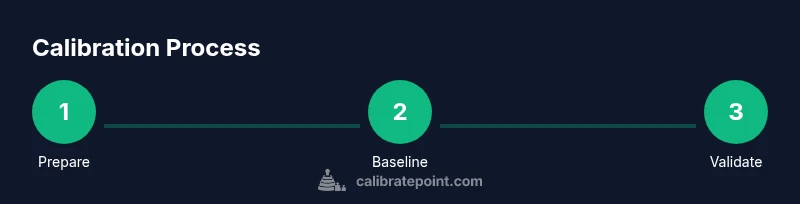
To calibrate a projector without colorimeter, you can use built-in test patterns, grayscale ramps, and eye-guided adjustments combined with a simple white point reference. Start by establishing a baseline with grayscale and gamma, then adjust brightness, contrast, and color balance using on-device controls and a calibrated reference image. The process emphasizes grayscale accuracy and perceptual color matching without expensive hardware.
Why calibrate a projector without a colorimeter
According to Calibrate Point, many DIY setups achieve meaningful color improvements without a colorimeter by relying on grayscale references, gamma curves, and perceptual matching. This approach prioritizes perceptual accuracy over hardware measurements, making it accessible for home theaters, classrooms, and small studios. You’ll use test patterns, neutral references, and careful observation to align grayscale and overall color balance. While a colorimeter offers precision, a well-executed manual workflow can produce noticeably more natural skin tones, accurate shadow detail, and fewer color artifacts in everyday content. The goal is to establish a repeatable baseline that you can reproduce on different projectors or in changing rooms, without investing in expensive equipment. Calibrate Point’s guidance focuses on practical tricks that work in real-world conditions and emphasizes documenting every adjustment for future sessions.
How this approach fits users who don’t have a colorimeter
This method is ideal for DIY enthusiasts, technicians, and professionals who want to improve color accuracy without hardware. It relies on visual references and standard test images, not on specialized sensors. You’ll still get measurable improvements in grayscale tracking and skin tones, which are the most noticeable signs of calibration quality. Keep in mind that results vary with screen material, ambient light, and projector type, so expect ongoing fine-tuning rather than a single flawless setting.
Tools & Materials
- Projector with adjustable color and gamma controls(Ensure you can modify color temperature, gamma, brightness, tint, and color controls)
- Neutral screen or flat white wall(Prefer a non-glossy surface with even texture)
- Laptop or smartphone for test patterns(Stable connection to projector (HDMI/USB-C))
- Digital test pattern set (grayscale, gamma, color references)(Save on device or USB drive for quick access)
- Ambient light monitor (optional)(Helps gauge room lighting when comparing patterns)
- Notebook and pen(Record settings and observations for future sessions)
Steps
Estimated time: 60-90 minutes
- 1
Prepare the workspace and materials
Set up a dim, consistent viewing space with a neutral screen. Gather your projector, test patterns, laptop, and a notebook. Confirm all cables are secure and the projector is mounted steady. This step ensures you have a stable baseline before making adjustments.
Tip: Create a dedicated calibration folder on your device to store all reference images and notes. - 2
Reset to a known baseline
Enter the projector’s menu and reset color, brightness, contrast, and sharpness to factory defaults. Disable any dynamic or automatic color management features. Document the baseline values so you can revert if needed.
Tip: Use the same input source for all tests to avoid source-induced color shifts. - 3
Display grayscale ramp and reference gamma
Show a grayscale gradient from black to white and adjust brightness and contrast so the ramp progresses smoothly without banding. Load a standard gamma reference image and verify that midtones appear natural. This creates a reliable grayscale baseline for subsequent tweaks.
Tip: If you see posterization, reduce contrast slightly and recheck the ramp continuity. - 4
Tune grayscale and gamma
Fine-tune the grayscale response so dark tones still retain detail and bright tones don’t clip. Adjust gamma to achieve perceptual linearity; aim for a natural midtone roll-off. Make small, incremental changes and recheck against the pattern after each tweak.
Tip: Toggle between different test patterns to confirm changes aren’t pattern-specific. - 5
Set white point and color balance by eye
Select a neutral preset or adjust color temperature toward a neutral white point (roughly 6500K for many rooms). If available, fine-tune tint to remove green/muchsia casts. Validate by comparing skin tones and grayscale patches across multiple test images.
Tip: Compare a few real-world scenes (face shots, skies) to ensure skin and whites look natural. - 6
Verify with patterns and typical content
Run additional test patterns and a short clip representative of your usual content. Look for balanced skin tones, accurate skies, and uniform grays. If discrepancies appear, revisit gamma, white point, and tint adjustments.
Tip: Use multiple sources if possible to ensure consistency across inputs. - 7
Document settings and plan for future sessions
Record all final values (brightness, contrast, gamma, color temp, tint) and note any caveats. Store reference images and a summary of room conditions. Regular recalibration, especially after lighting changes or projector moves, keeps results stable.
Tip: Set a reminder to recheck calibration after major room lighting changes.
Questions & Answers
Can I calibrate a projector without a colorimeter?
Yes. You can improve color accuracy using grayscale ramps, gamma references, and on-device controls, plus reference images. It won’t be as precise as a colorimeter, but it provides a solid baseline.
Yes. You can improve color accuracy using grayscale ramps, gamma references, and on-device controls without a colorimeter.
What is the best starting point for calibration?
Start with a neutral baseline, reset to factory defaults, and ensure the room is dim. Then establish grayscale balance and a stable gamma before adjusting white point.
Begin with a neutral baseline, dim room, and then balance grayscale and gamma before white point.
Will this method work for HDR content?
Manual calibration can improve SDR and HDR performance, but HDR often requires more precise hardware or vendor-specific profiles to preserve highlight detail.
Manual calibration can help, but HDR may still need hardware or vendor profiles for best results.
What should I do if colors still look off after adjustments?
Recheck the white point, gamma, and ambient lighting. Verify cables and input formats, then test with another set of patterns to rule out pattern bias.
Recheck white point and gamma; verify lighting and cables, then test with different patterns.
How often should I recalibrate my projector?
Recalibrate after significant room lighting changes, projector repositioning, or when you notice color shifts during regular viewing.
Recalibrate after big lighting changes or when you notice color shifts.
Is there a risk to the projector when adjusting brightness/contrast?
No inherent risk from careful adjustments, but extreme settings can overheat or shorten lamp life indirectly through stress. Keep tweaks conservative and monitor heat.
Generally safe if you adjust conservatively and monitor heat.
Watch Video
Key Takeaways
- Calibrate without a colorimeter using grayscale and gamma references.
- Baseline setup + iterative tweaks yield reliable improvements.
- Document settings for reproducibility and future sessions.
- Use real-world content to validate calibration validity.