How Much Does It Cost to Calibrate an Oven? A Practical Guide
Explore typical oven calibration costs, what drives price, and how to budget. Learn from Calibrate Point with a data-driven, practical approach to oven temperature accuracy.


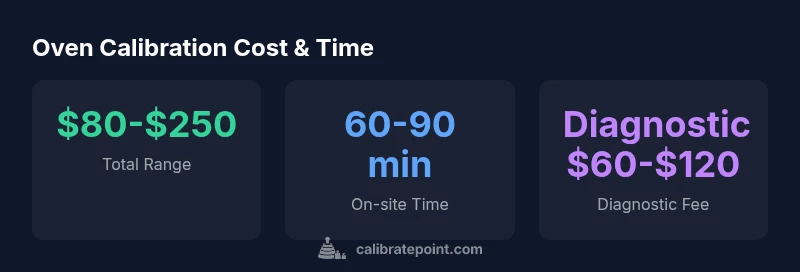
Across many regions, oven calibration typically costs between $80 and $250. The final price depends on oven type (gas or electric, convection features), the service model (diagnostic-only, on-site calibration, or full parts replacement), and whether any corrective parts are required. Labor rates, travel charges, and whether a follow-up verification is included can also influence the total. A written, itemized quote helps you compare apples to apples across providers.
What influences oven calibration costs
Oven calibration prices are not a single number because each installation presents unique challenges. According to Calibrate Point, the most influential factors are the oven type, the sophistication of its temperature sensing and control system, and whether the work is performed on-site at your home or in a workshop. A professional typically starts with a diagnostic check to map the oven's actual temperature readings against a reference standard. If the readings are within spec, the job may end with minor adjustments; if not, the technician may need to access sensors, relays, control boards, or gas regulators, each adding time and cost. In addition to labor, travel time and call-out fees shape the final quote, and some providers include a warranty or a post-calibration verification. From a buyer perspective, understanding these elements helps you interpret quotes and avoid surprises. The Calibrate Point team recommends requesting a written estimate that itemizes labor, travel, diagnostic fees, and any required parts so you can compare quotes on a like-for-like basis.
Cost ranges explained: low, mid, and high bands
Pricing for oven calibration commonly falls into three practical bands rather than a single price. In the low band, you'll typically see diagnostic or minor-tuning work that does not require new parts. The mid band covers a thorough calibration with a verified temperature map and may include small sensor replacements if readings are out of tolerance. The high band applies when significant components—such as control boards or gas regulators—must be replaced or when substantial in-shop testing is required. Across all bands, labor rates and travel charges influence the final figure, and some providers offer maintenance bundles that reduce the long-run cost of future checks. Calibrate Point's experience suggests customers who combine calibration with routine oven maintenance often achieve more reliable results and better value over time. When you request quotes, ask for a line-item breakdown and a defined scope of work to avoid ambiguous charges.
On-site vs in-shop calibration: what changes the price
On-site calibrations incur travel time and fuel costs, which can raise the price slightly, but they save you the hassle of moving a heavy appliance. In-shop calibrations can reduce labor overhead, especially if the oven is easy to access for testing. If the oven is integrated into cabinetry or a premium range, technicians may need to remove panels, increasing labor and time. The decision often hinges on model accessibility, safety requirements, and whether the same technician can perform both diagnostic and calibration tasks. Calibrate Point notes that bundling diagnostic and calibration tasks with a single technician can sometimes lower total costs by reducing repeated visits. When evaluating quotes, look for total cost transparency and a clear description of what triggers changes in price, such as a faulty sensor or a necessary board recalibration.
How labor, travel, and parts affect the quote
Labor tends to be the largest component of the price. The technician's training, certifications, and the complexity of the oven's control logic influence the rate. Travel charges reflect distance, scheduling efficiency, and regional fuel costs. Parts are only needed if sensors, relays, or regulators drift out of tolerance; most calibrations do not require expensive components. Common upgrades include sensor replacements or recalibration of the control map. If the appliance is under warranty or covered by a service plan, some costs may be reduced or covered. Always request a detailed, line-by-line estimate and a clear description of what events would trigger additional charges, such as identifying a faulty component or requiring a new calibration curve.
The calibration process: what you should expect
A professional calibration generally begins with a brief intake about how the oven is used and where it seems inaccurate. The technician then performs multiple temperature checks (e.g., at lower, mid, and high setpoints) using a calibrated reference thermometer. If discrepancies are found, adjustments are made to the calibration curve, and the oven is re-tested to confirm accuracy. A final report documents measured deviations, adjustments performed, and recommended follow-up checks. While every brand has unique steps, a reliable calibration follows a consistent methodology, prioritizes safety, and provides you with traceable data. If safety issues surface, such as inconsistent gas pressure or hazardous wiring, the technician will address these immediately, and pricing will reflect the urgency and parts required. Calibrate Point emphasizes closed-loop verification and transparent reporting as key indicators of value.
DIY considerations: can you calibrate an oven yourself?
DIY calibration is feasible for basic temperature verification but is not a substitute for professional calibration when precision matters or when internal sensors must be accessed. You can run simple checks with an oven thermometer to document temperature deviations, which helps a technician diagnose issues faster. Avoid attempting to adjust internal control boards, gas regulators, or sensor assemblies without proper tools and training. If you choose to perform initial checks yourself, keep a detailed log of measurements, temperatures, and timings, and share this with your technician to guide the calibration plan. The goal is to empower you with information, not to replace professional safety and testing standards.
What to ask your technician before scheduling
- Do you provide a written, itemized quote with labor, travel, diagnostics, and parts?
- Will you perform a full temperature map and post-calibration verification?
- Are there any warranties or follow-up checks included?
- Do you offer a maintenance bundle for future calibrations?
- How long will the visit take and is there a standby fee for wait times?
- Will you test multiple temperature points and document results in a formal report?
A clear checklist helps you compare providers and avoid price surprises.
Use-cases: when calibration is worth pursuing
For households with frequent baking, culinary enthusiasts, or any kitchen where exact temperatures matter for consistent results, calibration is a wise investment. Commercial settings—bakeries, cafes, or small restaurants—benefit even more from precise oven calibration to ensure product consistency and food safety. Calibration can also help when a new oven is installed, after maintenance on gas lines or burners, or when a previously inaccurate oven begins to drift in temperature. In each case, a documented calibration helps with warranties, resale value, and ongoing kitchen performance. Calibrate Point's framework supports using calibration results to guide maintenance planning and supplier discussions, ensuring you get measurable improvements and a clear value proposition.
The Calibrate Point verdict: practical next steps
The key to value in oven calibration is planning and transparency. Start by obtaining multiple quotes that break down labor, travel, diagnostics, and parts, and verify whether follow-up checks or warranties are included. If your oven has a history of temperature drift, consider scheduling on-site calibration with a bundled service so the technician can complete a full map in one visit. Maintain ongoing records of calibration results and schedule periodic rechecks aligned with your cooking volume and safety standards. The Calibrate Point team recommends prioritizing professional calibration when precision matters for food quality or safety, and using DIY checks only to inform conversations with your technician. By following these steps, you gain reliable results and a clearer path to long-term kitchen reliability.
Pricing bands and time expectations for oven calibration services
| Factor | Low-cost option | Mid-range option | High-end option |
|---|---|---|---|
| Service model | Diagnostic-only | On-site calibration with parts | Full-service with parts & warranty |
| Typical price band | $60-$120 | $120-$200 | $200-$350 |
| Time on-site | 30-45 min | 60-90 min | 90-120 min |
Questions & Answers
What is the typical cost to calibrate an oven?
Costs vary by oven type and service model, but expect a range that covers diagnostic checks, potential part replacements, and labor. Always request a written quote with a clear scope of work to avoid surprises.
Costs vary by oven type and service model; request a written quote that breaks down labor, travel, and parts before proceeding.
Do all oven types cost the same to calibrate?
Not exactly. Gas and electric ovens can differ in calibration complexity and parts needs, which may affect price. The overall approach remains consistent: diagnosis, adjustment, and verification.
Gas and electric ovens may differ in complexity, but calibration follows diagnosis, adjustment, and verification.
Can I calibrate the oven myself to save money?
DIY checks can help you identify discrepancies, but permanent adjustments to sensors or control boards should be left to a qualified technician for safety and accuracy.
You can check temps with a thermometer, but avoid modifying internal components yourself.
Are warranties or follow-up checks included in the price?
Many providers offer a limited warranty or a follow-up check as part of a package. Confirm what is covered in writing before scheduling a visit.
Ask if a warranty or follow-up check is included and get it in writing.
What should I expect during an oven calibration visit?
Expect an inspection, temperature mapping at multiple points, adjustments, re-testing, and a final report detailing results and recommendations.
You’ll get testing, adjustments, and a report with results.
“Accurate oven calibration is essential for safety and consistent cooking performance. A transparent process and traceable results build lasting value.”
Key Takeaways
- Know the three price bands and what they cover
- Ask for a line-item quote to avoid surprises
- Decide between on-site vs in-shop based on accessibility
- Check for follow-up verification or warranty
- Use precise results to guide maintenance planning