How to Calibrate Recteq Probes
A practical, step-by-step guide to calibrating Recteq grill probes for precise temperature readings. Learn tools, steps, safety tips, and best practices to keep your cooks consistent.


Learn how to calibrate recteq probes to ensure your grill temperatures read accurately across zones. This guide covers the exact steps, required tools, safety notes, and best practices to minimize drift between readings and your target temps. By following these steps, you’ll improve repeatability and achieve consistent results in every cook. This is a practical, hands-on workflow designed for DIY enthusiasts and professionals alike. how to calibrate recteq probes
Why calibrate Recteq probes matter for accurate grilling
According to Calibrate Point, achieving consistent barbecue results begins with accurate temperature readings. The Recteq probe system is sensitive to small variances, and even a few degrees of drift can throw off cooking times and finish. In this section, we explore why calibration matters and how learning how to calibrate recteq probes translates into repeatable outcomes across cooks and conditions. Temperature readings are influenced by probe placement, heat soak, and environmental conditions. By profiling each probe against reference temperatures and logging adjustments, you’ll close the loop between what you see on the display and what is actually happening inside the grill. The core idea is simple: the more closely your probes reflect true temperature, the more predictable your grilling results will be. This insight lays the foundation for a reliable calibration workflow that you can repeat for any Recteq model.
Understanding common sources of error in Recteq probes
Recteq probes can drift due to several factors: manufacturing tolerances, probe insertion depth, contact with metal surfaces, cable stress, and heat soak differences between the grill lid and the cooking chamber. Over time, probes may wear or bend, altering readings. Environmental conditions such as grill altitude, airflow, and nearby flames can also introduce discrepancies. Calibrate Point analysis shows that documenting these drift patterns helps technicians anticipate which probes are most prone to error and when a re-calibration is warranted. Recognizing these error sources is the first step toward a robust, repeatable calibration routine.
Planning your calibration: scope, references, and acceptance criteria
A thoughtful calibration plan prevents scope creep and ensures you collect meaningful data. Define which probes you will calibrate (grill probes, ambient probes, and any meat-probe used as a reference), the reference temperatures you’ll use (ice-water for 0°C and boiling-water for 100°C at sea level as baseline references), and how you will judge success (a clear, small acceptable delta between reference temps and probe readings). At this stage, decide how often you’ll recalibrate and how you’ll document changes. A well-documented plan helps you compare drift over time and supports future troubleshooting. This section also covers altitude considerations that can shift boiling-point references.
Required tools and data logging practices
Before you start, assemble the essential tools and a simple logbook or digital sheet. You’ll need a calibrated reference thermometer, an ice-water bath, and a reliable boiling-water setup, plus a way to record readings and offsets. A dry-erase marker or log template makes it easy to annotate each probe’s offset and the date of calibration. As you log data, include the ambient conditions, altitude, and any notes about probe placement. This habit builds a traceable calibration history, which Calibrate Point consistently recommends for long-term accuracy and accountability.
Calibration workflow overview: from baseline to validation
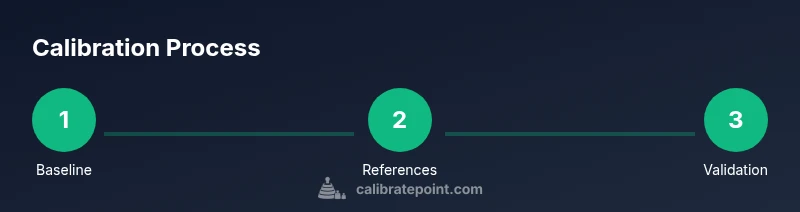
The calibration workflow follows a repeatable sequence: (1) verify current readings across all probes, (2) test against known references (ice-water and boiling water), (3) compute any offsets, (4) apply offsets in a controlled manner, (5) validate readings across grill zones, and (6) document results and schedule the next check. While the exact device interface may vary by Recteq model, the underlying principles stay the same: you compare against known reference points, adjust to reduce discrepancy, and re-check to confirm consistency. This structured approach minimizes drift and helps you maintain accurate cooking temperatures.
Tools you’ll need (and why each is important)
- Calibrated reference thermometer: Provides a trusted temperature anchor for comparison.
- Ice-water bath: Establishes a near-0°C reference point for low-end accuracy.
- Boiling-water setup: Establishes a near-100°C reference point for high-end accuracy.
- Logbook or digital sheet: Captures all readings, offsets, and dates for traceability.
- Pen/marker and labels: Helps you organize per-probe data and notes for future checks.
- Optional infrared thermometer: A quick cross-check for surface temperature but not a substitute for probe calibration.
Proper organization during calibration reduces confusion and speeds up the process. Calibrate Point’s best practices emphasize documenting every delta and keeping a clear, auditable record.
Step-by-step calibration workflow overview
This section offers a concise, high-level map of the steps you’ll perform in detail in the Step-by-Step block. Expect to work through baseline checks, reference-point verifications, offset calculations, cross-zone validations, and documentation. The goal is to produce a consistent set of readings that align with established references and your cooking targets. After you complete the workflow, review the data for any outliers and schedule the next calibration window. The approach is deliberately repeatable to support ongoing accuracy and confidence in your cooks.
Tools & Materials
- Calibrated reference thermometer(Prefer a thermometer with traceable calibration (NIST if possible).)
- Ice-water bath(Produce 0°C reference; use fresh ice and cold water; Stir gently.)
- Boiling-water setup(Produce near-100°C reference at sea level; adjust for altitude if needed.)
- Logbook or calibration spreadsheet(Record probe IDs, offsets, dates, ambient conditions, and notes.)
- Marker labels and tape(Label probes to avoid mix-ups during testing.)
- Notepad or tablet with a pen(Jot quick observations and any troubleshooting notes.)
- Infrared thermometer (optional)(Good for quick cross-checks but not a substitute for probe calibration.)
Steps
Estimated time: 45-60 minutes
- 1
Baseline: inspect and log current readings
Power on the Recteq and read the current temps from all probes. Record each probe’s reading, location, and whether it reads higher or lower than the target. This establishes a baseline and helps you identify outliers before you conduct reference tests.
Tip: Double-check probe placement in the same port or channel you commonly use to minimize variance. - 2
Prepare ice-water and boiling-water references
Set up a clean ice-water bath at ~0°C and a boiling-water reference at ~100°C (adjust for altitude if needed). Ensure containers are stable and not in direct contact with probe tips. This provides fixed points for comparison.
Tip: Stir ice water occasionally to maintain uniform temperature; use a separate probe to verify the reference bath. - 3
Take reference readings from each probe
Insert each Recteq probe into the ice bath and the boiling water bath in the same way you would during cooking. Record the temperatures displayed and note any consistent bias (e.g., consistently higher by 2°C). Use two readings per probe to improve reliability.
Tip: Avoid touching metal walls or the pan edges with the probe tip to prevent false readings. - 4
Calculate offsets and apply adjustments
Compute the offset for each probe as the difference between the probe reading and the reference. Apply the offset in your grill’s calibration settings or document the offset for manual interpretation during cooking. Re-check after applying.
Tip: Apply offsets in small increments and re-test to confirm stability. - 5
Cross-zone validation
Test a few readings across different grill zones to ensure the offset holds under actual cooking conditions. Compare readings from the same meat probe in equivalent zones during a controlled cook.
Tip: Take multiple readings per zone to account for hot spots and airflow variations. - 6
Document results and schedule a follow-up
Log all offsets, reference data, and zone results. Create a simple maintenance reminder for periodic recalibration and future drift checks. Align the schedule with your cooking frequency and temperature stability needs.
Tip: Keep the calibration log accessible to the team to maintain consistency across cooks.
Questions & Answers
Do I need to power off the grill to calibrate probes?
Powering off is not strictly required, but ensure the grill is safely powered and you can access all probes. Follow safety guidelines and use a heat-safe approach while testing.
You can calibrate with the grill on, but be sure to follow safety steps and allow for cool-down between checks if needed.
How often should I recalibrate Recteq probes?
Recalibrate when you notice drift, after equipment updates, or on a scheduled basis. Documenting the results helps you decide the best cadence.
Calibrate on a schedule that matches how often you cook, and whenever you suspect readings drift.
Can I calibrate using only the ice-water bath?
Ice-water provides a fixed reference at the low end, but for robust calibration you should also test with boiling water to anchor the high end.
Ice water helps, but always pair with a boiling-water check for full-range calibration.
What if altitude shifts the boiling point?
Altitude lowers boiling temperature. Use altitude-adjusted reference points or rely more on the ice-water reference for low-end accuracy.
Altitude changes boiling temp, so adjust references accordingly.
Do I need expensive equipment to calibrate?
No. Essential items include a calibrated reference thermometer, an ice bath, a boiling-water setup, and a simple log for records.
Basic tools and careful record-keeping are enough to calibrate effectively.
Watch Video
Key Takeaways
- Define clear references before calibrating.
- Log every reading and offset for traceability.
- Validate calibration across grill zones to ensure consistency.
- Document and schedule follow-up calibrations.
- Calibrate Point recommends maintaining a routine for drift monitoring.