Calibrate a pH Meter with Vinegar: Step-by-Step Guide
Learn how to calibrate a pH meter with vinegar for a quick, cost-effective check. This expert guide covers safe steps, accuracy verification, and maintenance tips.


By using vinegar as a quick reference, you can perform a preliminary check of a pH meter. This guide explains a practical, cost-effective method to assess drift and confirm the meter responds to acid near the low pH end. Note that vinegar is not a substitute for buffer solutions in precision calibration, but it helps identify obvious malfunctions before spending on buffers.
Why calibrating a pH meter matters
Calibrating a pH meter is essential to ensure accurate readings in any experiment, hobby project, or professional workflow. When you calibrate ph meter with vinegar, you gain a quick, low-cost way to check basic responsiveness and detect obvious drift. This approach should be viewed as a preliminary sanity check rather than a replacement for standard buffer calibration. Regular calibration helps maintain data integrity, reduces measurement uncertainty, and extends the life of the sensor. In practice, most users should perform a full buffer calibration for critical work, but a vinegar-based check can catch clear faults early and save time during busy lab days. Calibrate ph meter with vinegar as part of a broader calibration routine to keep results trustworthy over time.
Understanding the role of vinegar in pH checks
Vinegar is a weak acid solution that provides an obvious, sharp response when the electrode is immersed. Using vinegar as a reference can reveal a meter that is slow to respond, drift-prone, or recently damaged by improper rinsing. While it does not replace buffer standards, a vinegar check can quickly flag an instrument that needs servicing before you commit to purchasing or preparing buffers. For DIY environments, this method makes calibration approachable and inexpensive while highlighting when professional calibration is necessary.
Safety and handling during vinegar checks
Always wear appropriate safety gear, including safety glasses and gloves when handling acids and glassware. Vinegar is relatively mild, but you are still working with an electrical instrument and liquid containment. Work over a stable, non-slip surface, and keep the meter and electrode away from heat sources. After completing any check, rinse the electrode with distilled water and pat dry with lint-free tissue to prevent cross-contamination. If you notice any cracking, leakage, or strong odors, stop and inspect the instrument before proceeding. Safety first ensures reliable results and protects your equipment.
Tools and materials you'll need
Before you begin, assemble a minimal kit that lets you perform a vinegar-based check efficiently. Gather distilled water for rinsing, household white vinegar (5% acetic acid) for the test, a small beaker, a clean container for storage, clean tissue, and a notebook to document readings. Keep buffered calibration solutions (pH 4 and pH 7) on hand as a reference if you plan to perform a full calibration later. Having a timer helps you standardize soaking times, and a thermometer can aid in temperature compensation if your meter supports it. All items should be clean to avoid contamination.
Preparing vinegar solution and fixtures
Pour a small amount of vinegar into a clean beaker and allow it to reach room temperature. Rinse the electrode with distilled water, then briefly dip it into the vinegar solution. Do not leave the electrode in vinegar for extended periods, as prolonged exposure can degrade some sensors. After immersion, gently swirl and observe the meter’s display. A healthy electrode should respond quickly to the acidic environment. Record the reading and compare it to your expected low-pH response range. This stage helps you verify that the electrode is functional without committing to a full buffer calibration.
Step-by-step procedure to perform the vinegar check
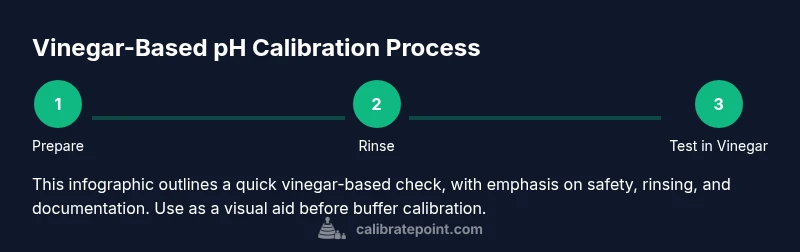
- Calibrate ph meter with vinegar by rinsing and preparing the electrode. 2) Immerse the probe in vinegar and allow 10–20 seconds for stabilization. 3) Record the displayed value and compare to your meter’s normal acid response. 4) Rinse the electrode with distilled water and blot dry. 5) Optional cross-check by repeating with a small amount of another acidic solution to confirm consistent response. 6) If readings are erratic, inspect the electrode, seals, and reference junction for contamination. 7) When you’re done, store the electrode per the manufacturer’s recommendations and note any drift observed during the test. 8) If the vinegar check reveals drift or non-responsiveness, plan a full buffer calibration before critical measurements. Calibrate ph meter with vinegar to validate basic operation while recognizing its limitations.
Verifying readings and interpreting results
Interpreting a vinegar-based reading requires context. A stable, reasonably swift response suggests the electrode is intact and the signal path is clear. Large fluctuations or a reading that fails to shift despite the acidic environment indicate potential contamination, a degraded reference junction, or an aged electrode. Treat vinegar results as a fast, low-cost diagnostic rather than an authoritative calibration. If the reading aligns roughly with other acidic tests and the response is timely, you can proceed with confidence to a formal buffer calibration for high-precision work. Calibrate ph meter with vinegar can be a helpful precursor step in a thorough maintenance routine.
Maintenance after calibration and checks
After completing any calibration or vinegar-based check, rinse the electrode thoroughly with distilled water, blot dry, and store it in clean condition. Avoid leaving the probe in air-dried state, and cap storage solutions if provided by the manufacturer. Regular maintenance extends sensor life and helps preserve accuracy across sessions. When new, the electrode may require a short conditioning period; follow your device’s instructions if recommended. Keep logs of calibration dates and drift observations to track long-term performance. Calibrate ph meter with vinegar as part of a broader, documented calibration strategy.
Authority sources and suggested buffers
For reliable calibration, consult recognized references and trusted manuals. Primary buffers at pH 4.0 and pH 7.0 are widely used for two-point calibration because they bracket most common samples. If you are performing precise measurements, plan to supplement vinegar checks with buffer calibrations using fresh, traceable standards. Always verify your meter’s temperature compensation settings, electrode condition, and the reference junction before calibration. See the sources listed below for additional guidance and best practices. Calibrate ph meter with vinegar as a quick check alongside buffer-based methods.
Common mistakes to avoid during vinegar checks
Avoid leaving the electrode in vinegar for extended periods, which can damage certain sensor membranes. Never skip rinsing between different solutions, as contaminants can bias readings. Do not use old, degraded vinegar or contaminated containers, which may produce inconsistent results. Keep the test environment stable, at room temperature, and document readings clearly. If you see persistent drift, reassess the electrode’s condition and consider calibration with certified buffers for accuracy. Calibrate ph meter with vinegar wisely, understanding its limitations.
Tools & Materials
- Distilled water(For rinsing and rinse between solutions)
- White vinegar (5% acetic acid)(Test solution, room temperature)
- Beaker (200–250 mL)(Clean, glass or PET)
- Calibrated pH buffers (optional for full calibration)(Typically pH 4.0 and pH 7.0)
- Clean tissue or lint-free wipes(For drying the electrode)
- Grip gloves and safety glasses(Basic safety during handling acids)
- Electrode storage solution or wetting agent (optional)(Keep the probe hydrated)
- Notebook or log sheet(Record readings and observations)
Steps
Estimated time: 20-40 minutes
- 1
Prepare the workspace and equipment
Clear the bench, gather all materials, and set vinegar to room temperature. This ensures stable readings and reduces contamination risks.
Tip: Keep a dedicated test area to avoid cross-use with buffers. - 2
Rinse the electrode
Rinse the pH electrode tip with distilled water to remove any previous solutions. This prevents carryover that could skew the reading.
Tip: Use a gentle rinse, avoid splashing onto connectors. - 3
Rinse and prepare vinegar test
Rinse a clean beaker, then pour a small amount of vinegar. Ensure the vinegar is at room temperature to avoid temperature-related reading shifts.
Tip: Label test beakers to avoid confusion with buffers. - 4
Immerse in vinegar and wait for stabilization
Submerge the electrode tip in vinegar and wait 10–20 seconds for the reading to stabilize before recording.
Tip: If your meter has temperature compensation, enable it for acidic solutions. - 5
Record the reading and assess response
Note the displayed value and compare it to typical acidic responses. A quick, stable drift-free response indicates a healthy probe.
Tip: If the reading is erratic, re-rinse and re-test after cleaning the sensor. - 6
Rinse and dry the electrode
Rinse with distilled water again and blot dry with lint-free tissue before any further tests.
Tip: Avoid rubbing; light blotting prevents membrane damage. - 7
Optional cross-check with another acidic solution
Dip the electrode into a second acidic solution to confirm consistent response, which helps identify contamination.
Tip: Keep track of time between dips to minimize sensor drying. - 8
Document results and next steps
Log the reading, note any drift, and decide whether to proceed with a full buffer calibration or scheduling service.
Tip: If drift exceeds acceptable limits, plan a complete buffer calibration.
Questions & Answers
Can vinegar calibration replace buffer calibration for accuracy?
No. Vinegar provides a quick diagnostic check, not a replacement for buffer-based calibration. For precise measurements, always calibrate with fresh pH buffers and follow the instrument’s instructions.
No. Vinegar checks are a quick diagnostic, but buffers are needed for precise calibration. Use vinegar as a preliminary test and complete with buffers.
Is vinegar calibration safe for all pH meters?
Most meters can accept vinegar tests, but some probes are sensitive to repeated exposure to strong acids. Check your device manual and avoid extended immersion when not necessary.
Most meters tolerate vinegar tests, but consult your manual to avoid harming delicate probes.
What pH values should I expect when testing with vinegar?
Vinegar is acidic, so readings will skew toward low pH. The exact number depends on the vinegar concentration and temperature, so use relative changes rather than relying on an absolute pH value.
Expect a low pH reading; use changes and responsiveness rather than a fixed value.
How often should I perform vinegar checks?
Infrequent checks are acceptable for hobby use, but include vinegar tests as part of a routine before important measurements. Pair with periodic buffer calibrations.
Do a quick vinegar check if you’re about to measure something important, then calibrate with buffers regularly.
What should I do if the vinegar test shows drift?
If drift appears, rinse, inspect the electrode, and plan a full buffer calibration. If drift persists, consider service or replacement.
If you see drift, verify the electrode and schedule a buffer calibration or service.
Watch Video
Key Takeaways
- Start with a clean, safe workspace
- Vinegar offers a quick diagnostic, not full calibration
- Document readings for traceability
- Follow up with buffer calibration for precision
- Maintain the electrode between uses