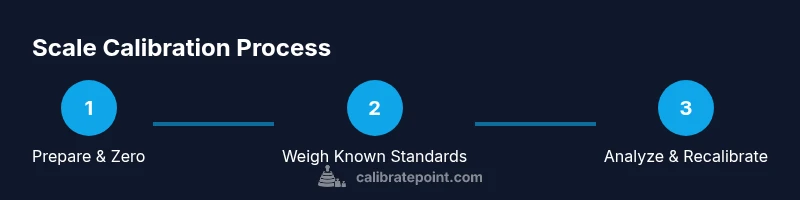
How to Know If a Scale Is Calibrated: Practical Guide
Learn how to verify scale calibration with at-home tests, standard weights, and professional service options. This Calibrate Point guide covers steps, tools, and best practices for accurate measurements.


To know if a scale is calibrated, perform a quick check using known weights and a stable surface. Zero the scale, weigh several standard weights, and compare results against expected masses within the device's stated tolerance. If readings drift or fall outside tolerance, recalibration or servicing is advised. This guide covers at-home verification and professional options.
Why Calibration Matters for Scales
Understanding how to know if scale is calibrated is essential for accurate measurement in any workflow. Whether you work in a home workshop or a professional lab, a small error can compound across repeated weighings. In this guide, we cover practical checks, common pitfalls, and efficient routines to validate scale accuracy without specialized equipment. By establishing routine verification, you protect data integrity and product quality, and you extend the life of your equipment. Key ideas include using known weights, environmental control, and documenting results for traceability. The Calibrate Point team emphasizes that calibration is not a one-time event but an ongoing process that adapts to use, location, and development of the device over time.
In short, regularly answering how to know if scale is calibrated helps you catch drift early and keep your measurements trustworthy. You’ll learn how to set up a simple at-home verification, what tools matter, and when to seek professional recalibration. This approach applies whether you use a pocket scale, kitchen scale, lab balance, or industrial platform scale, and it relies on fundamental principles of measurement science.
As you read, keep in mind that temperature, surface level, air movement, and even the placement of weights can influence results. The goal is not perfection on every test, but consistent performance within specified tolerances across weight ranges. The Calibrate Point philosophy is to build repeatable checks you can perform quickly, with clear records for traceability.
Quick Checks You Can Perform at Home or in the Shop
A practical validation of scale calibration starts with simple, repeatable checks. Use a small set of known weights and a stable surface. Before you begin, confirm the scale is powered and warmed up, then zero or tare the reading. Place each known weight at the center of the weighing surface, wait for the reading to settle, and record the result. Compare the measured mass to the known mass; calculate the absolute and percent error. If all readings fall within the scale's stated tolerance, your device is performing as expected for those weights. If any reading is outside tolerance or drifts between trials, note the discrepancy and plan a full calibration check or service. Environmental factors like drafts, vibration, and temperature can skew results, so minimize disturbances and repeat tests to confirm stability.
Keep a calibration log with dates, weights used, readings, and tolerance. This log is invaluable when diagnosing drift, planning maintenance, and proving traceability during audits. For many digital scales, a simple three-weight verification (e.g., 100 g, 500 g, 1 kg) offers a quick sanity check, while balance scales may require more attention to zeroing and tare. The goal is a reliable snapshot of current performance and a plan for action if results deviate.
Selecting and Using Calibration Weights
Calibration weights must be accurate, stable, and appropriate for your scale's range. Start with a basic set of standard weights: 100 g, 200 g, 500 g, and 1 kg cover a broad range for common scales. If possible, use weights with traceability certificates from a recognized standards organization; this ensures your references are genuine and well documented. Store weights in a clean, dry container away from magnetic materials and temperature extremes to preserve mass stability. When weighing, use a clean weighing pan and consider using a tare container to account for vessel mass. For high-precision work, consider conducting checks with both light and heavy weights to map linearity across the scale's range. Always handle weights with gloves to avoid residues that could affect mass readings.
Remember that traceability matters. A traceable calibration weight set provides a documented path back to national or international standards, which is critical for audits, manufacturing, and quality control. If you don’t have traceable weights, use repeatability checks with your best available standards and document the limitations of your verification.
Step-by-Step Guide: Verify Accuracy with Known-Weight Standards
This section expands on the practical steps you’ll perform in the STEP-BY-STEP section, focusing on a structured workflow that mirrors factory or lab procedures. Start by validating the environment: ensure the scale is on a level, vibration-free surface away from direct sunlight and temperature changes. Then zero the device, place a known weight in the center, and record the reading. Repeat with two more weights to test linearity, ideally spanning the lower, middle, and upper portions of the scale's range. After collecting data, compute the absolute error (measured minus known) and the percent error relative to the known weight. If your scale offers internal calibration, follow its prompts to adjust accordingly and re-test. If adjustments are not possible, schedule professional calibration and document the readings to guide service technicians. Finally, log all results and establish a re-check interval based on your usage and tolerance requirements.
Interpreting Results and Deciding When to Recalibrate
Interpreting calibration results is about tolerance and consistency. Compare your errors against the scale’s specified tolerance. A single outlier may be an anomaly caused by momentary disturbance, but repeated outliers indicate a registration drift or mechanical issue. If errors exceed tolerance and recur across multiple weights, you should recalibrate. For digital scales with an automatic calibration function, ensure any automatic recalibration is enabled and repeated after repositioning or moving the device. If the device cannot be recalibrated internally, plan professional calibration service and obtain a calibration certificate for traceability. Track environmental conditions during calibration since temperature fluctuations can alter readings, especially on balances and analytical scales. After recalibration, repeat tests to confirm the stability of results, and update your calibration log accordingly.
When to Seek Professional Calibration and How Calibrate Point Helps
Many scales benefit from periodic professional calibration, especially in regulated environments or high-precision tasks. A service visit can address mechanical wear, sensor drift, and internal calibration settings that are not adjustable by users. The Calibrate Point team recommends scheduling professional calibration when repeated tests show drift across multiple weights, or when a scale is moved to a different location or used for critical measurements. Professional calibration provides an official certificate and traceability documentation, which can be essential for audits, quality systems, and regulatory compliance. In between professional calibrations, maintain routine checks with known weights, keep thorough logs, and ensure your testing environment remains stable. This approach helps minimize downtime and keeps measurement confidence high, especially in production, laboratory, or field settings.
Common Pitfalls and Troubleshooting
Even experienced users stumble over a few recurring issues. Always start with a clean, level surface; dust and residue can alter readings. Avoid drafts, air currents, or vibration from nearby machinery during tests. Do not mix weight units or use damaged or questionable weights; damaged weights can give false readings. If you notice persistent drift after calibration, verify that the scale is properly zeroed before each measurement, and consider repeating the test with traceable weights. If you encounter persistent instability, consult the device's manual or contact a calibration professional to avoid compromising measurements.
Tools & Materials
- Calibration weights (100 g, 200 g, 500 g, 1 kg or equivalent set)(Prefer traceable weights; include a 0 g zero reference if available)
- Reference scale or certified weight standard(Use to verify other measurements against a trusted standard)
- Tare container or weighing boats(Zero the container mass to measure only the sample weight)
- Soft lint-free cloth(Keep the weighing surface clean and free of residue)
- Temperature/humidity log(Environmental data helps explain minor drift)
- Notepad and pen(Record weights, readings, tolerances, and calculations)
- Gloves or clean handling tools(Handle weights to avoid transferring oils)
- Calibration certificate (optional)(If you receive professional calibration, keep the certificate for traceability)
Steps
Estimated time: 60-90 minutes
- 1
Prepare workspace
Clear a flat, stable area. Gather all tools and ensure the scale is powered and warmed up. Confirm ambient conditions are stable to minimize environmental drift. Allow the scale to warm up for at least a few minutes if specified by the manufacturer.
Tip: Choose a vibration-free surface and avoid air currents from nearby openings. - 2
Zero and tare
Turn on the scale and allow it to stabilize. Tare to zero using a clean pan or container. Confirm the display shows zero before adding any weights.
Tip: Ensure the tare container is centered on the weighing surface for best stability. - 3
Clean weighing surface
Wipe the platform with a lint-free cloth to remove dust or residues that could affect readings. Allow any cleaning to dry completely before proceeding.
Tip: Even small particles can shift readings, so cleanliness matters. - 4
Add first known weight
Place the 100 g weight on the center of the pan. Wait for the reading to settle, then record the measured mass.
Tip: Place weights gently to avoid bouncing and disturbances. - 5
Record and evaluate
Note the measurement and calculate absolute and percent error against the known mass. Repeat with 200 g and 500 g to check linearity.
Tip: Use the same units and rounding precision for all measurements. - 6
Test multiple weights for linearity
Weigh 200 g and 500 g; compare each result to the known mass. Consistency across the range indicates good linearity; drift suggests issues.
Tip: Graph the results if you can to visualize drift easily. - 7
Decide on recalibration
If errors exceed tolerance or drift across trials is observed, perform device recalibration if supported, or schedule professional service. Re-test after any adjustment.
Tip: Document the results before and after calibration for traceability. - 8
Document and plan follow-up
Record all readings, tolerance, environmental conditions, and dates. Set a re-check interval based on use and criticality.
Tip: Keep a dedicated calibration log to aid audits and maintenance planning.
Questions & Answers
Why is calibration important for scales?
Calibration ensures measurement accuracy across tasks, reduces systematic errors, and supports data integrity in audits and quality control. Regular checks help catch drift early.
Calibration is important because it keeps measurements accurate over time and across tasks, preventing drift from impacting decisions.
How often should I calibrate a scale?
Calibration frequency depends on usage, environment, and criticality of measurements. In high-stakes settings, check frequently and after moving the scale; for routine use, set a periodic interval and document procedures.
Frequency depends on use and environment; check after moving the scale or if measurements start drifting.
What if readings vary with temperature?
Temperature can affect scale electronics and material expansion. Calibrate in a stable temperature, keep readings within typical operating conditions, and note environmental conditions during calibration.
Temperature matters; calibrate where conditions are stable and record the environment alongside readings.
Can I calibrate a scale at home?
Many digital scales support user calibration with known weights. Follow the manufacturer’s instructions precisely; for mechanical balances, professional service may be required.
Yes, many scales can be calibrated at home using the manual; some require professional service for accuracy.
What does traceability mean in calibration?
Traceability links your scale’s measurements to national or international standards. Certificates or records ensure that results can be audited and compared across time and facilities.
Traceability ties your measurements to recognized standards with formal documentation.
What should I do if my scale can’t be calibrated?
If calibration isn’t possible, consult the manual or contact the manufacturer or a professional service for evaluation and potential repair. Document limitations and plan for replacement if needed.
If you can’t calibrate it yourself, seek professional service and keep notes on limitations.
Watch Video
Key Takeaways
- Use known weights and zeroing to verify accuracy
- Map linearity by testing multiple weights across the range
- Document readings for traceability and audits
- Know when to recalibrate or seek professional service