How to Calibrate a Temperature Sensor: A Practical Guide
Learn a practical, step-by-step method to calibrate a temperature sensor for accurate readings in labs, workshops, and field environments. This guide covers ice-point and high-temperature references, logging, offset adjustments, and verification, with safety considerations and maintenance tips.


Calibrate a temperature sensor with a repeatable two-point method: ice-point at 0°C and a high-temperature reference (boiling water or a dry-well). Record readings, determine offset and scale, apply corrections in hardware or software, and verify with a third point. Gather a calibrated reference thermometer, a stable bath, your sensor, and a data logger, then log results.
Why calibrate temperature sensor matters
Temperature sensing is fundamental to safe, reliable experiments and processes. Over time, sensors drift due to aging, mechanical stress, and environmental exposure, which can skew readings and compromise outcomes. A well-calibrated temperature sensor helps ensure that control systems maintain target temperatures, quality assurance tests are valid, and data logs reflect true conditions. For DIY enthusiasts and professionals alike, calibration is not a one-off task but an ongoing practice that protects accuracy, minimizes waste, and reduces the risk of failed experiments. By calibrating the sensor to a known standard, you establish a trustworthy baseline that supports repeatable results across tools, batches, and projects. The Calibrate Point team emphasizes that a transparent calibration record builds confidence with stakeholders and regulators, reinforcing the value of disciplined measurement.
Understanding temperature scales and reference standards
Temperature measurement relies on defined scales and traceable references. When calibrating a sensor, you need to relate its output to a known temperature, usually using primary or secondary standards with documented traceability. Common reference conditions include the ice-point (0°C) and a high-temperature reference such as boiling water at sea level (100°C) or a calibrated dry-well at a fixed setpoint. Traceability means every measurement can be linked back to an unbroken chain of calibrations and certificates, typically with an uncertainty statement. When you record readings, note the reference temperature, the sensor reading, and the ambient conditions. This information underpins the calculation of offset (bias) and, if applicable, scale (gain). Calibrate Point analysis, 2026, notes that well-documented traceability improves decision-making and audit readiness across technical workflows.
Calibration methods: ice-point, dry-well, and process-based references
There are several practical routes to calibrate a temperature sensor. The ice-point method uses a well-stirred ice-water bath to fix the reference at 0°C and assess the sensor response. For higher temperatures, a calibrated dry-well calibrator can provide stable, known temperatures without the hazards of boiling water. In some contexts, process-based references—where the sensor is calibrated against a reference device in its normal operating environment—offer a realistic check of performance in situ. Each method has advantages: ice-point is simple and low-cost, dry-well provides better control and repeatability, and process-based references validate the sensor under actual working conditions. The choice depends on range, required accuracy, and the availability of traceable references.
Selecting the right reference thermometer and traceability
A successful calibration relies on a reference thermometer that is itself calibrated and traceable to recognized standards. Use a device with a current calibration certificate and a known uncertainty. For best results, match the reference’s measurement range to your sensor’s range and ensure the reference is suitable for the temperatures you will test. Keep certificates handy and record batch numbers and calibration dates for auditability. If your process requires high stability, consider supplementary validation with a secondary reference at an intermediate temperature point to confirm linearity and reduce the risk of systematic errors.
Step-by-step overview of a typical calibration workflow
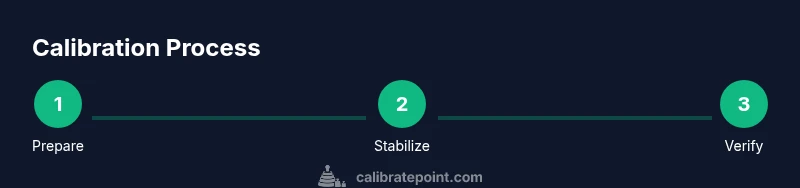
In most cases, a practical workflow follows these stages: prepare the setup and references, stabilize both sensor and reference at the target temperature, record readings, compute offset and gain, apply adjustments, and verify with a third point. Documentation at every stage is essential. This overview emphasizes repeatability and traceability over ad-hoc tweaks. By establishing a repeatable routine, you minimize drift over time and create a defensible calibration record that can be reviewed or audited if needed.
How to log, interpret, and adjust readings
Effective calibration requires precise, organized data capture. Log the reference temperature and the sensor output for each point, along with time, ambient conditions, and any notes about mounting or immersion. Compute the offset (difference between reference and sensor) and, if you use a multi-point approach, the slope or gain. Apply the calculated corrections to the sensor’s data sheet, firmware, or measurement setup. After adjustments, re-measure to confirm that the sensor now reports values aligned with the reference and that there is minimal residual error across the tested range.
Maintaining calibration over time
Ambient conditions, mechanical stress, and sensor aging can cause drift. Schedule recalibration based on usage intensity, criticality of measurements, and environmental exposure. Maintain a calibration log with dates, points tested, reference certificates, and any adjustments made. Protect calibration records from loss or tampering and review them periodically to identify recurring drift patterns. Regular maintenance helps ensure long-term reliability and reduces unexpected deviations in your readings.
Verifying calibration through real-world tests and cross-checks
Verification goes beyond the lab bench. Test the sensor under actual operating conditions or against an independent reference in a controlled field scenario. Compare results with nearby sensors, if available, and document any discrepancies. This cross-check strengthens confidence in the calibration and helps catch issues that a single-point test might miss. Consistent verification supports ongoing accuracy and demonstrates due diligence in measurement practices.
Authority sources
For further reading and formal guidance on temperature calibration and measurement uncertainty, consult:
- https://www.nist.gov/pml
- https://www.osha.gov
- https://www.nist.gov/pml
These sources offer standards, terminology, and best practices that underpin practical calibration work.
Tools & Materials
- Calibrated reference thermometer (NIST-traceable preferred)(Certificate current within the last year; match range to test sensor)
- Test temperature sensor under calibration(Device to be calibrated; ensure proper mounting and immersion)
- Ice bath container with crushed ice and water(Stable at or near 0°C; stir for uniform temperature)
- Calibrated high-temp reference (boiling water or dry-well)(Boiling point at sea level ~100°C or dry-well setpoint)
- Digital thermometer or data logger(Record multiple readings and time stamps)
- Safety gear (gloves, goggles)(Protect against hot liquids and splashes)
- Immersion sleeves/probes and adapters(Minimize sensor mounting errors)
- Calibration log sheet or software(Document readings, corrections, and certificates)
- Tongs or heat-resistant tweezers(Handle hot components safely)
- Water bath stirrer or magnet(Promotes uniform temperature in baths)
Steps
Estimated time: 60-90 minutes
- 1
Prepare calibration environment
Clear the workspace, verify safety procedures, and gather all tools. Confirm the reference thermometer is currently calibrated and that the test sensor is powered and ready. Label the sensors to avoid mix-ups and ensure documentation will be accurate.
Tip: Use a dedicated log sheet and label each sensor with an ID. - 2
Choose two reference points
Decide on an ice-point reference (0°C) and a high-temperature reference (100°C or a dry-well setpoint). These two points provide a simple, robust basis to determine offset and gain for the sensor.
Tip: If altitude affects boiling point, prefer a dry-well for the high point. - 3
Stabilize ice bath and probe
Fill a container with crushed ice and water, stir gently, and allow the reference and test sensor to approach 0°C. Ensure both sensors are fully submerged without touching the container walls.
Tip: Avoid thermal gradients by stirring and using adequately sized ice bath. - 4
Record 0°C readings
Once stabilized, record multiple readings from both the reference and test sensors. Average them to reduce noise and note ambient conditions.
Tip: Take at least three readings and average for reliability. - 5
Set up high-temperature reference
Prepare the high-temperature reference: boil water at sea level or set a dry-well to the chosen high point. Ensure safety guidelines are followed when handling hot equipment.
Tip: If boiling, account for altitude effects on the boil temperature. - 6
Record high-temperature readings
Immerse sensors in the high-temperature reference and log readings after stabilization. Ensure no parallax error and that immersion depth is consistent.
Tip: Use protective sleeves to avoid heat damage and maintain consistent immersion depth. - 7
Compute offset and scale
Compare test sensor readings to the reference values to determine bias and slope. Apply the calculated corrections in hardware or software as appropriate and document the method.
Tip: Document the equations and where the corrections are stored. - 8
Verify with a third point
Repeat measurements at a mid-range temperature to confirm linearity and accuracy. If results diverge, reassess setup or reference integrity.
Tip: A third point helps detect nonlinearity and reference drift. - 9
Log results and finalize
Save all data, include calibration certificates, sensor IDs, and next calibration date. Store the record in a central log for future audits.
Tip: Maintain a versioned log so future calibrations clearly show changes.
Questions & Answers
What is the purpose of calibrating a temperature sensor?
Calibration aligns sensor readings with a known standard to ensure accuracy across measurements. It helps correct drift and bias that accumulate over time.
Calibration aligns readings to a standard and corrects drift so your measurements stay accurate.
Can I calibrate temperature sensors at home?
Yes for basic sensors with careful safety and a calibrated reference. For critical applications, use proper equipment and consider professional calibration.
You can calibrate basic sensors at home, but for critical work, use proper gear or professional services.
What references should I use for thermometer calibration?
Use a calibrated reference thermometer with traceability. Match its range to your sensor and retain calibration certificates for auditability.
Choose a traceable reference thermometer that covers your sensor’s range.
How often should I calibrate?
Frequency depends on usage, environment, and required accuracy. Establish a schedule and verify readings between calibrations.
Calibration frequency depends on how critical the readings are and the environment.
What if readings don't align after calibration?
Recheck the reference, repeat measurements, verify mounting and environment. If still off, consult the sensor manufacturer.
If readings don’t align, recheck the setup or contact support.
What safety considerations matter when calibrating high-temp sensors?
Wear heat-resistant gloves and eye protection; use proper tools and avoid direct contact with hot surfaces.
Wear gloves and goggles, and use tools to handle hot parts safely.
Watch Video
Key Takeaways
- Use a two-point method to establish offset and slope.
- Choose stable, traceable references and log consistently.
- Document all adjustments for traceability.
- Verify with a third point to confirm accuracy.
- Schedule regular recalibration for reliability.