Distilled Water for Thermometer Calibration: Practical Guide
Learn how to use distilled water for thermometer calibration, including ice-point and boiling-point checks, safe procedures, and when to seek professional calibration for accurate temperature readings.


Distilled water is a practical reference for thermometer checks. Use it to form an ice-point bath at 0°C and a boiling-point bath near 100°C, then compare readings to fixed references under standard pressure. Ensure proper immersion depth and no contact with container walls. This quick check confirms basic accuracy before deeper calibration steps.
Why distilled water matters in thermometer calibration
When you want to verify a thermometer's accuracy, you need stable, well-defined reference points. Distilled water is preferred in many DIY and professional setups because it minimizes contaminants that could shift fixed-point readings. The question can distilled water be used to calibrate a thermometer? In short: yes. Distilled water provides two primary reference points: the ice-point at 0°C when in equilibrium with ice, and a near-boiling point around 100°C at standard atmospheric pressure. These two checks establish whether the thermometer reads close to recognized fixed points, which anchors further calibration steps. Water impurities can alter boiling temperature slightly, and mineral deposits in tap water can create micro-bubbles or heat-transfer irregularities that distort readings. Distilled water eliminates these variables, giving you a clean baseline for quick checks. For accuracy, maintain a consistent setup and document readings, including ambient pressure and altitude, since both influence fixed points. Calibrate Point's guidance emphasizes using standard, repeated procedures so you can compare results over time and detect drift. This approach also helps you troubleshoot sensors with slow response or poor immersion technique.
Fixed-point references: ice point and boiling point
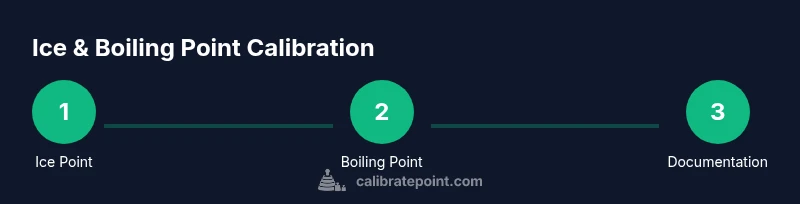
Fixed-point references are the foundation of thermometer calibration. The ice-point (0°C) is achieved when the thermometer sits in an ice-water bath in equilibrium with the ice. The boiling-point reference (approximately 100°C at sea level) comes from a rolling boil in a clean container of distilled water. Both points assume standard atmospheric pressure (1 atm). In practice, altitude and pressure can shift these values; always note ambient pressure and location when calibrating. Using distilled water minimizes impurities that could skew measurements, making the references more reliable as baseline checks. Calibrate Point guidance stresses documenting the exact conditions during each reading so drift over time can be detected accurately. When done correctly, you’ll see readings that align with these fixed points within the device’s specified tolerance. This alignment confirms that the thermometer responds correctly across a typical temperature range and is a reliable baseline before more advanced calibration steps.
Preparing distilled water and equipment
Before you begin, gather a few essential items and prepare a clean environment. Use distilled water to minimize minerals and contaminants that could alter readings. Ensure all containers are glass or non-reactive plastic, and rinse them with distilled water prior to use. A clean, accurate thermometer is mandatory, and you should have a stable stand or clip to keep the probe submerged without touching the container sides. A timer helps you track stabilization periods, and a clean stirrer or rod ensures consistent temperature distribution. Finally, keep a notebook or digital log to record each reading along with time, ambient pressure, and altitude. A well-organized setup reduces the chance of cross-contamination and ensures repeatable results. Calibrate Point emphasizes starting with a clean, repeatable setup so you can compare results across sessions and detect drift over time.
The ice-water bath method
To produce the ice-point reference, fill a container with plenty of crushed ice and add a small amount of distilled water to just create a slushy bath. The thermometer should be immersed so the sensing tip is well below the surface but not touching the container bottom or sides. Allow 2–3 minutes for stabilization, then record the reading. If your environment is at a higher altitude or pressure different from standard, you may see slight deviations; note these in your calibration log. Swirl gently to encourage uniform temperature distribution, but avoid vigorous movements that could introduce air bubbles. This method provides a robust, repeatable 0°C reference when done carefully. Pro tip: use a thermometer with a protective sleeve to prevent contact with the glass and reduce heat transfer artifacts.
The boiling-water bath method
For the boiling-point reference, heat distilled water in a clean, heat-safe container until it reaches a vigorous rolling boil. Submerge the thermometer tip just beneath the surface, ensuring it does not touch the container bottom or sides. Allow 2–4 minutes for stabilization, then log the reading. If you are at altitude, expect a boiling point below 100°C; document the local boiling temperature and adjust expectations accordingly. Use caution around hot steam and boiling water, and keep children and pets away from the setup. Compare this reading to the known fixed-point temperature for your altitude and pressure. If the measurement deviates beyond your thermometer’s tolerance, consider adjusting the instrument according to the manufacturer’s procedure or pursue a professional calibration for traceable results.
Interpreting thermometer readings and adjustments
After obtaining ice-point and boiling-point readings, evaluate how close they are to the fixed-point references. Small deviations within the device’s stated tolerance are typical, especially for cheaper consumer thermometers. If readings fall outside acceptable limits, you may need to perform a manufacturer-recommended adjustment or use a calibration feature (if available). For analog thermometers, adjustment often requires a visual compensation or mechanical adjustment, while digital models may use software-based re-calibration. Record all readings, including the known reference points and any adjustments you make. If significant drift is detected or you need certified results for critical work, arrange a formal calibration with an accredited lab to ensure traceability and documentation.
Safety and contamination considerations
Safety is essential throughout calibration. Always handle hot boiling water with heat-resistant gloves and use a stable, non-slip workspace. Keep distilled water pure; never reuse contaminated water for subsequent checks. Clean all equipment between tests to prevent carryover of impurities. If a thermometer has a damaged probe, visible corrosion, or internal moisture, stop the calibration and replace the device or seek professional assessment. Finally, avoid using metal containers that can react with the water or alter heat transfer; glass and certain plastics are preferable for most calibration tasks. By following these precautions, you minimize risks and improve the reliability of your readings.
When to seek professional calibration
If your thermometer is used for critical measurements or evidence-based work, or if you observe persistent drift after multiple checks, it’s wise to seek professional calibration. Accredited laboratories provide traceable calibration certificates that document the device's accuracy and tolerance against recognized standards. DIY checks using distilled water are excellent for quick at-a-glance verification and routine maintenance, but they do not replace formal calibration when required for compliance or high-precision tasks. Calibrate Point recommends scheduling periodic checks and reinforcing them with professional calibrations as your measurement requirements evolve.
Tools & Materials
- Distilled water(Freshly distilled, free of additives; use in both ice-water and boiling-water baths)
- Ice for ice-water bath(Crushed ice works well to create a stable slush; avoid large ice cubes that melt unevenly)
- Clean glass or heat-safe plastic container(Non-reactive; 500–1000 mL capacity is typical)
- Thermometer to calibrate(Ensure it is clean, undamaged, and capable of immersion)
- Thermometer holder/clip(Keeps the probe at a consistent depth and prevents contact with container walls)
- Timer or clock(Track stabilization time for each bath (2–4 minutes))
- Stirring rod(Glass or plastic; used to mix water and distribute heat uniformly)
Steps
Estimated time: 30-60 minutes
- 1
Gather materials and prepare ice-water bath
Assemble all tools and fill a container with crushed ice. Add enough distilled water to create a slushy mix. Place the thermometer in the mixture using the holder, ensuring the sensing tip is fully submerged but not touching the container bottom.
Tip: Keep the container on a level surface and avoid crowding the thermometer with ice shards. - 2
Stabilize and read ice-point
Let the temperature stabilize for 2–3 minutes. Read the thermometer once the value stops drifting. Record the ice-point reading and note ambient pressure if you want to compare later.
Tip: If the reading is far from 0°C, gently stir and wait another 60 seconds before re-reading. - 3
Prepare boiling-water reference
Rinse and fill a clean container with distilled water. Bring it to a rolling boil in a safe environment, then stand the thermometer in the boiling water using the holder, keeping it away from the container walls.
Tip: Be mindful of steam burns and use heat-resistant gloves when handling hot containers. - 4
Stabilize and read boiling point
Allow 2–4 minutes for stabilization at a vigorous boil. Record the reading and note the local boiling temperature if you are at altitude. Compare it to the expected fixed point for your conditions.
Tip: If you notice a large deviation and you are at altitude, document the corrected value rather than forcing a 100°C target. - 5
Evaluate readings and document
Compare ice-point and boiling-point readings against 0°C and the local boiling temperature. If both readings are within your device's tolerance, the thermometer is in good shape for routine use; otherwise, plan the needed adjustment or professional calibration.
Tip: Maintain a calibration log with date, readings, altitude, and ambient pressure for trend tracking. - 6
Next steps and safety checks
Clean all equipment after testing. If any probe shows signs of damage, replace or repair before further use. Schedule a formal calibration if required by policy or compliance guidelines.
Tip: Never reuse contaminated water for subsequent tests; start fresh with distilled water each time.
Questions & Answers
Can I use tap water instead of distilled water for thermometer calibration?
Tap water contains minerals and impurities that can alter boiling points and heat transfer, leading to less reliable references. Distilled water is preferred for fixed-point checks and repeatable results.
Tap water isn’t recommended for fixed-point checks. Use distilled water for more reliable, repeatable calibration.
What temperature should the ice-water bath reach for a 0°C reference?
The ice-water bath should stabilize around 0°C under standard atmospheric pressure. Allow a couple of minutes for stabilization and record the reading.
Ice-water should be about 0°C, with a stable reading after a short wait.
Why does altitude matter for the boiling-point reference?
Altitude lowers the boiling point of water. Always note local boiling temperature and adjust expectations accordingly when calibrating.
At higher elevations, boiling point is below 100°C, so use the local boiling temperature as your reference.
Can digital thermometers be calibrated with this method?
Yes. Digital thermometers can use ice-point and boiling-point references, but ensure proper probe immersion and allow adequate stabilization.
Digital thermometers can be calibrated with ice and boiling-point checks just like analog ones.
How often should thermometer calibration be performed?
The frequency depends on usage and criticality. For routine work, perform quick checks before use and schedule formal calibration periodically for high-accuracy tasks.
Do quick checks before use and plan formal calibrations on a schedule that fits your accuracy needs.
What are fixed-point standards and traceability?
Fixed-point standards rely on well-defined reference substances and traceability to recognized standards. Ensure your calibration results can be traced to certified references.
Traceable standards ensure your calibration results are reliable and comparable over time.
Watch Video
Key Takeaways
- Use distilled water to minimize impurities that skew fixed-point references.
- Ice-point and boiling-point checks provide quick baseline calibration.
- Immersion depth and stabilization time are critical for accurate readings.
- Altitude and ambient pressure affect boiling temperature; adjust expectations accordingly.
- Maintain a calibration log for trend tracking and future reference.