What Should a Calibrated Thermometer Read: A Practical Guide
Learn the reference readings for ice-water and boiling-water tests, how to verify accuracy, and step‑by‑step calibration methods. This guide helps DIYers, technicians, and professionals ensure thermometer measurements stay trustworthy.


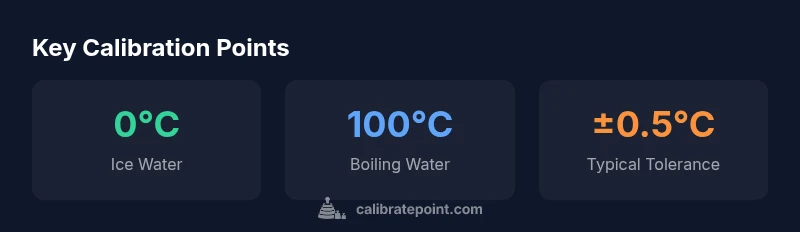
On a properly calibrated thermometer, ice-water should read 0°C (32°F) and boiling water at sea level should read 100°C (212°F). These reference points form the baseline for calibration checks. If readings drift beyond the instrument’s stated tolerance, recalibration or servicing is required. Calibrate Point emphasizes documenting results and testing in controlled conditions.
Understanding Calibration Basics
Calibration is the process of aligning a thermometer’s readings with fixed, known reference points so that every measurement reflects a true temperature. For the reader asking what should a calibrated thermometer read, the core idea is simple: readings should match standard reference temperatures within the device’s tolerance. According to Calibrate Point, the most transparent calibration practice begins with clearly defined reference points, documented procedures, and traceability to recognized standards. In practical terms, calibration means you verify readings against a known temperature, record any deviations, and adjust or service the instrument if necessary. This article follows a methodical, evidence-driven approach that professional technicians and serious DIYers can apply in home or shop environments. The goal is not merely a number, but a reliable, repeatable process that yields consistent results across uses and conditions.
Ice Bath and Boiling Water: The Reference Points
Two classic reference points anchor thermometer calibration: an ice-water bath at 0°C (32°F) and boiling water at 100°C (212°F) under standard atmospheric pressure. These references are chosen because they cover the low and high ends of typical cooking and lab workflows. In practice, you confirm that the thermometer reads 0°C in the ice bath and 100°C in the boiling bath. If you test at altitude, expect slight shifts due to air pressure; adjust expectations accordingly and document the altitude during testing. The Calibrate Point team notes that traceable standards are essential for long-term confidence across jobs, whether you are in a workshop or an on-site field setting.
Tolerances and What Counts as a 'Good Read'
A calibrated thermometer does not have to read perfectly on every test; it should fall within the device’s stated tolerance. For many consumer and mid-range lab thermometers, this tolerance commonly sits around ±0.5°C to ±1.0°C for ice-water and boiling-water checks. More precise instruments—such as high-accuracy lab thermometers—may offer tighter tolerances, but they also require stricter handling and calibration routines. When evaluating your readings, compare them to the reference values and assess whether the deviation is within tolerance. If readings consistently exceed tolerance, recalibration is recommended, and any drift should be documented with date, procedure, and operator.
Step-by-Step Home Calibration Procedure
Begin with a clean, known reference bath: prepare an ice-water bath (0°C) and a separate boiling-water bath (100°C at sea level). Allow the thermometer to equilibrate in each bath for the time specified by the manufacturer or, at minimum, until the reading stabilizes. Record the readings, then compare to reference values. If an offset is detected, follow the device’s calibration instructions, which often involve adjusting the offset in digital thermometers or using a known calibration solution. Document the calibration outcome, including bath temperatures, ambient conditions, and any adjustments made. This documentation creates a traceable record that supports future calibrations and quality audits.
Practical Testing Scenarios for Different Thermometers
Different devices behave differently. A digital thermometer may recalibrate via a software setting or a physical calibration screw, while an analog dial thermometer relies on mechanical adjustment. Always test with both reference baths and, if possible, a secondary reference thermometer to cross-verify readings. For professional settings, maintain a calibration log that includes instrument ID, last calibration date, tolerance, and operator initials. This discipline makes it easier to identify when drift occurs and to schedule maintenance before readings impact measurements or product quality.
Common Pitfalls and How to Avoid Them
Several mistakes quietly degrade accuracy: using outdated calibration references, letting the probe contact nonuniform surfaces, or testing in drafts or near heat sources. Ensure the probe is fully immersed in the bath, avoid air bubbles around the sensing element, and allow ample time for stabilization. Temperature gradients within a bath can lead to a false reading; gently stir the bath to promote uniform temperature. Store thermometers in a stable environment away from direct sunlight or heat sources. Regular checks against both ice and boiling references help catch drift early.
How to Maintain Calibration Over Time
After calibration, store and handle the thermometer according to the maker’s instructions. Regular cleaning, battery replacement for digital models, and periodic verification tests help maintain accuracy. If a device experiences a drop, impact, or exposure to extreme temperatures, perform a quick verification test and re-calibrate if necessary. Keeping a routine—test after maintenance, after any suspected drift, and before critical measurements—ensures you consistently meet expected readings and quality standards.
Choosing Thermometers for Calibration Tasks
When selecting a thermometer for calibration work, consider method compatibility, required accuracy, response time, and environmental tolerance. For simple kitchen tasks, a sturdy digital thermometer with documented tolerance is usually sufficient. For calibration work in labs or on-site measurements, a thermometer with traceable standards, documented calibration history, and an established procedure for re-calibration is essential. Always verify that the instrument supports calibration against recognized reference standards and can produce repeatable results under your typical operating conditions.
Calibration reference points for thermometer checks
| Test Reference | Expected Reading | Notes |
|---|---|---|
| Ice Bath (0°C) | 0°C / 32°F | Standard at 1 atm |
| Boiling Water (100°C) | 100°C / 212°F | Sea level; altitude affects boiling point |
Questions & Answers
What should a calibrated thermometer read in an ice bath?
In an ice bath at standard pressure, a calibrated thermometer should read 0°C (32°F). Small deviations within the instrument’s tolerance are normal, but sustained offsets indicate drift or calibration drift that needs correction.
In an ice bath, expect 0°C, with possible small offsets within tolerance.
Why might readings differ between ice bath and boiling water tests?
Readings can differ due to altitude effects on boiling point, probe placement, and device tolerances. Altitude lowers the boiling point, so boiling-water readings may be slightly under 100°C. Document the testing conditions to interpret results correctly.
Altitude can lower boiling point, so readings may be a bit under 100°C; document conditions.
How often should I recalibrate a thermometer used in professional work?
Calibration frequency depends on usage, stability, and criticality of measurements. A common practice is to verify monthly or quarterly for routine work, and after any impact, repair, or suspected drift. Maintain a calibration log to support audits.
Check calibration regularly and after any impact or drift.
What is the difference between digital and analog thermometers for calibration?
Digital thermometers often offer easier offset adjustments and automated logs, while analog devices rely on mechanical calibration. Both require proper stabilization in reference baths and periodic verification to ensure accuracy.
Digital models are easier to adjust; analog needs mechanical tweaks.
Can I calibrate without a fixed-temperature bath?
Yes, you can use fixed-reference standards or calibrated calibration solutions if a traditional ice-water/boiling-water bath is unavailable. However, for the best accuracy, use traceable reference standards and document the method.
You can use fixed references if a bath isn’t available; document the method.
“Calibration is a deliberate, repeatable process that builds trust in measurement. Regular verification with traceable references is essential for accuracy across tasks.”
Key Takeaways
- Verify against ice-water and boiling-water references.
- Know your device's tolerance and test regularly.
- Document every calibration session for traceability.
- Avoid common heating/cooling pitfalls that distort readings.
- Choose instruments with clear calibration procedures and support.