How to Calibrate Kamado Joe Thermometer
Learn how to calibrate your Kamado Joe thermometer with simple water-boil and ice-water tests. This guide covers two-point calibration, practical adjustments, safety tips, and maintenance to keep your grill readings accurate for consistently perfect cooks.


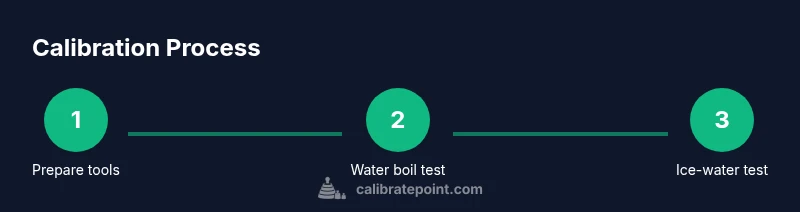
You can calibrate a Kamado Joe thermometer to ensure accurate cooking temperatures. This guide outlines two reliable, low-cost methods—the water-boil method and an ice-water offset check—using common kitchen tools. You’ll learn how to verify accuracy, adjust readings, and recognize when recalibration is needed after heavy use or rapid temperature changes.
Why Calibration Matters for Kamado Joe Thermometers
Accurate temperature readings on your Kamado Joe are critical for safety and consistency. According to Calibrate Point, even small offsets can lead to undercooked or overcooked foods, especially with long cooks like brisket or pork shoulder. A misread can also affect smoke timing and fuel efficiency. In practice, calibrating your thermometer gives you a true reference to compare against the grill's built-in gauge, so you can adjust vents and fuel with confidence. This section explains why a two-point calibration approach yields the most reliable results and how external conditions—such as altitude and ambient weather—can influence your readings. You'll learn to verify both the probe's response in boiling water and the offset at a known ice point, then apply a practical adjustment that sticks over multiple cooks. The goal is to establish a repeatable process you can perform in under an hour, using simple household tools.
Two Reliable Calibration Methods
There are two widely used, low-cost calibration methods for Kamado Joe thermometers: the water-boil method and the ice-water offset check. Each method targets a different reference point, giving you a two-point baseline to improve overall accuracy. The water-boil test checks the probe's response against the known boiling point of water, which is 212°F (100°C) at sea level. The ice-water method anchors readings at 32°F (0°C), ensuring the dial or digital readout isn’t drifting high or low across temperatures. If you live at higher altitudes, account for the reduced boiling temperature by adjusting the expected reference point. Combining both methods minimizes systematic errors and makes future calibrations faster and more reliable.
Interpreting Readings and Adjusting Your Thermometer
Once you have both reference readings, compare them to your Kamado Joe thermometer. If there is a discrepancy beyond your acceptable margin (commonly around 2–5°F, depending on your model and tolerance), adjust the calibration mechanism if your unit has one. For dial thermometers, this may involve turning a small calibration screw or nut; for digital probes, use the built-in calibration or offset feature as described in the user manual. After adjustments, recheck against both reference points to confirm the correction held. Keep notes on your readings and adjustments, so you have a personal calibration log for ongoing accuracy.
Maintenance, Safety, and Scheduling Calibration
Regular maintenance helps ensure calibration stays accurate. After heavy grilling sessions, or if you notice temperature swings during cook cycles, perform a quick check before your next cook. Clean the probe to remove any residue that could affect contact and response time, and store the thermometer in a dry, stable environment to prevent corrosion or drift. Consider recalibrating at least every few months, or whenever you move to very different ambient conditions or fuel loads. By embedding calibration into your routine, you’ll maintain consistent results and food safety across all cooks.
Tools & Materials
- Thermometer to calibrate (dial or digital)(Ensure it reads in Fahrenheit or Celsius and covers 32–260°F (0–127°C). If your model has a calibration screw, identify its location.)
- Pot for boiling water(Use a non-reactive pot (stainless or enamel) with a capacity of 3–4 quarts; has a wide rim for easy immersion.)
- Ice cubes and a cup of cold water(Prepare ice-water for the 32°F reference point; do not contaminate water with impurities.)
- Tongs and oven mitts(Handle hot vessels safely; keep hands away from steam and boiling water.)
- Clean workspace and thermometer cleaning cloth(Wipe probe before and after tests to avoid residue affecting readings.)
- Calibration log or notebook(Record dates, readings, and adjustments for future reference.)
Steps
Estimated time: 30-45 minutes
- 1
Prepare tools and workspace
Gather the Kamado Joe thermometer, pot, water, ice, tongs, and a towel. Set up a safe, stable surface away from flammable materials. Wipe down the thermometer probe to remove any oil or residue that could affect contact. This ensures consistent readings in both tests.
Tip: Keep a dedicated calibration area to avoid cross-contamination with food prep. - 2
Set up the water-boil test
Fill the pot with water and place it on the stove. Bring to a rolling boil. The water’s boiling point will serve as the first reference point for your thermometer. Do not submerge the probe until the water is at full boil to avoid erratic readings.
Tip: Altitude affects boiling point; factor in a slightly lower reference if you’re cooking at higher elevations. - 3
Perform the water-boil test
Carefully insert the thermometer probe into the boiling water, avoiding contact with the pot sides or bottom. Wait 15–30 seconds for the reading to stabilize, then note the temperature. If your thermometer reads significantly above or below 212°F (100°C), prepare to adjust.
Tip: If your手 is unstable, use tongs to keep the probe steady. - 4
Ice-water offset check
Prepare an ice-water mixture (fill a glass with ice, add cold water, stir, and let sit for 1 minute). Submerge the thermometer probe in the ice-water without touching the glass. After it settles, record the temperature (32°F / 0°C). If the reading differs, prepare to calibrate the offset mechanism.
Tip: Ensure the ice is fully melted and the water remains cold before testing. - 5
Make necessary adjustments
If your model has a calibration screw or offset feature, adjust to align with the reference readings from both tests. If no adjustment is possible on the unit, plan to compensate in future recipes and consider a recalibration after several uses. Re-test to confirm accuracy.
Tip: Small changes can have big effects; adjust in small increments and recheck. - 6
Document results and re-test
Record the readings and any adjustments in your calibration log. Re-test after making adjustments to confirm both reference points align. This ensures ongoing reliability for future cooks.
Tip: Keep the log handy for quick reference before your next barbecue.
Questions & Answers
Why should I calibrate my Kamado Joe thermometer?
Calibration ensures your grill reads accurate temperatures, which improves cooking results and food safety. Even small offsets can impact long cooks and fuel management.
Calibration ensures accurate temperatures for safe and consistent cooking.
Can I calibrate without removing the thermometer?
Yes. Many models support an internal offset or calibration screw. If your unit lacks this, you can rely on the ice-water test and adjust in future cooks.
Yes, you can calibrate using built-in offset if available.
How often should I recalibrate?
Regular calibration is a good habit, especially after heavy cooks, cleaning, or weather changes. Consider a quick check before major cooks.
Do a quick check before big cooks, and recalibrate as needed.
What if readings still differ after calibration?
If discrepancies persist, the probe may be damaged or drifted beyond adjustment range. Consider replacing the thermometer or consulting support.
If still off, consider replacement or professional support.
Does altitude affect calibration tests?
Yes. Boiling point drops with altitude, so reference values may shift slightly. Adjust expected boiling point accordingly.
Altitude changes boiling point; adjust reference values accordingly.
Watch Video
Key Takeaways
- Calibrate with a two-point method for accuracy
- Use water-boil and ice-water tests as reference points
- Document results to inform future cooks
- Re-test after adjustments to confirm stability