How to Calibrate a Probe Thermometer: A Practical Guide
Learn what can be used to calibrate a probe thermometer and how to perform ice-water and boiling-water calibrations safely and accurately for DIY setups.


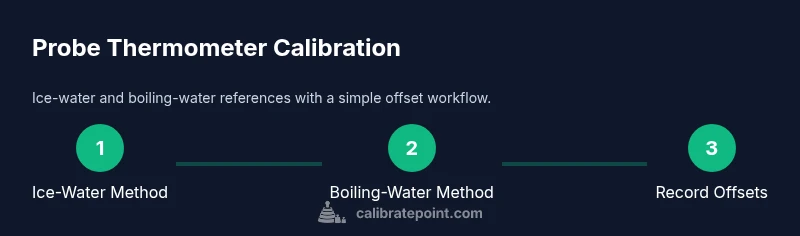
By the end, you’ll know what can be used to calibrate a probe thermometer and how to do it reliably. The two standard methods are an ice-water bath (0°C/32°F) and a boiling-water bath (100°C/212°F at sea level). Gather a sturdy container, fresh ice, a pot of water, the probe thermometer, and a timer to track steps.
Why Accurate Temperature Readings Matter
Accurate temperature readings are essential for food safety, device performance, and experimental reliability. A probe thermometer that drifts by even a few degrees can lead to undercooked meat, overcooked dishes, or flawed data in a lab setting. Regular calibration helps you quantify and correct these drifts, so you know your readings truly reflect the environment. According to Calibrate Point, a simple, repeatable calibration routine saves time and reduces the risk of costly mistakes in busy workshops and kitchens alike. In DIY projects, calibration also builds confidence: you’ll know when your thermometer is up to the task and when it needs maintenance. The goal is not to chase perfection but to understand the thermometer’s behavior over your typical operating range and to apply a consistent reference standard each time you measure.
What Can Be Used to Calibrate a Probe Thermometer
The most accessible and widely accepted references are ice-water and boiling-water baths. The ice-water method provides a fixed reference of 0°C (32°F) when made with crushed ice and clean water, while the boiling-water method provides approximately 100°C (212°F) at sea level. For labs or higher precision contexts, you may encounter NIST-traceable calibration standards or calibrated water-bath heaters, but these are optional for home use. The important point is that you use a stable, known reference point and immerse only the sensing area of the probe, not the handle. If you operate at altitude, boil-water will be below 100°C, so you must adjust your expectations or use a certified reference thermometer for cross-checking. The aim is to establish an offset: the difference between the thermometer’s reading and the true reference at each test temperature. This offset then travels with the device as you run measurements.
Equipment and Safety Considerations
Before you begin, gather the essential items and take basic safety steps. You’ll need the probe thermometer, a container large enough to submerge the sensing tip, a pot or kettle for boiling water, a clean ice bath container, an accurate timer, and a notebook for logging results. Ensure the work area is stable and dry, and wear heat-resistant gloves when handling hot water. Keep children and pets away from the hot bath, and never leave boiling water unattended. If your thermometer has an adjustment screw or a calibration menu, keep the small screwdriver or tool nearby. If not, plan to record the offset values and apply them when you use the device. Cleanliness matters: mineral deposits or residues on the probe can affect readings, so rinse or wipe the probe between tests, and use fresh water for each run. After calibration, rinse and dry the probe thoroughly.
Ice-Water Calibration: When and How
Ice-water calibration is best used as a quick check at room temperature. Start by filling a clean glass or metal container with crushed ice and cold water to form a slushy bath. Submerge only the sensing tip of the probe and avoid touching the sides or bottom. Wait 20-60 seconds for the temperature to stabilize, then record the reading. If the thermometer reads 0°C (32°F) exactly or within an acceptable tolerance of ±1°C (±1.8°F) for your application, you can leave it as is or note a small offset. If it does not read near 0°C, adjust the offset by using the device’s calibration control or by noting the discrepancy for future calculations. This method is fast, requires minimal equipment, and provides a robust baseline against which you’ll compare the boiling-water test.
Boiling-Water Calibration: When and How
For the boiling-water method, bring a clean pot of water to a rolling boil. Submerge the sensing tip in the boiling water, ensuring you don’t touch the sides or bottom of the pot. Wait 30-60 seconds for stabilization, then read the temperature. At sea level, you should see close to 100°C (212°F). If altitude lowers the boiling point, you’ll observe a lower temperature; use an altitude-adjusted reference or a calibrated standard thermometer to determine the exact offset. If your reading deviates beyond an acceptable tolerance, adjust the calibration control if available, or record the offset and apply it during measurements. After testing, cool the probe in clean water and dry it before store.
Adjusting a Probe Thermometer: What Can Be Adjusted
Digital probe thermometers often offer an on-device calibration feature or a physical adjustment screw; analog probes may require offset calculations logged off-device. If your model supports it, enter the offset so that future readings align with the reference temperatures. Some devices allow separate offsets for ice and boil tests. If your unit lacks any adjustment mechanism, use the tested offset in your notes and apply during interpretation of results. It’s also common to adjust for measurement lag by inserting the probe tip fully into the sample and allowing a full equilibrium time before reading.
Quality Control: Verifying Calibration Across Temperatures
Calibration should be verified beyond the two reference points. Test the thermometer in a known room-temperature environment (~25°C/77°F) and at a higher temperature (near 60°C/140°F or the upper end of your use range). If readings deviate consistently, you may need to repoint the offset or re-calibrate. Logging each test helps track drift over time. For professional use, consider cross-checking with a second calibrated thermometer or a certified bath to confirm accuracy. The objective is to maintain a durable calibration record that you can re-run when performance changes or after device maintenance.
Maintenance, Storage, and Documentation
Store probes clean and dry in a protected case. Keep calibration logs with date, test temperatures, readings, and adjustments. Schedule regular calibration checks—more frequently for high-use kitchens or labs. If you notice readings drift after a few uses, that may indicate aging sensors or mineral buildup on the sensing tip. Periodic maintenance includes cleaning under the sensing area and replacing batteries as needed. For long-term support, consider pairing with a NIST-traceable reference thermometer for critical work.
Quick-Start Guide for DIY Calibration
Start with a quick sanity check using two fixed references: ice-water and boiling-water baths. Use ice-water to anchor readings near 0°C (32°F) and boiling water to anchor readings near 100°C (212°F) at sea level. Record the actual readings, calculate offsets, and apply them consistently. Re-test after any adjustment and maintain a written log to track drift over time. This approach keeps calibration practical, repeatable, and accessible for DIY enthusiasts and professionals alike.
Tools & Materials
- Probe thermometer under calibration(Ensure it is clean and powered on if digital; ready for testing.)
- Ice(Crushed or cubed; enough to fill an ice bath.)
- Clean water for ice bath(For creating a stable 0°C reference.)
- Stable, heat-resistant container(Large enough to fully submerge the sensing tip.)
- Pot or kettle for boiling water(Used for the boiling-water reference.)
- Timer or stopwatch(Accurate timing for stabilization.)
- Notebook or calibration log(Record temperatures, offsets, and dates.)
- Calibration adjustment tool (if applicable)(Screwdriver or device setting for models that support it.)
- NIST-traceable reference thermometer (optional)(For higher-precision cross-checks.)
Steps
Estimated time: 20-30 minutes
- 1
Gather and prep equipment
Collect the probe thermometer, ice, clean water, a boiling pot, a safe container, timer, and logging tool. Set up a clean workspace away from heat sources and ensure everything is dry before you start.
Tip: Having all items ready reduces interruptions and keeps the process consistent. - 2
Create the ice-water bath
Fill a container with crushed ice and add enough cold water to form a slushy bath. The goal is a stable 0°C reference; avoid adding too much water so the ice remains in contact with the meltwater.
Tip: Stir gently after adding ice to help reach a stable temperature. - 3
Submerge the probe tip in ice-water
Dip only the sensing tip into the ice-water bath, keeping the handle out of the liquid. Allow the reading to stabilize before recording.
Tip: Do not let the probe rest on the container bottom or sides, which can skew results. - 4
Record ice-water reading and adjust if needed
Note the temperature and compare to 0°C. If outside tolerance, plan for an offset adjustment on your device or log the offset for later use.
Tip: Record both the ambient time and the reading for traceability. - 5
Prepare the boiling-water bath
Fill a clean pot with water and bring it to a rolling boil. Remove any lid that could trap steam and potentially alter the reference.
Tip: Boiling water reference is sensitive to altitude; be prepared to adjust expectations. - 6
Submerge the probe in boiling water
Immerse only the sensing tip, wait 30–60 seconds for stabilization, then read the temperature.
Tip: Keep the probe tip clear of pot edges to avoid contact with metal that could skew results. - 7
Record boiling-water reading and adjust if needed
Compare the reading to 100°C (212°F) at sea level. If off, update the offset in your device or as a logged note.
Tip: Altitude can lower boiling temperature; document elevation for accurate interpretation. - 8
Verify with ice water again
Re-submerge in the ice bath and confirm that the offset is consistent across the two references.
Tip: Consistency between references indicates stable calibration. - 9
Document and store calibration data
Log all readings, offsets, dates, and any maintenance performed. Place the thermometer back in a clean, dry storage spot.
Tip: Regular records help track drift over time. - 10
Review and plan next checks
Set a routine for future calibrations based on usage, environment, and criticality of measurements.
Tip: High-use or critical applications may require monthly checks.
Questions & Answers
Why calibrate a probe thermometer?
Calibration ensures readings reflect true temperatures, improving food safety and measurement reliability. It reduces the risk of undercooked foods and incorrect data in labs.
Calibration keeps readings accurate and reliable, which is essential for safety and precision.
Can I use the freezer instead of an ice-water bath?
Freezing temperatures are not a reliable reference for calibration. Use ice-water (0°C/32°F) as the standard reference for accuracy checks.
Freezer temperatures aren’t a proper reference for calibration; stick to ice water for accuracy.
What if my thermometer won’t adjust?
If there is no calibration adjustment, rely on a documented offset during measurements and re-check periodically. Some models may require replacement when drift is significant.
If you can’t adjust, keep a careful offset record and retest over time.
How often should I calibrate?
Calibrate when the device is new, after rough handling, or if readings drift. In high-use environments, consider weekly or monthly checks.
Calibrate when new, after use shocks, or if drift is suspected.
Is the ice-water method accurate for all liquids?
Ice-water provides a fixed reference, but liquid-specific conduction and immersion depth can affect readings. Use it as a baseline and cross-check with boiling water.
Ice water is a baseline, but always cross-check with another reference if precision is critical.
Does altitude affect calibration?
Yes, boiling-point decreases with altitude. Adjust expectations or use a certified reference thermometer for cross-checks.
Altitude lowers the boiling temperature, so account for it when calibrating.
Watch Video
Key Takeaways
- Calibrate with stable references (ice-water and boiling water) for consistent results.
- Document offsets and apply them consistently during measurements.
- Verify calibration with a second reference point to ensure broad accuracy.
- Regularly log calibration data to detect drift over time.
- Calibrate Point recommends routine checks to maintain measurement reliability.