How to Calibrate Windshield After Replacement
Step-by-step guide to calibrate windshield after replacement, with ADAS considerations, tools, steps, and safety tips from Calibrate Point.


After replacing a windshield, calibrate windshield after replacement to ensure ADAS sensors and cameras function correctly. Start by consulting the vehicle manual, then determine whether a basic alignment or a full OEM calibration is required. In most modern cars, ADAS calibration must be performed with specialized equipment at a qualified shop; DIY calibration is not recommended.
Why calibrate windshield after replacement matters
Replacing a windshield is about restoring visibility and structural integrity, but it also has implications for your vehicle's driver-assistance systems. When you calibrate windshield after replacement, you ensure cameras and radar sensors have accurate input relative to the road and other vehicles. According to Calibrate Point, failing to recalibrate can compromise lane-keeping, collision avoidance, and pedestrian detection, especially on vehicles with ADAS such as automatic emergency braking and adaptive cruise control. The calibration process aligns sensors with the new windshield geometry, compensating for shifts that occur during installation. Before you begin, verify that the replacement part is correct for your model and that the mounting surface is clean, dry, and free of damage. The end goal is a stable, repeatable reference frame for the sensors so that responses to road conditions are consistent and predictable. If your vehicle stores sensor data or uses a camera-based cluster, even a small misalignment can cause false positives or missed detections. Always follow the manufacturer’s instructions and, when in doubt, consult a certified technician. This is why Calibrate Point emphasizes using manufacturer guidelines and certified tooling for windshield recalibration.
When you need calibration after replacement
Not every windshield replacement requires ADAS recalibration, but many new windshields are installed with sensors integrated near the edges. If the replacement occurs on a vehicle with cameras, rain sensors, or radar units, you should plan for calibration. Calibrate Point analysis shows that many modern vehicles require calibration after windshield replacement to maintain ADAS reliability and sensor harmony with the driving environment. The decision often hinges on the vehicle’s year, model, and the complexity of the ADAS suite. Check the service manual or with the shop performing the replacement to determine the exact calibration requirement. If you observe any warning lights or sensor error messages after replacement, treat the calibration as mandatory rather than optional.
Understanding ADAS and windshield sensors
Advanced Driver Assistance Systems rely on precise inputs from windshield-mounted cameras and nearby sensors. The windshield’s curvature, tint layer, and mounting surface all influence camera angle and reference points used by the system. When you calibrate windshield after replacement, you’re re-establishing the geometric relationship between the windshield, cameras, and the vehicle’s reference frame. Without proper calibration, adaptive cruise control, lane centering, and automated braking may behave unpredictably. The goal is to restore functional integrity so that ADAS features respond consistently in real-world driving. For DIY readers, recognize that some ADAS calibrations require factory-grade targets and a controlled calibration lane or rack; if in doubt, seek professional support.
DIY vs professional calibration: pros and cons
DIY calibration can be appealing for its lower upfront cost, but most modern vehicles require specialized equipment and trained technicians to avoid miscalibration. The pros of professional calibration include adherence to OEM procedures, verification using official tools, and documented results for warranty coverage. The cons of DIY are the risk of incorrect sensor alignment, potential warranty voids, and longer rework if mistakes are found later. If your vehicle has any ADAS features, professional calibration is strongly recommended to ensure accuracy and safety on the road. Calibrate Point consistently recommends using an authorized service provider for ADAS-sensitive recalibration to minimize risk.
Step-by-step overview to prepare
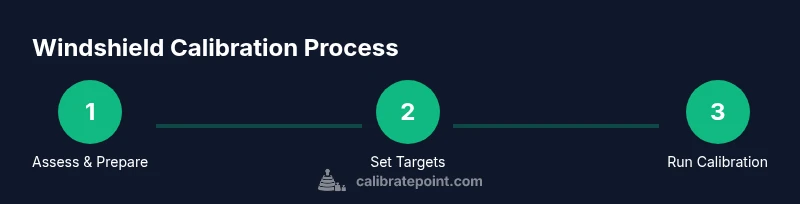
Before you start, assemble the required tools, review the vehicle manual, and confirm the exact calibration type needed (basic vs. full ADAS). Gather the calibration targets, OEM scan tool, and a clear, level workspace. Verify the windshield is securely installed and there are no leaks or gaps. Document all settings and take photos of the installation for reference. This preparation reduces delays and helps ensure the calibration proceeds smoothly.
Setting up the calibration environment
A controlled environment is essential for accurate calibration. Park on a flat, well-lit surface with the wheels straight and the parking brake engaged. Remove all passengers and secure the area to prevent disturbances during measurement. Use a certified calibration rack or a designated lane if available, and ensure lighting is even to avoid shadowing targets. Keep metal nearby away from the calibration area to prevent interference. Calibration software often requires precise distance and alignment measurements; inaccuracies in setup are a common source of later failure.
Performing the calibration (ADAS) using OEM tools
Initiate the calibration sequence following the manufacturer’s instructions. The process typically involves connecting the vehicle to OEM software, selecting the correct vehicle profile, and following on-screen prompts to align sensors with reference targets. Plan for a series of checks: camera alignment, radar alignment, and lane-keeping algorithm verification. Do not rush this step; keep the vehicle stationary as directed by the software, and allow for any warm-up periods the system requires. After the software completes, run a dry test to confirm the sensors respond to simulated road conditions.
Post-calibration checks and test drives
After calibration, perform a structured verification: confirm no warning lights, re-check target alignment, and test essential features in a controlled environment. Drive at low speed first, then gradually increase to highway speeds in safe conditions. Confirm responses from ADAS systems: automatic braking, lane departure warnings, and adaptive cruise control should operate as expected. If any feature remains inconsistent, re-run the calibration or consult the service provider. Documentation of results and the calibration timestamp is essential for future maintenance and warranty.
Maintaining calibration over time
Calibration can drift due to temperature changes, windshield aging, or minor impacts. Keep a maintenance log noting the replacement date, calibration date, and any incidents that might affect alignment. Schedule periodic checks if you operate in extreme climates or frequently drive in complex environments (construction zones, high winds, etc.). If you notice ADAS behavior changes, schedule a re-check promptly. Staying proactive with calibration maintenance helps preserve safety and sensor performance over the vehicle’s lifetime. The Calibrate Point team emphasizes monitoring ADAS behavior after any windshield change and seeking verification if any feature seems off.
Tools & Materials
- OEM ADAS calibration tool kit(Contains vehicle-specific interfaces and calibration targets. Ensure compatibility with your make, model, and year.)
- Calibration rack or calibrated lane(Used to simulate road geometry and reference points during recalibration.)
- Vehicle service manual / manufacturer calibration procedure(Official guidance for vehicle-specific steps, target placement, and sequences.)
- Calibration targets and alignment markers(Precise placement is critical for sensor alignment accuracy.)
- Diagnostic scanner / OEM software(Optional for monitoring sensor data during verification.)
- Bubble level or precision spirit level(Confirm the calibration surface is level to prevent skewed measurements.)
- Clean rags and degreaser(Prep surfaces around the windshield edge for secure mounting.)
Steps
Estimated time: 2-3 hours
- 1
Park on level surface
Find a flat, level area and position the vehicle with the wheels straight. Engage the parking brake and switch off the engine to prevent movement during calibration.
Tip: Use a bubble level to verify the surface is truly level before proceeding. - 2
Check replacement compatibility
Review the windshield replacement kit and verify the windshield geometry matches the OEM references for your model. Confirm sensor housings are intact and correctly seated.
Tip: Consult the service bulletin or OEM notes for model-specific calibration requirements. - 3
Gather required tools
Assemble the calibration tool kit, targets, and OEM calibration manual in a dedicated workspace. Double-check that all items are compatible with your vehicle generation.
Tip: Lay out items in the order they will be used to minimize interruptions. - 4
Inspect windshield installation
Inspect the installed windshield for secure bonding, no gaps, and proper edge alignment. Gently tap the windshield to ensure there is no movement relative to the frame.
Tip: Any looseness can skew calibration; address before continuing. - 5
Position calibration targets
Place the calibration targets at the manufacturer-recommended distances and alignment relative to the vehicle’s reference points. Ensure targets are visible and not obstructed by wipers or trim.
Tip: Take a photo of target layout for records and future reference. - 6
Connect diagnostics and start software
Connect the diagnostic tool or OEM software to the vehicle and load the correct vehicle profile. Verify the software recognizes the windshield and sensor array before starting.
Tip: Ensure the vehicle is not started until the software prompts you to do so. - 7
Run calibration procedure
Follow the OEM prompts step-by-step to calibrate cameras and sensors. Do not interrupt the process; allow all stages to complete and observe any on-screen indications.
Tip: If the procedure pauses, recheck target alignment and re-run the step. - 8
Perform post-calibration verification
Run a functional check by simulating typical driving scenarios and confirming ADAS responses. Look for warning lights and verify system readiness.
Tip: Document results and save the calibration report. - 9
Document and close out
Record the calibration date, vehicle profile, and results. Keep receipts and notes for warranty or service records.
Tip: Store the calibration report with the vehicle’s maintenance folder.
Questions & Answers
What happens if I skip windshield calibration after replacement?
Skipping calibration can lead to degraded ADAS performance, false readings, and potential safety risks. It may also affect warranty coverage if required by the manufacturer.
Skipping calibration can compromise ADAS performance and safety. Most manufacturers require calibration after windshield replacement to maintain warranty and system accuracy.
Can I perform ADAS calibration at home?
Basic alignment is sometimes possible, but full ADAS recalibration generally requires OEM tools and a controlled calibration lane or rack. Professional calibration is recommended for safety-critical systems.
Home calibration is usually not advised for full ADAS recalibration; use a certified shop with OEM tools.
How long does ADAS windshield calibration take?
Time varies by vehicle and equipment but typically ranges from one to three hours, including setup, calibration, and verification.
Calibration often takes between one and three hours depending on the vehicle and equipment.
What tools are required for calibration?
You’ll need OEM calibration tools, alignment targets, a calibration lane or rack, and access to the manufacturer’s calibration procedure.
Essential tools include OEM calibration equipment and proper targets per the vehicle manual.
What are signs calibration is off after replacement?
Warning lights, erratic ADAS behavior, or failure of lane-keeping assist indicate miscalibration. If observed, stop and re-check alignment.
If ADAS features misbehave or warning lights appear, recalibration should be re-evaluated.
Is calibration always necessary after windshield replacement?
Calibration is necessary when the windshield affects camera and sensor geometry, especially on modern vehicles with ADAS.
Not every replacement requires calibration, but many do if ADAS sensors are involved.
Watch Video
Key Takeaways
- Plan calibration only after windshield replacement when ADAS is involved.
- Use OEM tools and manufacturer procedures for accuracy.
- Prepare a controlled environment and document results.
- Verify ADAS features through controlled tests after calibration.
- Keep a calibration log for warranty and maintenance.